Wednesday, March 9, 2022

3.6 Billion Years in Pastel Colors


The Pilbara in northwestern Australia exposes some of the oldest rocks on Earth, over 3.6 billion years old.

from NASA http://www.nasa.gov/image-feature/36-billion-years-in-pastel-colors
via IFTTT
Tuesday, March 8, 2022

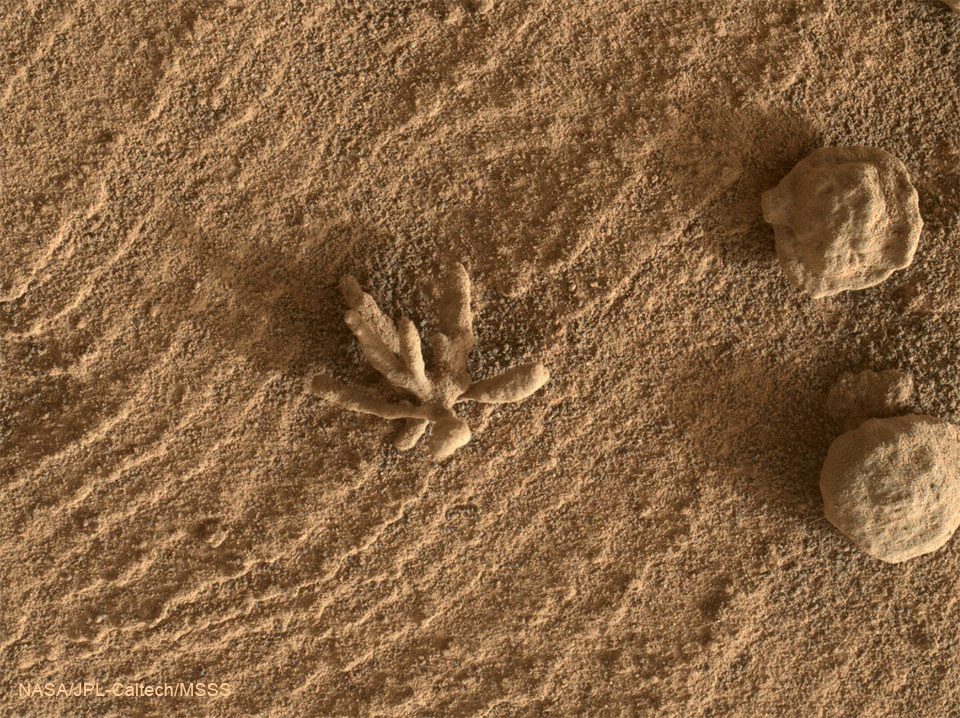
A Flower Shaped Rock on Mars


It is one of the more unusual rocks yet found on Mars. Smaller than a penny, the rock has several appendages that make it look, to some, like a flower. Although it would be a major discovery if the rock was truly a fossilized ancient Martian flower, there are less spectacular -- and currently preferred -- explanations for its unusual structure. One theory that has emerged is that the rock is a type of concretion created by minerals deposited by water in cracks or divisions in existing rock. These concretions can be compacted together, can be harder and denser than surrounding rock, and can remain even after the surrounding rock erodes away. The flower structure may also be caused by crystal clusters. The small rock, named Blackthorn Salt, has similarities to previously imaged Martian pebbles. The featured image was taken by the Curiosity rover on Mars in late February. Scientists will continue to study data and images taken of this -- and similar -- surprising Martian rocks.

https://apod.nasa.gov/apod/ap220309.html ( March 09, 2022)

Engineering NASA’s Return to the Moon


These engineers developed and tested Space Launch System software that will tell the rocket how to operate for the first 8 minutes of Artemis during launch and ascent.

from NASA http://www.nasa.gov/image-feature/engineering-nasa-s-return-to-the-moon
via IFTTT

ISS Daily Summary Report – 3/07/2022

iss-about-banner


Payloads: Cold Atom Lab (CAL): A visual inspection was performed of the CAL moderate temperature coolant jumper, and any coolant observed was cleaned up. A persistent very slow leak has been observed in this coolant line and the ground is discussing a forward plan, but science activities can be continued in this state. The CAL … ...
March 07, 2022 at 11:00AM
From NASA: https://blogs.nasa.gov/stationreport/2022/03/07/iss-daily-summary-report-3-07-2022/

Monday, March 7, 2022

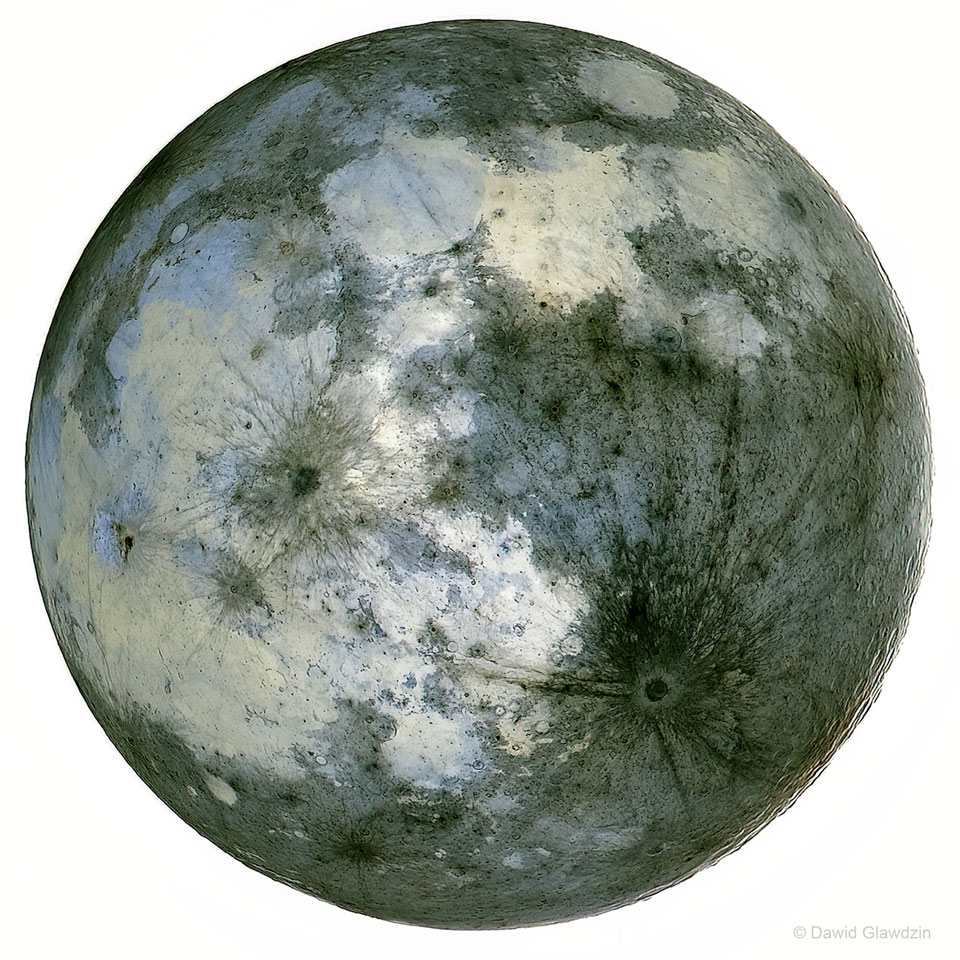
Moon in Inverted Colors


Which moon is this? It's Earth's moon -- but in inverted colors. Here, the pixel values corresponding to light and dark areas have been translated in reverse, or inverted, producing a false-color representation reminiscent of a black and white photographic negative. However, this is an inverted color image -- where the muted colors of the moon are real but digitally exaggerated before inversion. Normally bright rays from the large crater Tycho dominate the southern (bottom) features as easily followed dark green lines emanating from the 85-kilometer diameter impact site. Normally dark lunar mare appear light and silvery. The image was acquired in Southend-on-Sea, England, UK. Historically, astronomical images recorded on photographic plates were directly examined on inverted-color negatives because it helped the eye pick out faint details.

https://apod.nasa.gov/apod/ap220308.html ( March 08, 2022)

Launching to Study Pulsating Aurora


The LAMP mission hopes to understand an often overlooked kind of aurora, called a pulsating aurora, and to test a theory on what causes them.

from NASA http://www.nasa.gov/image-feature/launching-to-study-pulsating-aurora
via IFTTT

Sunday, March 6, 2022

A Lion in Orion


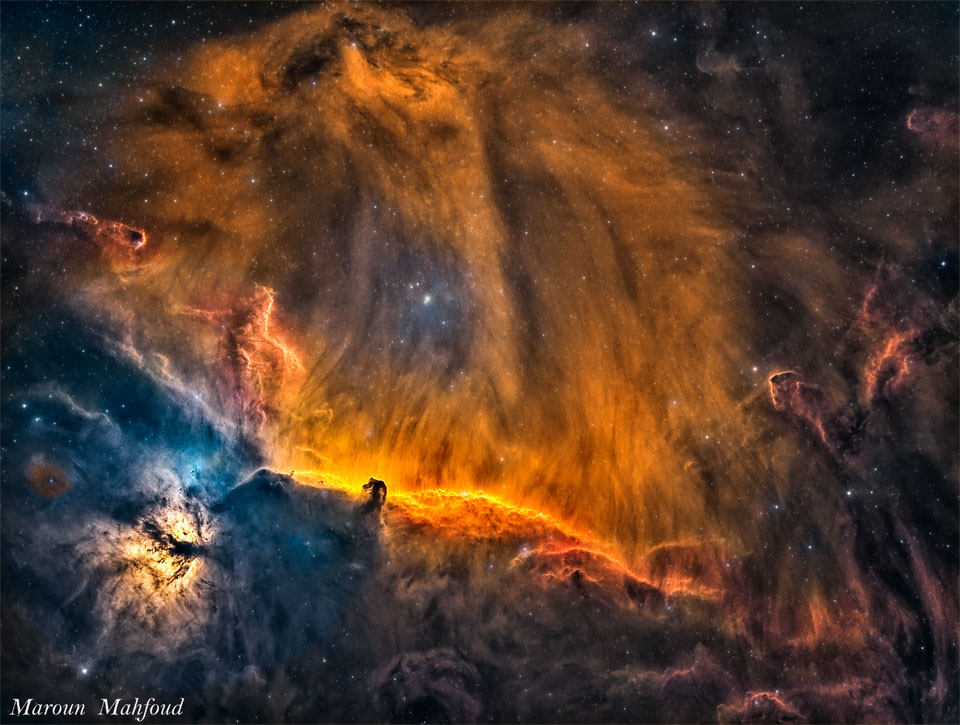
Yes, but can you see the lion? A deep exposure shows the famous dark indentation that looks like a horse's head, visible just left and below center, and known unsurprisingly as the Horsehead Nebula. The Horsehead Nebula (Barnard 33) is part of a vast complex of dark absorbing dust and bright glowing gas. To bring out details of the Horsehead's pasture, an astrophotographer artistically combined light accumulated for over 20 hours in hydrogen (orange), oxygen (blue), and sulfur (green). The resulting spectacular picture captured from Raachine, Lebanon, details an intricate tapestry of gaseous wisps and dust-laden filaments that were created and sculpted over eons by stellar winds and ancient supernovas. The featured composition brings up another pareidolic animal icon -- that of a lion's head -- in the expansive orange colored gas above the horse's head. The Flame Nebula is visible just to the left of the Horsehead. The Horsehead Nebula lies 1,500 light years distant towards the constellation of Orion.

https://apod.nasa.gov/apod/ap220307.html ( March 07, 2022)

Saturday, March 5, 2022

Venus and the Triply Ultraviolet Sun


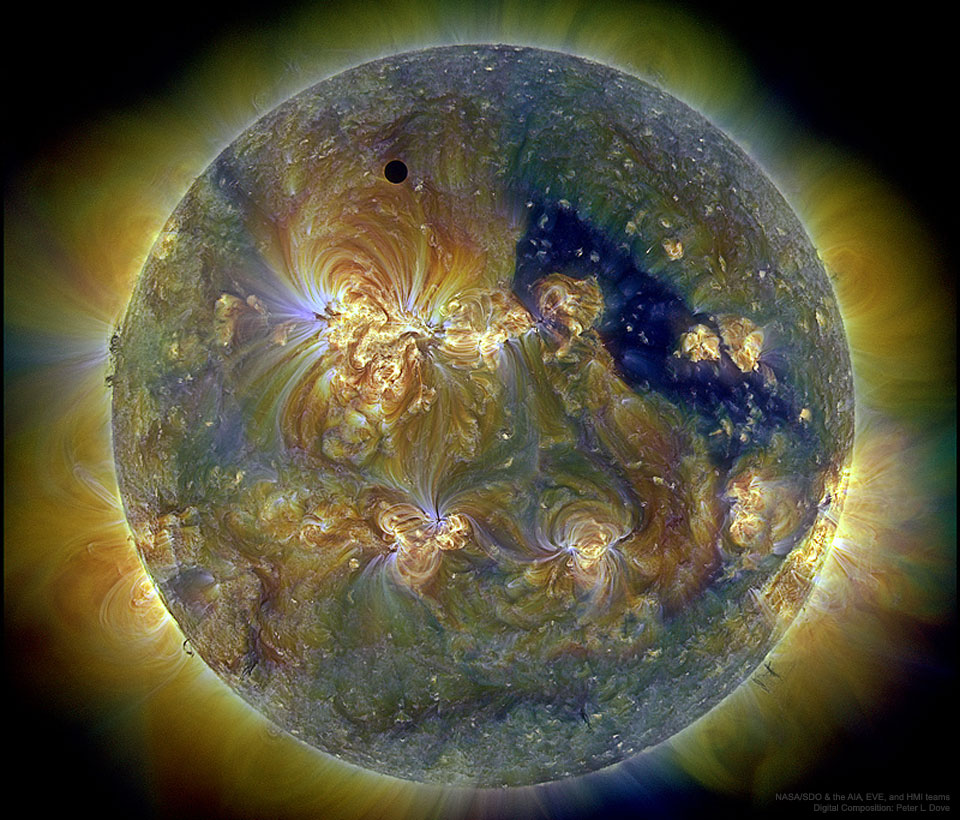
This was a very unusual type of solar eclipse. Typically, it is the Earth's Moon that eclipses the Sun. In 2012, though, the planet Venus took a turn. Like a solar eclipse by the Moon, the phase of Venus became a continually thinner crescent as Venus became increasingly better aligned with the Sun. Eventually the alignment became perfect and the phase of Venus dropped to zero. The dark spot of Venus crossed our parent star. The situation could technically be labeled a Venusian annular eclipse with an extraordinarily large ring of fire. Pictured here during the occultation, the Sun was imaged in three colors of ultraviolet light by the Earth-orbiting Solar Dynamics Observatory, with the dark region toward the right corresponding to a coronal hole. Hours later, as Venus continued in its orbit, a slight crescent phase appeared again. The next Venusian transit across the Sun will occur in 2117.

https://apod.nasa.gov/apod/ap220306.html ( March 06, 2022)

Friday, March 4, 2022

Interstellar Comet 2I Borisov


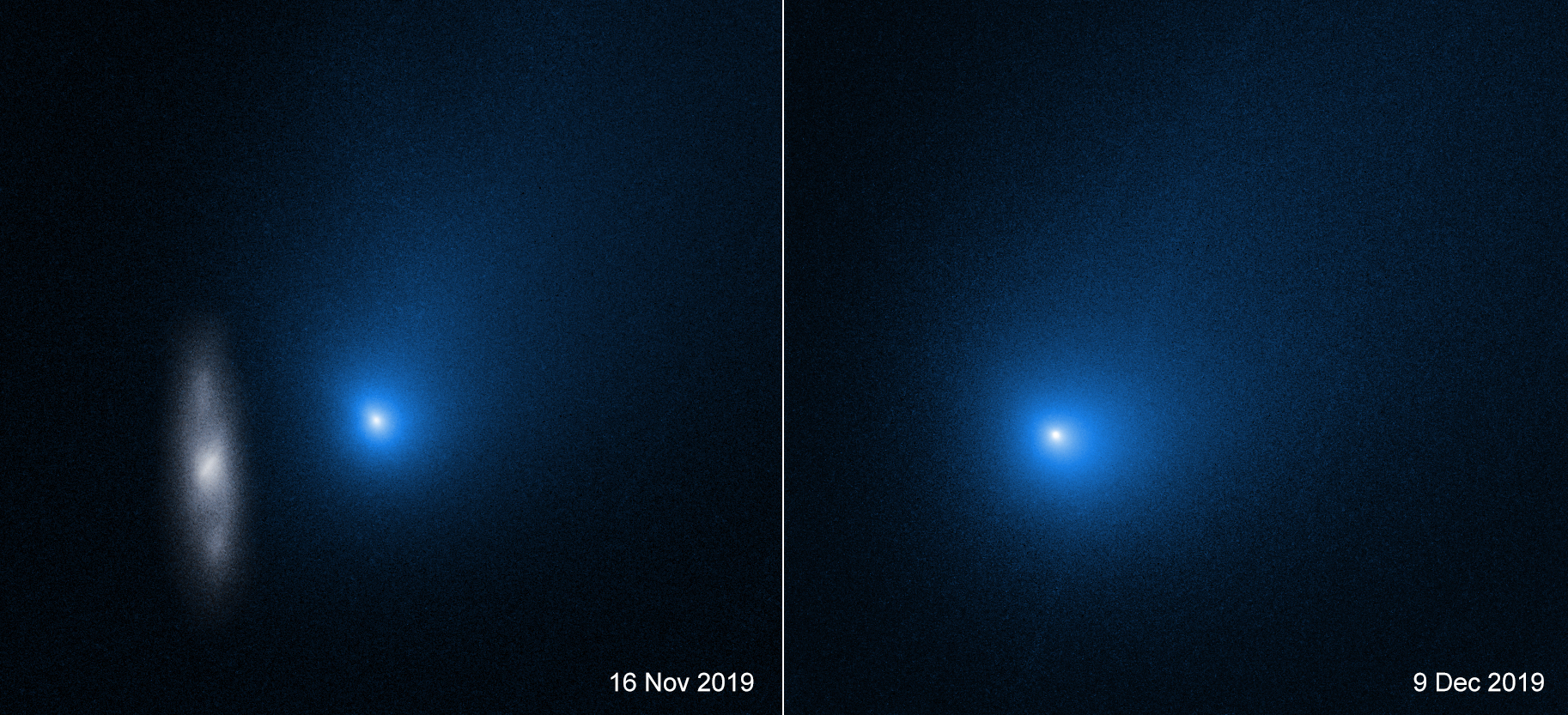
From somewhere else in the Milky Way galaxy, Comet 2I/Borisov was just visiting the Solar System. Discovered by amateur astronomer Gennady Borisov on August 30, 2019, the first known interstellar comet is seen in these two Hubble Space Telescope images from November and December 2019. On the left, a distant background galaxy near the line-of-sight to Borisov is blurred as Hubble tracked the speeding comet and dust tail about 327 million kilometers from Earth. At right, 2I/Borisov appears shortly after perihelion, its closest approach to Sun. European Southern Observatory observations indicate that this comet may never have passed close to any star before its 2019 perihelion passage. Borisov's closest approach to our fair planet, a distance of about 290 million kilometers, came on December 28, 2019. Even though Hubble's sharp images don't resolve the comet's nucleus, they did lead to estimates of less than 1 kilometer for its diameter.

https://apod.nasa.gov/apod/ap220305.html ( March 05, 2022)

ISS Daily Summary Report – 3/03/2022

iss-about-banner


Payloads: Cryo Chiller: An ambient Sample Cartridge was installed into the Cryo Chiller volume. Cryo Chiller is a single Expedite the Processing of Experiments to Space Station (EXPRESS) locker replacement unit which provides rapid freezing capability in support of biological sciences, as well as temperature-controlled transfer to/from the ISS on visiting vehicles. Electromagnetic Levitator (EML): … ...

March 03, 2022 at 11:00AM
From NASA: https://blogs.nasa.gov/stationreport/2022/03/03/iss-daily-summary-report-3-03-2022/