Wednesday, July 15, 2026

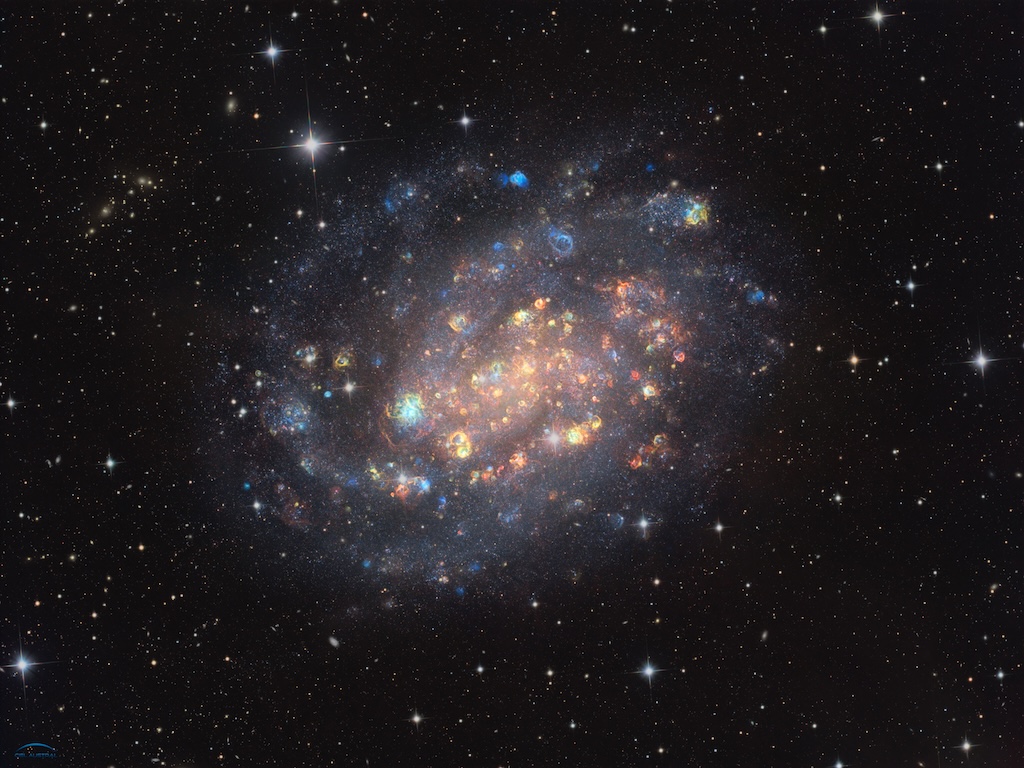
NGC 300: A Cosmic Gemstone with Stars and Gas Clouds


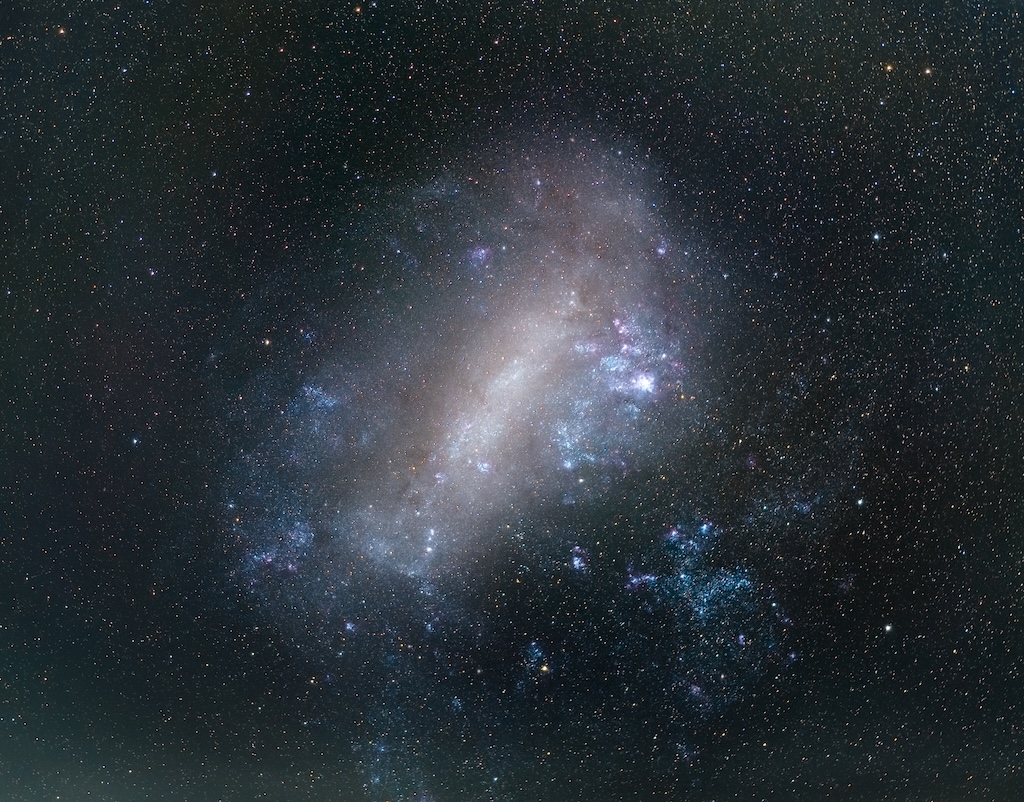
This sparkling, colorful gemstone is a spiral galaxy, NGC 300. It is one of the closest spiral galaxies to Earth, only about 6 million light-years away. But does it really look like this? Here is a more standard portrait of it. This unusual image combines the light from the stars and dust within the galaxy with the light from ionized clouds of interstellar gas shown in red (Sulphur), green (Hydrogen) and blue (Oxygen). Combining red and green light in different proportions makes yellow or orange light, most visible in the image. Light from other ionized gases is also at work in neon signs, fluorescent tubes and street lights. These massive clouds of ionized gas are typically created by young, massive stars that produce high-energy ultraviolet radiation capable of ionizing the gas. Massive stars are short-lived, compared with lighter stars like our sun, and explode as supernovas at the end of their lives. Some of the colorful clouds in the image could be hidingsupernova remnants.

https://apod.nasa.gov/apod/ap260716.html ( July 15, 2026 at 08:00PM)

Wednesday, July 1, 2026

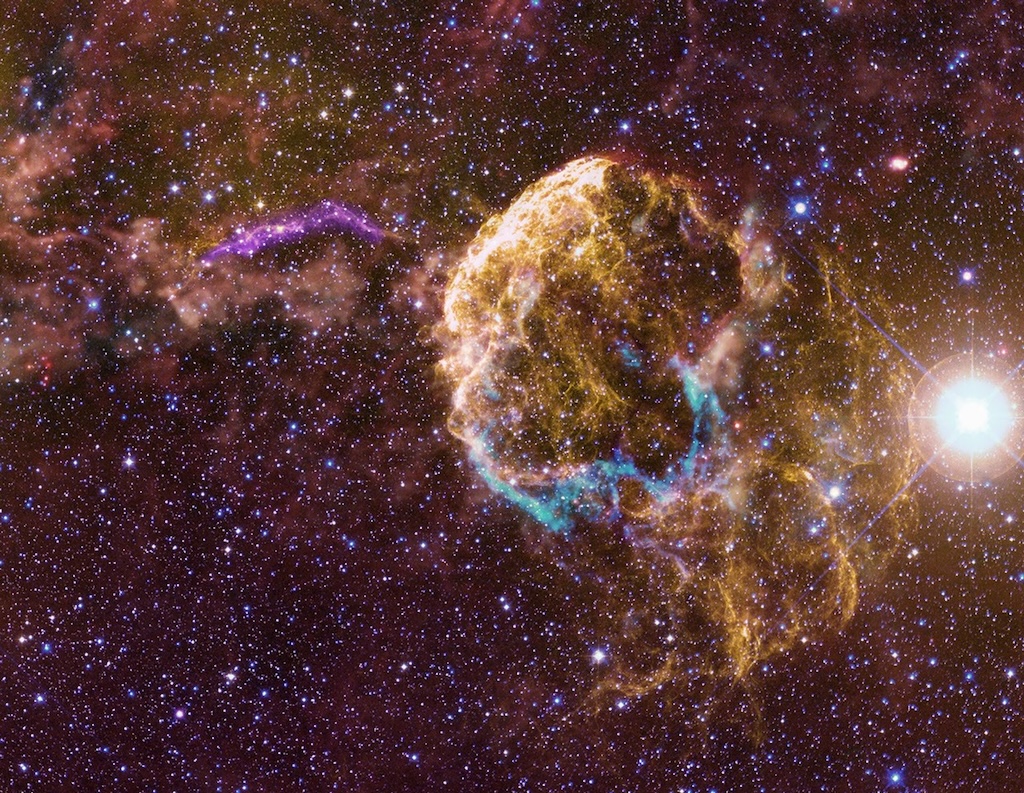
Sibling Supernova Remnants


What happens when one of the stars in a binary goes supernova? This image combines visible (yellow), ultraviolet (purple) and infrared light (cyan, red and orange) to show two supernova remnants and their surrounding environment, about 6,000 light-years away. The younger one is the well-known Jellyfish Nebula in the center (mostly in yellow). If we could see it by eye, it would appear larger than the full moon in the sky. The filament shown in purple is part of an older, overlapping supernova remnant, G189.6+3.3. A new study used data from NASA's Fermi Gamma-ray Space Telescope to piece together their story. Astronomers believe that there were two stars in a binary system, then the first one exploded as a supernova, kicking away its companion, which also exploded as a supernova tens of thousands of years later, creating the superimposed supernova remnants we see today. The bright star on the right is actually a triple star system named Propus.

https://apod.nasa.gov/apod/ap260702.html ( July 1, 2026 at 08:00PM)