Tuesday, January 11, 2022

ISS Daily Summary Report – 1/10/2021

iss-about-banner


Payloads: Advanced Plant Experiment-07 (APEX-07): A harvest was performed for the plants that have been growing in petri plate experiment containers in the Veggie Facilities. This harvest follows approximately 12 days of plant growth for the Arabidopsis thaliana. APEX-07 examines how changes in gravity and other environmental factors associated with spaceflight affect plants at the … ...

January 10, 2022 at 11:00AM
From NASA: https://blogs.nasa.gov/stationreport/2022/01/10/iss-daily-summary-report-1-10-2021/

The Milky Way's Supermassive Black Hole Has a Leak


Our Milky Way's central black hole has a leak.

from NASA http://www.nasa.gov/image-feature/the-milky-ways-supermassive-black-hole-has-a-leak
via IFTTT

Monday, January 10, 2022

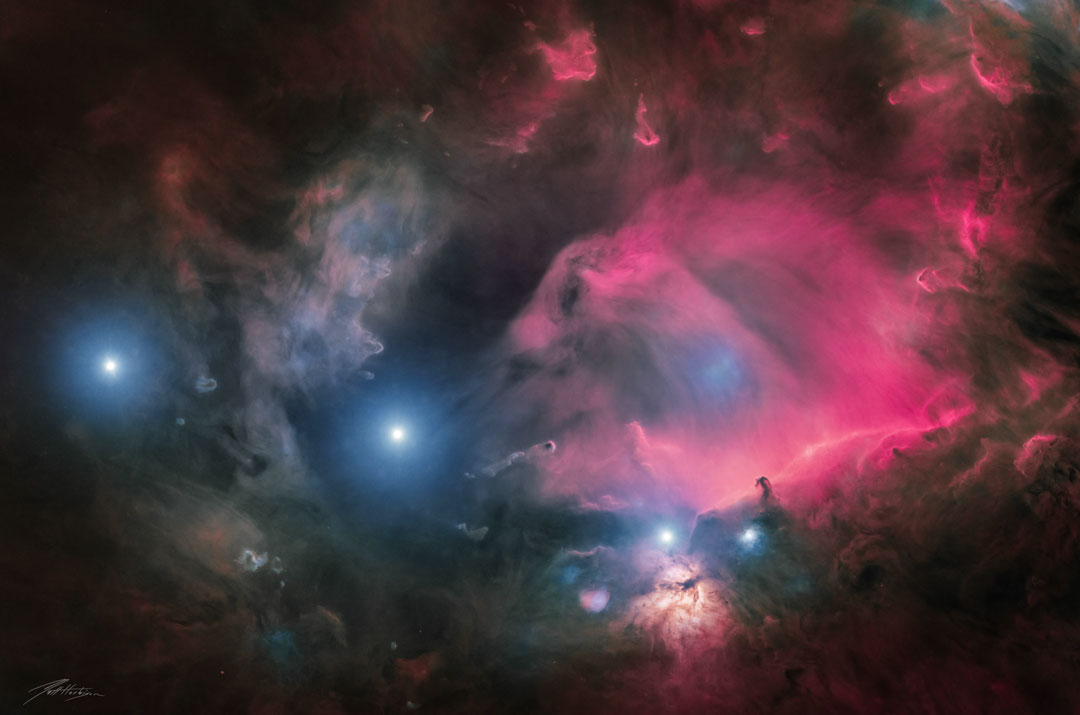
Orions Belt Region in Gas and Dust


You may have seen Orion's belt before -- but not like this. The three bright stars across this image are, from left to right, Mintaka, Alnilam, and Alnitak: the iconic belt stars of Orion. The rest of the stars in the frame have been digitally removed to highlight the surrounding clouds of glowing gas and dark dust. Some of these clouds have intriguing shapes, including the Horsehead and Flame Nebulas, both near Alnitak on the lower right. This deep image, taken last month from the Marathon Skypark and Observatory in Marathon, Texas, USA, spans about 5 degrees, required about 20 hours of exposure, and was processed to reveal the gas and dust that we would really see if we were much closer. The famous Orion Nebula is off to the upper right of this colorful field. The entire region lies only about 1,500 light-years distant and so is one of the closest and best studied star formation nurseries known.

https://apod.nasa.gov/apod/ap220111.html ( January 11, 2022)

Sidney Poitier's Visit to NASA's Jet Propulsion Laboratory


Legendary actor and diplomat, Sidney Poitier, visited JPL in 1979.

from NASA http://www.nasa.gov/image-feature/sidney-poitiers-visit-to-nasas-jet-propulsion-laboratory
via IFTTT

Sunday, January 9, 2022

Comet Leonards Tail Wag


Why does Comet Leonard's tail wag? The featured time-lapse video shows the ion tail of Comet C/2021 A1 (Leonard) as it changed over ten days early last month. The video was taken by NASA's Solar Terrestrial Relations Observatory-Ahead (STEREO-A) spacecraft that co-orbits the Sun at roughly the same distance as the Earth. Each image in this 29-degree field was subtracted from following image to create frames that highlight differences. The video clearly shows Comet Leonard's long ion tail extending, wagging, and otherwise being blown around by the solar wind -- a stream of fast-moving ions that stream out from the Sun. Since the video was taken, Comet Leonard continued plunging toward the Sun, reached its closest approach to the Sun between the orbits of Mercury and Venus, survived this closest approach without breaking apart, and is now fading as heads out of our Solar System.

https://apod.nasa.gov/apod/ap220110.html ( January 10, 2022)

Saturday, January 8, 2022

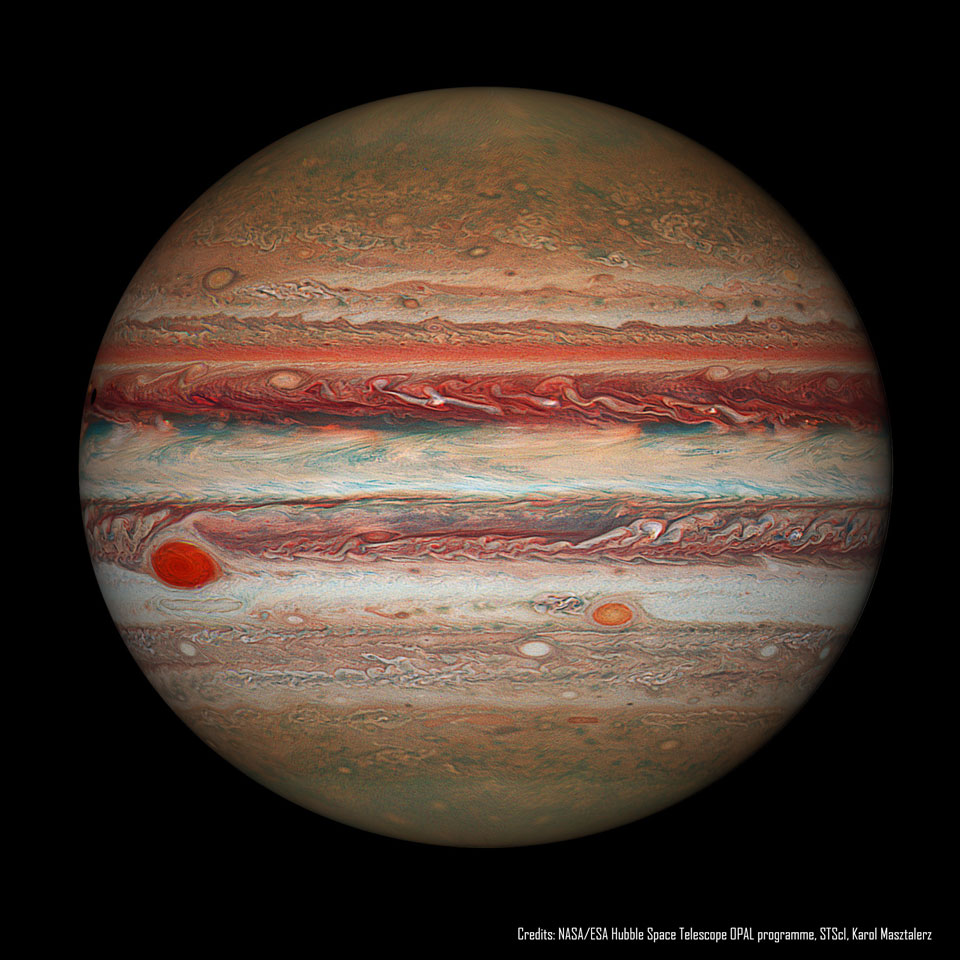
Hubbles Jupiter and the Shrinking Great Red Spot


What will become of Jupiter's Great Red Spot? Gas giant Jupiter is the solar system's largest world with about 320 times the mass of planet Earth. Jupiter is home to one of the largest and longest lasting storm systems known, the Great Red Spot (GRS), visible to the left. The GRS is so large it could swallow Earth, although it has been shrinking. Comparison with historical notes indicate that the storm spans only about one third of the exposed surface area it had 150 years ago. NASA's Outer Planets Atmospheres Legacy (OPAL) program has been monitoring the storm more recently using the Hubble Space Telescope. The featured Hubble OPAL image shows Jupiter as it appeared in 2016, processed in a way that makes red hues appear quite vibrant. Modern GRS data indicate that the storm continues to constrict its surface area, but is also becoming slightly taller, vertically. No one knows the future of the GRS, including the possibility that if the shrinking trend continues, the GRS might one day even do what smaller spots on Jupiter have done -- disappear completely.

https://apod.nasa.gov/apod/ap220109.html ( January 09, 2022)

Friday, January 7, 2022

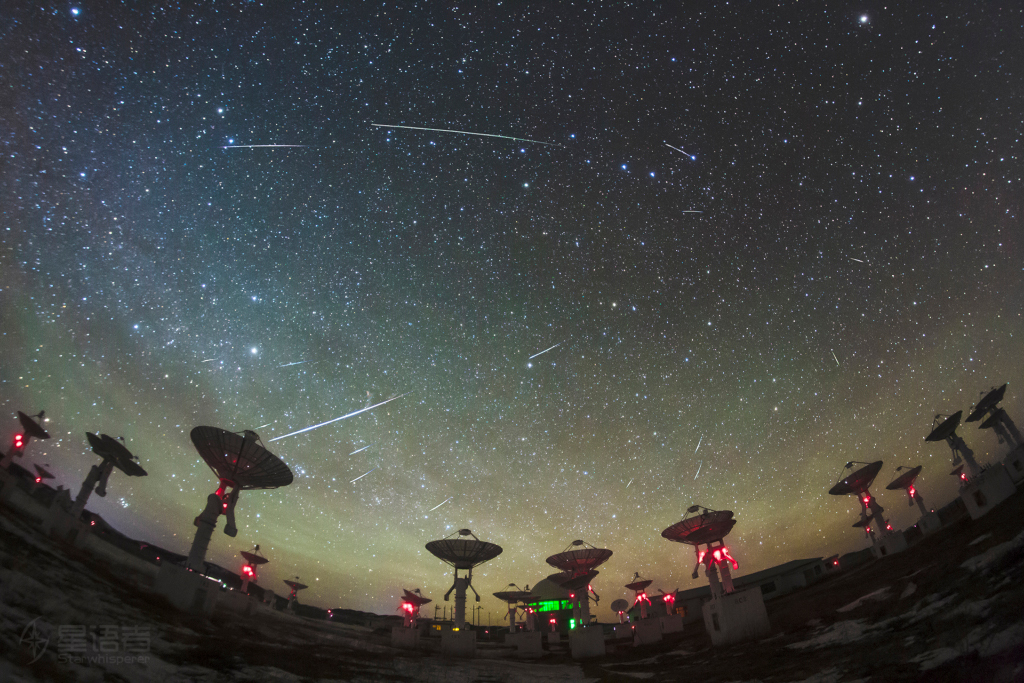
Quadrantids of the North


Named for a forgotten constellation, the Quadrantid Meteor Shower puts on an annual show for planet Earth's northern hemisphere skygazers. The shower's radiant on the sky lies within the old, astronomically obsolete constellation Quadrans Muralis. That location is not far from the Big Dipper, at the boundaries of the modern constellations Bootes and Draco. In fact north star Polaris is just below center in this frame and the Big Dipper asterism (known to some as the Plough) is above it, with the meteor shower radiant to the right. Pointing back toward the radiant, Quadrantid meteors streak through the night in the panoramic skyscape, a composite of images taken in the hours around the shower's peak on January 4, 2022. Arrayed in the foreground are radio telescopes of the Chinese Spectral Radioheliograph, Mingantu Observing Station, Inner Mongolia, China. A likely source of the dust stream that produces Quadrantid meteors was identified in 2003 as an asteroid.

https://apod.nasa.gov/apod/ap220108.html ( January 08, 2022)

Waiting to Unfold


This image shows the James Webb Space Telescope atop its launch vehicle, but before it was encapsulated in the rocket fairing.

from NASA http://www.nasa.gov/image-feature/waiting-to-unfold
via IFTTT

ISS Daily Summary Report – 1/06/2021

iss-about-banner


Payloads: Acoustic Diagnostics:  Acoustic Diagnostics (AUDIO) measurements were taken.  The Acoustic Upgraded Diagnostics In-Orbit (Acoustic Diagnostics) investigation tests the hearing of ISS crew members before, during, and after flight. This study assesses the possible adverse effects of noise and the microgravity environment aboard the ISS on human hearing. The investigation compares the relationship between the … ...

January 06, 2022 at 11:00AM
From NASA: https://blogs.nasa.gov/stationreport/2022/01/06/iss-daily-summary-report-1-06-2021/

Thursday, January 6, 2022

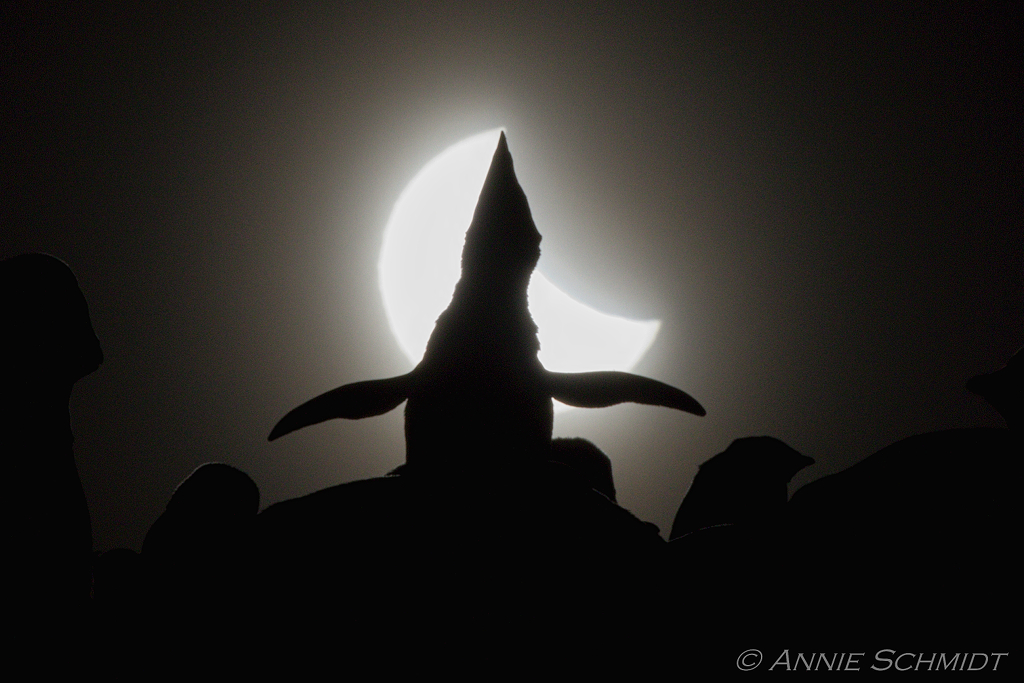
Ecstatic Solar Eclipse


A male Adelie penguin performed this Ecstatic Vocalization in silhouette during the December 4 solar eclipse, the final eclipse of 2021. Of course his Ecstatic Vocalization is a special display that male penguins use to claim their territory and advertise their condition. This penguin's territory, at Cape Crozier Antarctica, is located in one of the largest Adelie penguin colonies. The colony has been studied by researchers for over 25 years. From there, last December's eclipse was about 80 percent total when seen at its maximum phase as the Moon's shadow crossed planet Earth's southernmost continent.

https://apod.nasa.gov/apod/ap220107.html ( January 07, 2022)