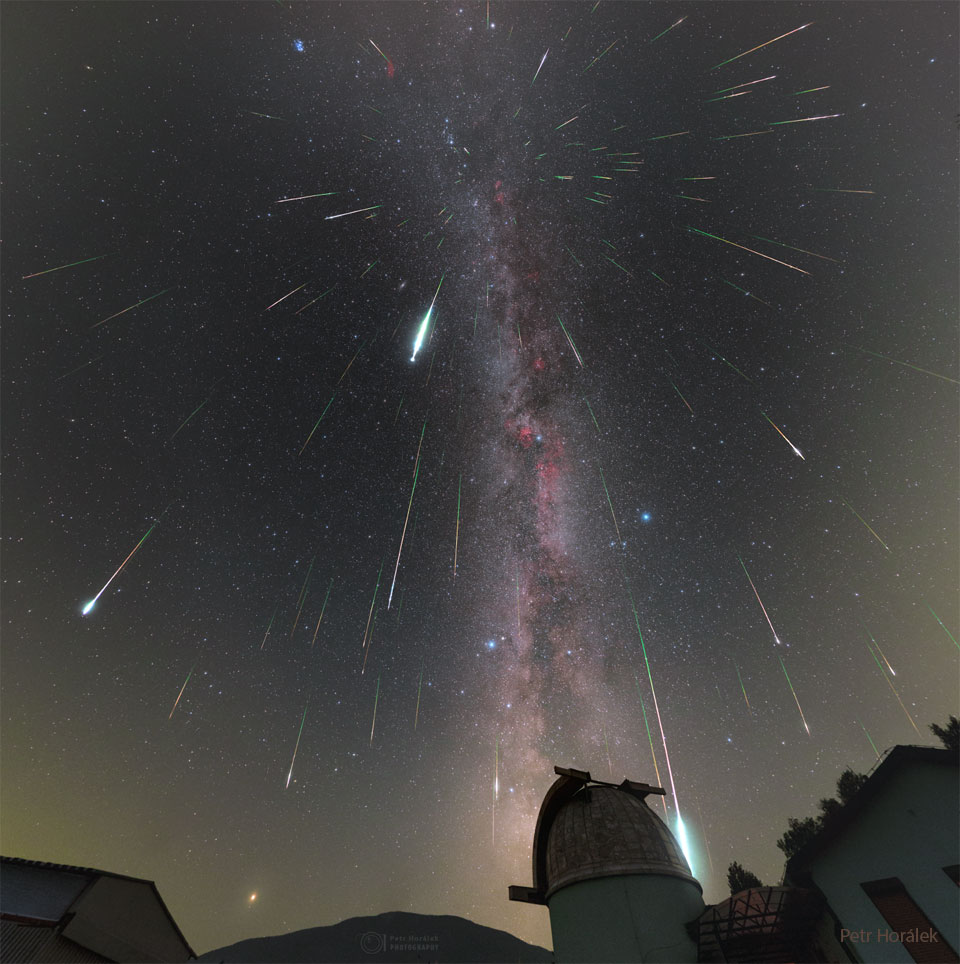
Tuesday, August 8, 2023


This is a good week to see meteors. Comet dust will rain down on planet Earth, streaking through dark skies during peak nights of the annual Perseid Meteor Shower. The featured composite image was taken during the 2018 Perseids from the Poloniny Dark Sky Park in Slovakia. The dome of the observatory in the foreground is on the grounds of Kolonica Observatory. Although the comet dust particles travel parallel to each other, the resulting shower meteors clearly seem to radiate from a single point on the sky in the eponymous constellation Perseus. The radiant effect is due to perspective, as the parallel tracks appear to converge at a distance, like train tracks. The Perseid Meteor Shower is expected to reach its highest peak on Saturday after midnight. Since a crescent Moon will rise only very late that night, cloudless skies will be darker than usual, making a high number of faint meteors potentially visible this year.

https://apod.nasa.gov/apod/ap230809.html ( August 09, 2023)

Commander Moonikin Campos Goes Sledding


In this image from April 2023, NASA’s Moonikin Campos enjoys a quiet moment during acceleration sled testing at Wright-Patterson Air Force Base in Ohio.

from NASA http://www.nasa.gov/image-feature/commander-moonikin-campos-goes-sledding
via IFTTT

ISS Daily Summary Report – 8/07/2023

iss-about-banner


Payloads: Cold Atom Lab (CAL): CAL science module 3B was installed at its temporary location and powered to maintain the health of the unit. Installation of this science module into CAL is planned for later this year. CAL produces clouds of atoms that are chilled to about one ten billionth of a degree above absolute … ...

August 07, 2023 at 12:00PM
From NASA: https://blogs.nasa.gov/stationreport/2023/08/07/iss-daily-summary-report-8-07-2023/

Monday, August 7, 2023


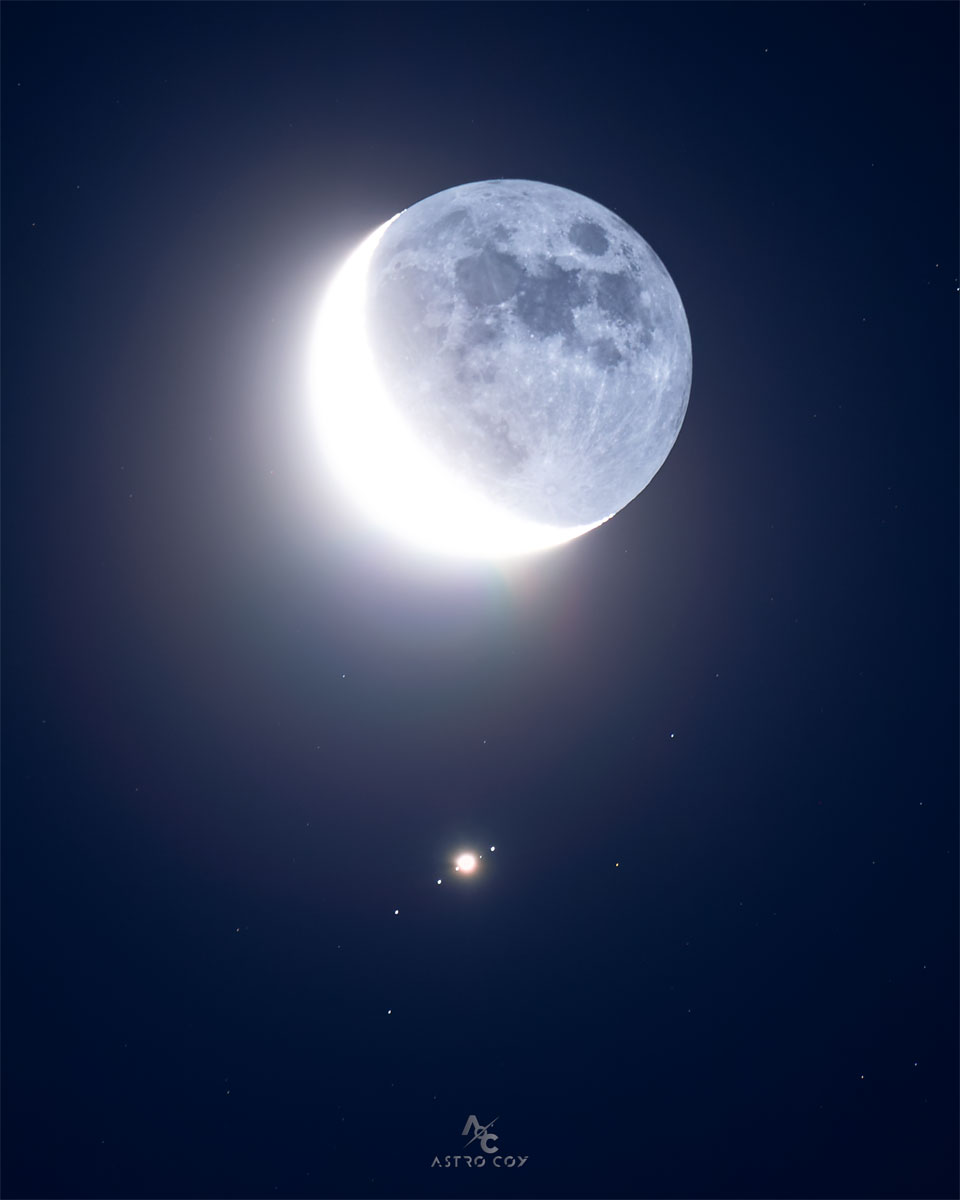
What's that below the Moon? Jupiter -- and its largest moons. Many skygazers across planet Earth enjoyed the close conjunction of Earth's Moon passing nearly in front of Jupiter in mid-June. The featured image is a single exposure of the event taken from Morón de la Frontera, Spain. The sunlit lunar crescent on the left is overexposed, while the Moon's night side, on the right, is only faintly illuminated by Earthshine. Lined up diagonally below the Moon, left to right, are Jupiter's bright Galilean satellites: Callisto, Ganymede, Io (hard to see as it is very near to Jupiter), and Europa. In fact, Callisto, Ganymede, and Io are larger than Earth's Moon, while Europa is only slightly smaller. NASA's robotic spacecraft Juno is currently orbiting Jupiter and made a close pass near Io only a week ago. If you look up in the night sky tonight, you will again see two of the brightest objects angularly close together -- because tonight is another Moon-Jupiter conjunction.

https://apod.nasa.gov/apod/ap230808.html ( August 08, 2023)

Testing New Wheels for the Moon


In this image from June 2023, an engineer watches a development model rover during a test for NASA’s Cooperative Autonomous Distributed Robotic Exploration (CADRE) technology demonstration in the Mars Yard at NASA’s Jet Propulsion Laboratory in Southern California.

from NASA http://www.nasa.gov/image-feature/testing-new-wheels-for-the-moon
via IFTTT

Testing New Wheels for Mars


In this image from June 2023, an engineer watches a development model rover during a test for NASA’s Cooperative Autonomous Distributed Robotic Exploration (CADRE) technology demonstration in the Mars Yard at NASA’s Jet Propulsion Laboratory in Southern California.

from NASA http://www.nasa.gov/image-feature/testing-new-wheels-for-mars
via IFTTT

Sunday, August 6, 2023


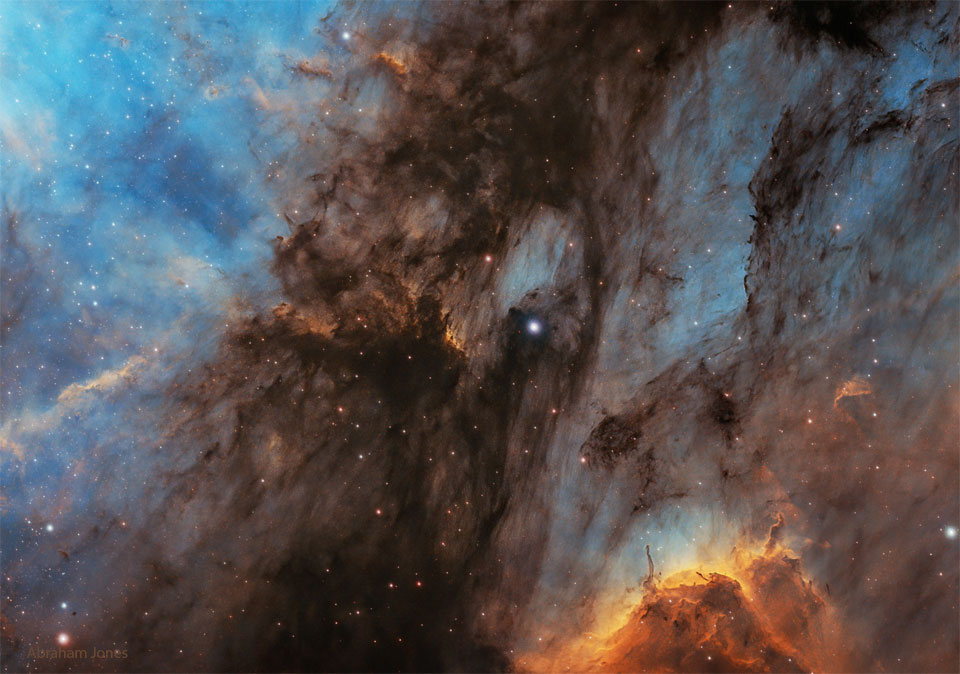
The Pelican Nebula is slowly being transformed. IC 5070 (the official designation) is divided from the larger North America Nebula by a molecular cloud filled with dark dust. The Pelican, however, receives much study because it is a particularly active mix of star formation and evolving gas clouds. The featured picture was produced in three specific colors -- light emitted by sulfur, hydrogen, and oxygen -- that can help us to better understand these interactions. The light from young energetic stars is slowly transforming the cold gas to hot gas, with the advancing boundary between the two, known as an ionization front, visible in bright orange on the right. Particularly dense tentacles of cold gas remain. Millions of years from now, the Pelican nebula, bounded by dark nebula LDN 935, might no longer be known as the Pelican, as the balance and placement of stars and gas will surely leave something that appears completely different.

https://apod.nasa.gov/apod/ap230807.html ( August 07, 2023)

Saturday, August 5, 2023


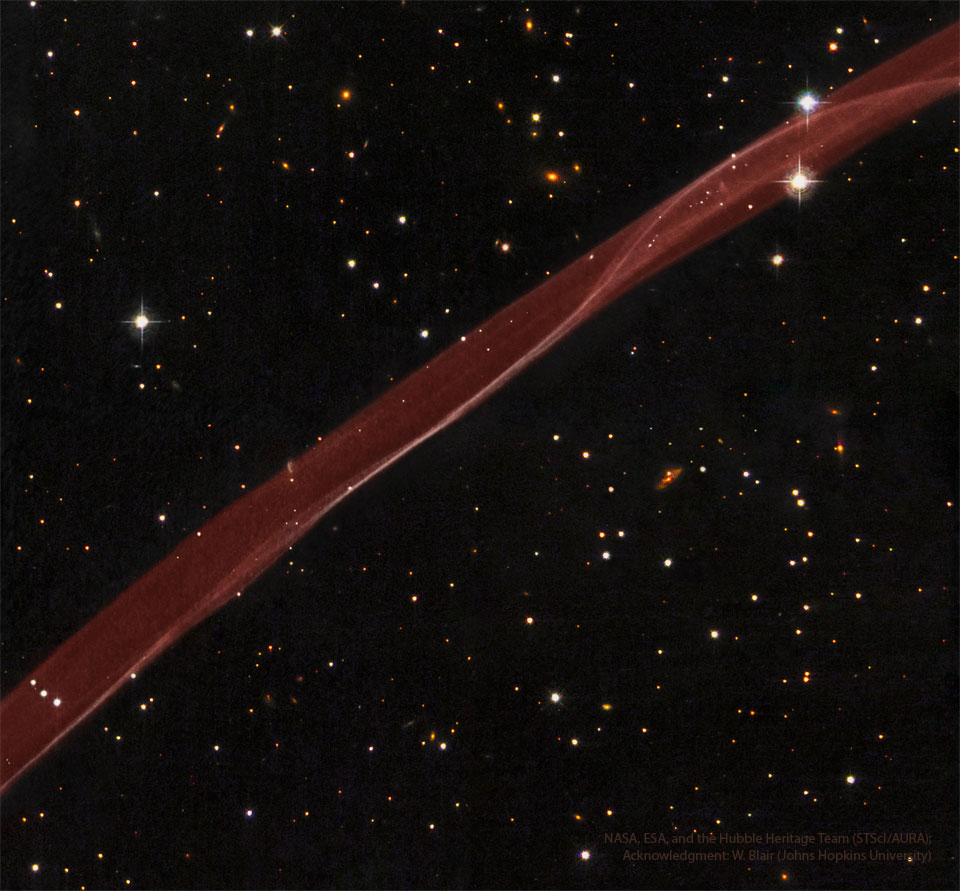
What created this unusual space ribbon? The answer: one of the most violent explosions ever witnessed by ancient humans. Back in the year 1006 AD, light reached Earth from a stellar explosion in the constellation of the Wolf (Lupus), creating a "guest star" in the sky that appeared brighter than Venus and lasted for over two years. The supernova, now cataloged at SN 1006, occurred about 7,000 light years away and has left a large remnant that continues to expand and fade today. Pictured here is a small part of that expanding supernova remnant dominated by a thin and outwardly moving shock front that heats and ionizes surrounding ambient gas. The supernova remnant SN 1006 now has a diameter of nearly 60 light years.

https://apod.nasa.gov/apod/ap230806.html ( August 06, 2023)

Friday, August 4, 2023

NGC 1360: The Robin's Egg Nebula


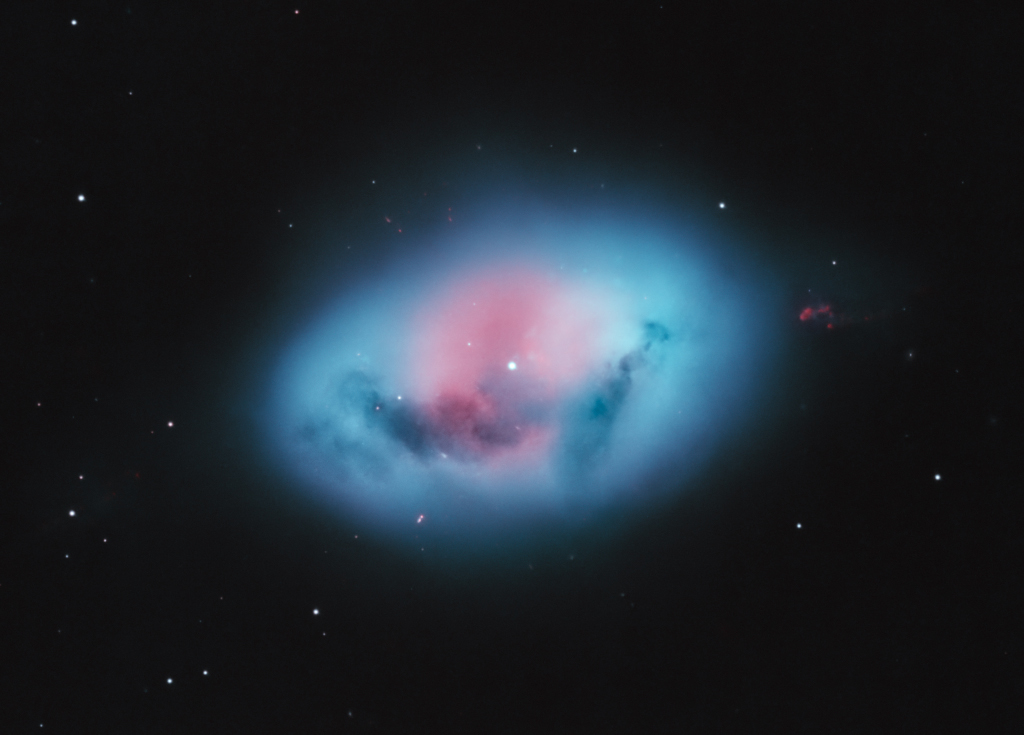
This pretty nebula lies some 1,500 light-years away, its shape and color in this telescopic view reminiscent of a robin's egg. The cosmic cloud spans about 3 light-years, nestled securely within the boundaries of the southern constellation Fornax. Recognized as a planetary nebula, egg-shaped NGC 1360 doesn't represent a beginning though. Instead it corresponds to a brief and final phase in the evolution of an aging star. In fact, visible at the center of the nebula, the central star of NGC 1360 is known to be a binary star system likely consisting of two evolved white dwarf stars, less massive but much hotter than the Sun. Their intense and otherwise invisible ultraviolet radiation has stripped away electrons from the atoms in their mutually surrounding gaseous shroud. The predominant blue-green hue of NGC 1360 seen here is the strong emission produced as electrons recombine with doubly ionized oxygen atoms.

https://apod.nasa.gov/apod/ap230805.html ( August 05, 2023)

ISS Daily Summary Report – 8/03/2023

iss-about-banner


Payloads: Food Physiology: The crew participated in a Food Physiology diet briefing with the science team on the ground. The Integrated Impact of Diet on Human Immune Response, the Gut Microbiota, and Nutritional Status During Adaptation to Spaceflight (Food Physiology) experiment is designed to characterize the key effects of an enhanced spaceflight diet on immune … ...

August 03, 2023 at 12:00PM
From NASA: https://blogs.nasa.gov/stationreport/2023/08/03/iss-daily-summary-report-8-03-2023/