Sunday, August 8, 2021

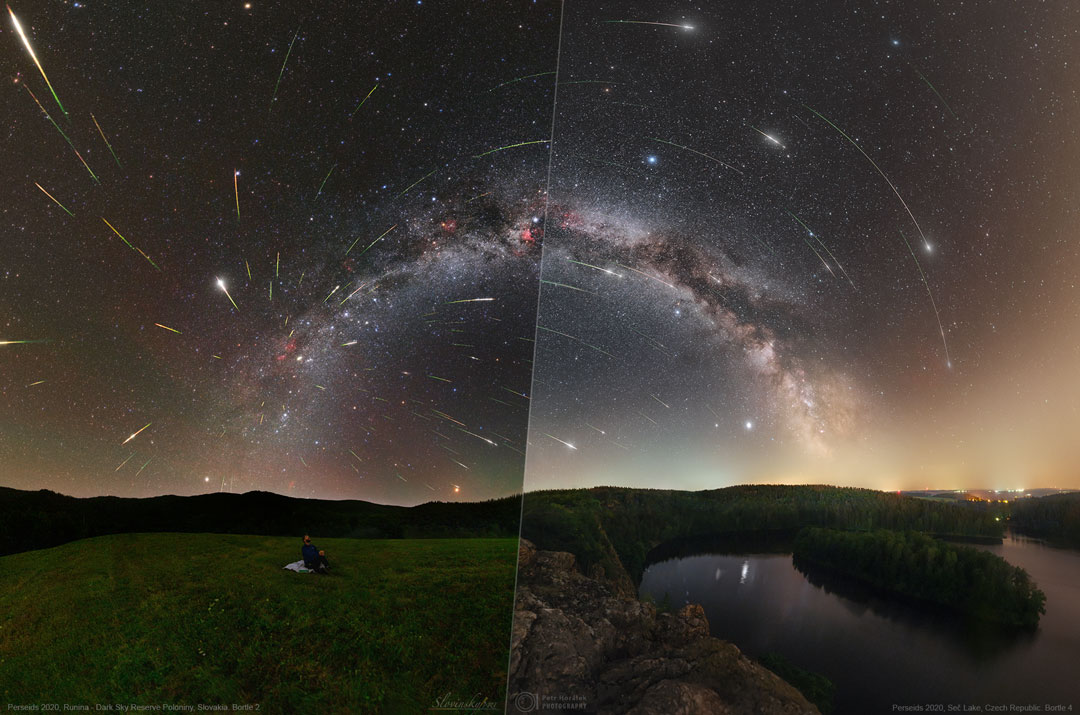
Perseus and the Lost Meteors


What's the best way to watch a meteor shower? This question might come up later this week when the annual Perseid Meteor Shower peaks. One thing that is helpful is a dark sky, as demonstrated in the featured composite image of last year's Perseids. Many more faint meteors are visible on the left image, taken through a very dark sky in Slovakia, than on the right image, taken through a moderately dark sky in the Czech Republic. The band of the Milky Way Galaxy bridges the two coordinated images, while the meteor shower radiant in the constellation of Perseus is clearly visible on the left. In sum, many faint meteors are lost through a bright sky. Light pollution is shrinking areas across our Earth with dark skies, although inexpensive ways to combat this might be implemented.

https://apod.nasa.gov/apod/ap210809.html ( August 09, 2021)

Saturday, August 7, 2021

A Perseid Below


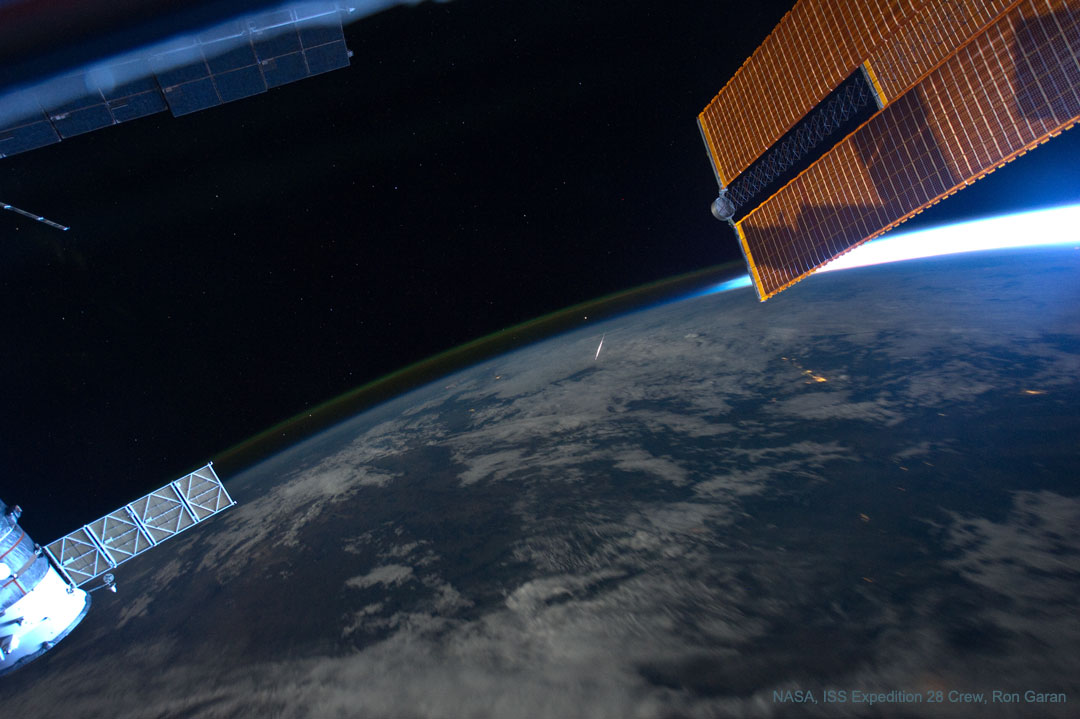
Earthlings typically watch meteor showers by looking up. But this remarkable view, captured on August 13, 2011 by astronaut Ron Garan, caught a Perseid meteor by looking down. From Garan's perspective onboard the International Space Station orbiting at an altitude of about 380 kilometers, the Perseid meteors streak below, swept up dust left from comet Swift-Tuttle heated to incandescence. The glowing comet dust grains are traveling at about 60 kilometers per second through the denser atmosphere around 100 kilometers above Earth's surface. In this case, the foreshortened meteor flash is right of frame center, below the curving limb of the Earth and a layer of greenish airglow, just below bright star Arcturus. Want to look up at a meteor shower? You're in luck, as the 2021 Perseids meteor shower peaks this week. This year, even relatively faint meteors should be visible through clear skies from a dark location as the bright Moon will mostly absent.

https://apod.nasa.gov/apod/ap210808.html ( August 08, 2021)

Friday, August 6, 2021

Jezero Crater: Raised Ridges in 3D


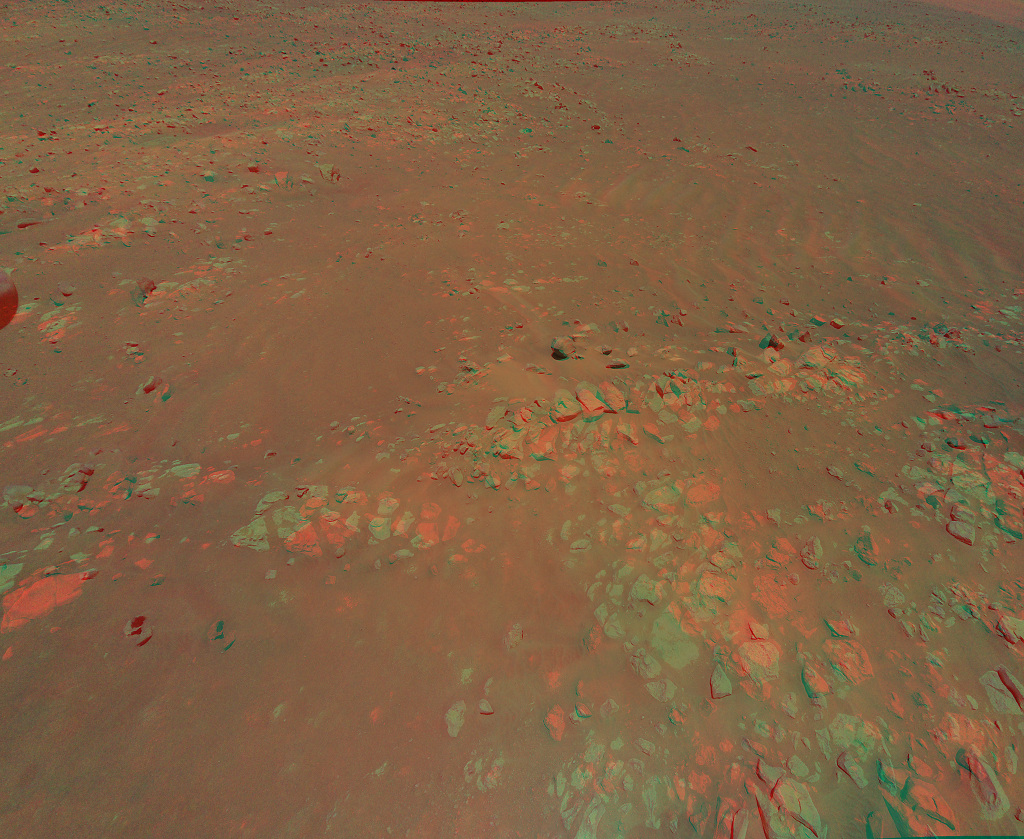
Get out your red-blue glasses and hover over the surface of Mars. Taken on July 24, the 3D color view is from the Mars Ingenuity Helicopter's 10th flight above the Red Planet. Two images from Ingenuity's color camera, both captured at an altitude of 12 meters (40 feet), but a few meters apart to provide a stereo perspective, were used to construct the color anaglyph. Ingenuity's stereo images were made at the request of the Mars Perseverance rover science team. The team is considering a visit to these raised ridges on the floor of Jezero Crater during Perseverance's first science campaign.

https://apod.nasa.gov/apod/ap210807.html ( August 07, 2021)

ISS Daily Summary Report – 8/05/2021

iss-about-banner


Payloads Cell Biology Experiment Facility (CBEF) humidifier installation:  The crew installed the CBEF Incubator Unit (IU) humidifier on the micro-gravity CBEF IU.  The Cell Biology Experiment Facility (CBEF) is a Japan Aerospace Exploration Agency (JAXA) subrack facility; it is an incubator with an artificial gravity generator. CBEF is housed in the Saibo (living cell) Experiment … ...

August 05, 2021 at 12:00PM
From NASA: https://blogs.nasa.gov/stationreport/2021/08/05/iss-daily-summary-report-8-05-2021/

Juno Celebrates 10 Years With a New View of Jovian Moon Ganymede


This infrared view of Jupiter’s icy moon Ganymede was obtained by the Jovian Infrared Auroral Mapper (JIRAM) instrument aboard NASA’s Juno spacecraft during its July 20, 2021, flyby.

from NASA http://www.nasa.gov/image-feature/juno-celebrates-10-years-with-a-new-view-of-jovian-moon-ganymede
via IFTTT

Thursday, August 5, 2021

Stars and Dust Across Corona Australis


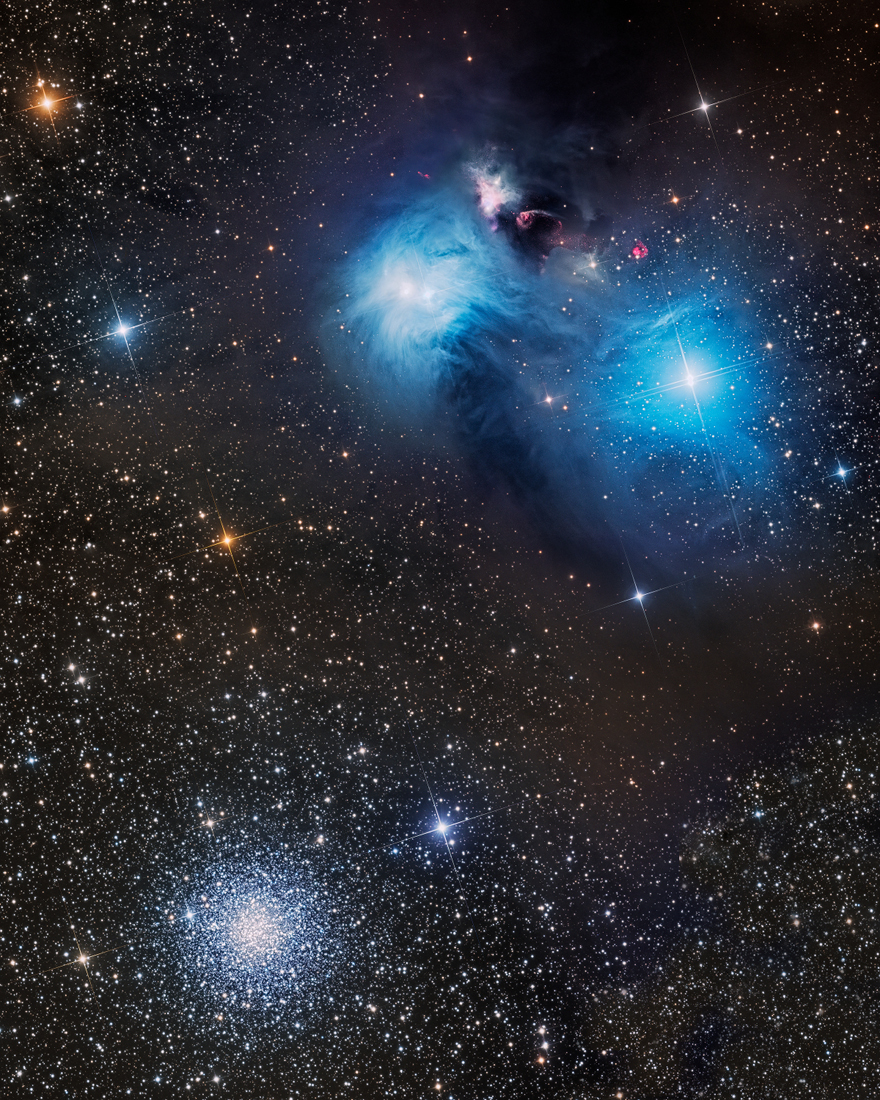
Cosmic dust clouds cross a rich field of stars in this telescopic vista near the northern boundary of Corona Australis, the Southern Crown. Less than 500 light-years away the dust clouds effectively block light from more distant background stars in the Milky Way. Top to bottom the frame spans about 2 degrees or over 15 light-years at the clouds' estimated distance. At top right is a group of lovely reflection nebulae cataloged as NGC 6726, 6727, 6729, and IC 4812. A characteristic blue color is produced as light from hot stars is reflected by the cosmic dust. The dust also obscures from view stars in the region still in the process of formation. Just above the bluish reflection nebulae a smaller NGC 6729 surrounds young variable star R Coronae Australis. To its right are telltale reddish arcs and loops identified as Herbig Haro objects associated with energetic newborn stars. Magnificent globular star cluster NGC 6723 is at bottom left in the frame. Though NGC 6723 appears to be part of the group, its ancient stars actually lie nearly 30,000 light-years away, far beyond the young stars of the Corona Australis dust clouds.

https://apod.nasa.gov/apod/ap210806.html ( August 06, 2021)

Curiosity Celebrates Another Year on Mars


In this self-portrait from 2018, NASA's Curiosity Mars rover sits atop Vera Rubin Ridge, which the rover had been investigating.

from NASA http://www.nasa.gov/image-feature/curiosity-celebrates-another-year-on-mars
via IFTTT

Wednesday, August 4, 2021

Tycho and Clavius


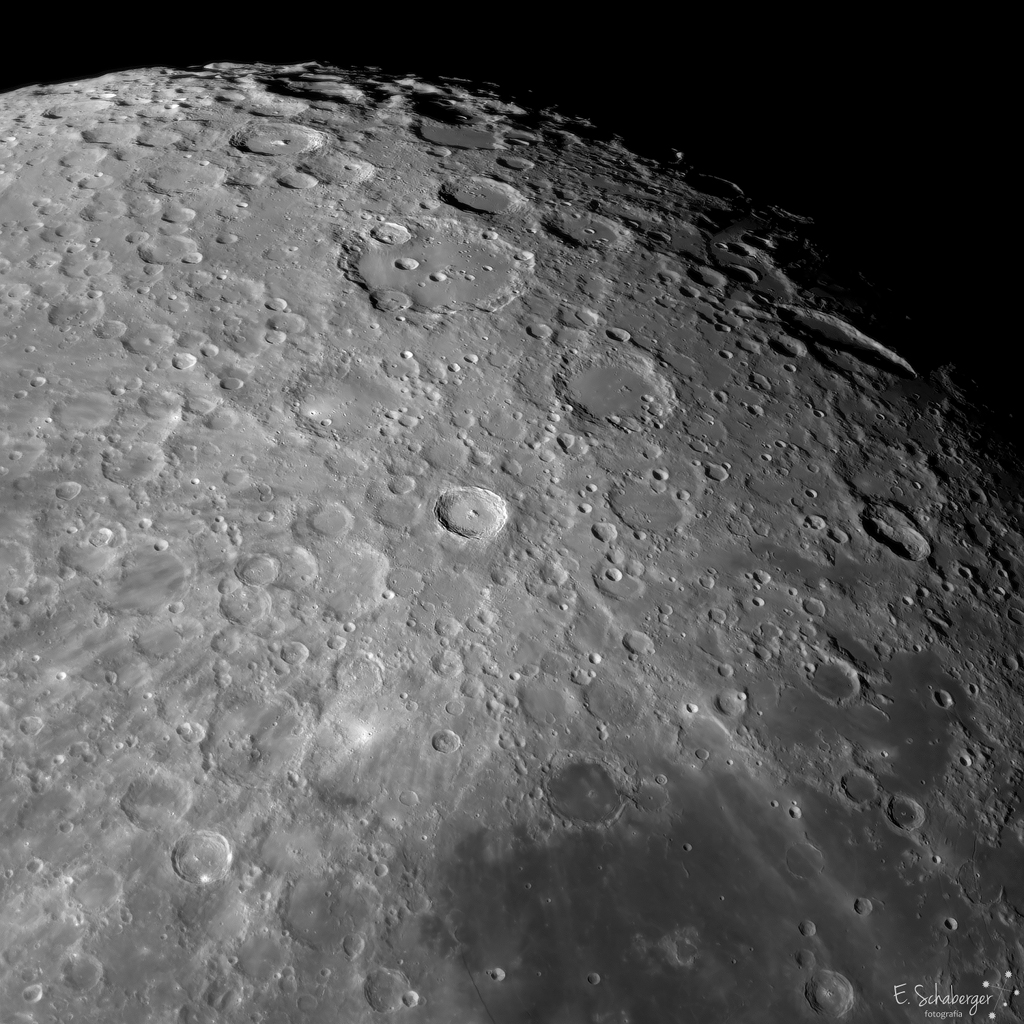
South is up in this detailed telescopic view across the Moon's rugged southern highlands. Captured on July 20, the lunar landscape features the Moon's young and old, the large craters Tycho and Clavius. About 100 million years young, Tycho is the sharp-walled 85 kilometer diameter crater near center, its 2 kilometer tall central peak in bright sunlight and dark shadow. Debris ejected during the impact that created Tycho still make it the stand out lunar crater when the Moon is near full, producing a highly visible radiating system of light streaks, bright rays that extend across much of the lunar near side. In fact, some of the material collected at the Apollo 17 landing site, about 2,000 kilometers away, likely originated from the Tycho impact. One of the oldest and largest craters on the Moon's near side, 225 kilometer diameter Clavius is due south (above) of Tycho. Clavius crater's own ray system resulting from its original impact event would have faded long ago. The old crater's worn walls and smooth floor are now overlayed by smaller craters from impacts that occurred after Clavius was formed. Observations by the Stratospheric Observatory for Infrared Astronomy (SOFIA) published in 2020 found water at Clavius. Of course both young Tycho and old Clavius craters are lunar locations in the science fiction epic 2001: A Space Odyssey.

https://apod.nasa.gov/apod/ap210805.html ( August 05, 2021)

ISS Daily Summary Report – 8/03/2021

iss-about-banner


Payloads Investigating the Structure of Paramagnetic Aggregates from Colloidal Ellipsoids (InSPACE-4):  The crew performed the steps necessary to initiate experiment runs, with a goal of working through runs 61-64. InSPACE-4 studies the assembly of tiny structures from colloids using magnetic fields. These structures change the properties of the assembled material, such as its mechanical response … ...

August 03, 2021 at 12:00PM
From NASA: https://blogs.nasa.gov/stationreport/2021/08/03/iss-daily-summary-report-8-03-2021/

The Menu Matters


An army marches on its stomach, the saying goes, and astronauts fly on theirs.

from NASA http://www.nasa.gov/image-feature/the-menu-matters
via IFTTT