Thursday, December 7, 2023

ISS Daily Summary Report – 12/06/2023

iss-about-banner


25th Anniversary of the ISS: Today marks the 25th anniversary of the USOS Unity node (Node 1) mating with the Russian Zarya module (FGB) marking the start of the ISS in orbit.  Designed and built by engineers thousands of miles apart and never joined together on Earth, the first two modules of the orbiting laboratory … ...

December 06, 2023 at 11:00AM
From NASA: https://blogs.nasa.gov/stationreport/2023/12/06/iss-daily-summary-report-12-06-2023/

Wednesday, December 6, 2023

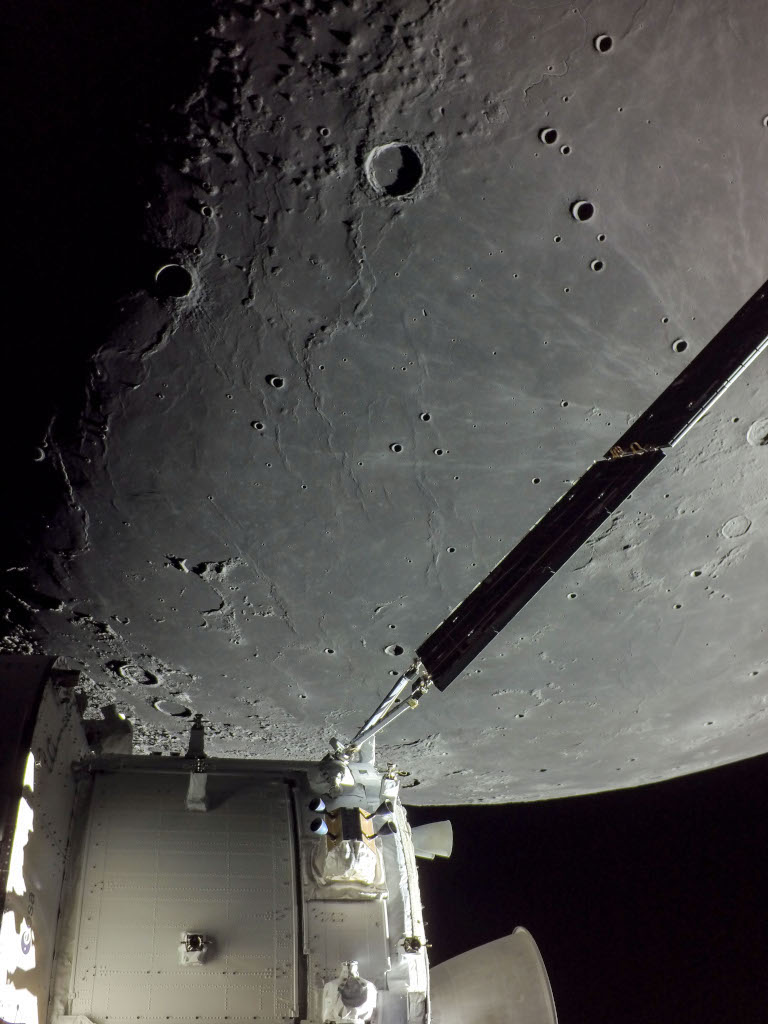
Orion and the Ocean of Storms


On December 5, 2022, a camera on board the uncrewed Orion spacecraft captured this view as Orion approached its return powered flyby of the Moon. Beyond one of Orion's extended solar arrays lies dark, smooth, terrain along the western edge of the Oceanus Procellarum. Prominent on the lunar nearside Oceanus Procellarum, the Ocean of Storms, is the largest of the Moon's lava-flooded maria. The lunar terminator, shadow line between lunar night and day, runs along the left of this frame. The 41 kilometer diameter crater Marius is top center, with ray crater Kepler peeking in at the edge, just right of the solar array wing. Kepler's bright rays extend to the north and west, reaching the dark-floored Marius. On December 11, 2022 the Orion spacecraft reached its home world. The historic Artemis 1 mission ended with Orion's successful splashdown in planet Earth's water-flooded Pacific Ocean.

https://apod.nasa.gov/apod/ap231207.html ( December 07, 2023)

ISS Daily Summary Report – 12/05/2023

iss-about-banner


Payloads: Actiwatch-Plus: Twelve Actiwatch Plus devices were removed from the USB Hubs connected to the Human Research Facility (HRF) PC on the HRF Rack. The crew verified that the device displays matched the expected state of the hardware, and returned them to each crewmember for use or had the units stowed in the Actiwatch Plus … ...

December 05, 2023 at 11:00AM
From NASA: https://blogs.nasa.gov/stationreport/2023/12/05/iss-daily-summary-report-12-05-2023/

Tuesday, December 5, 2023


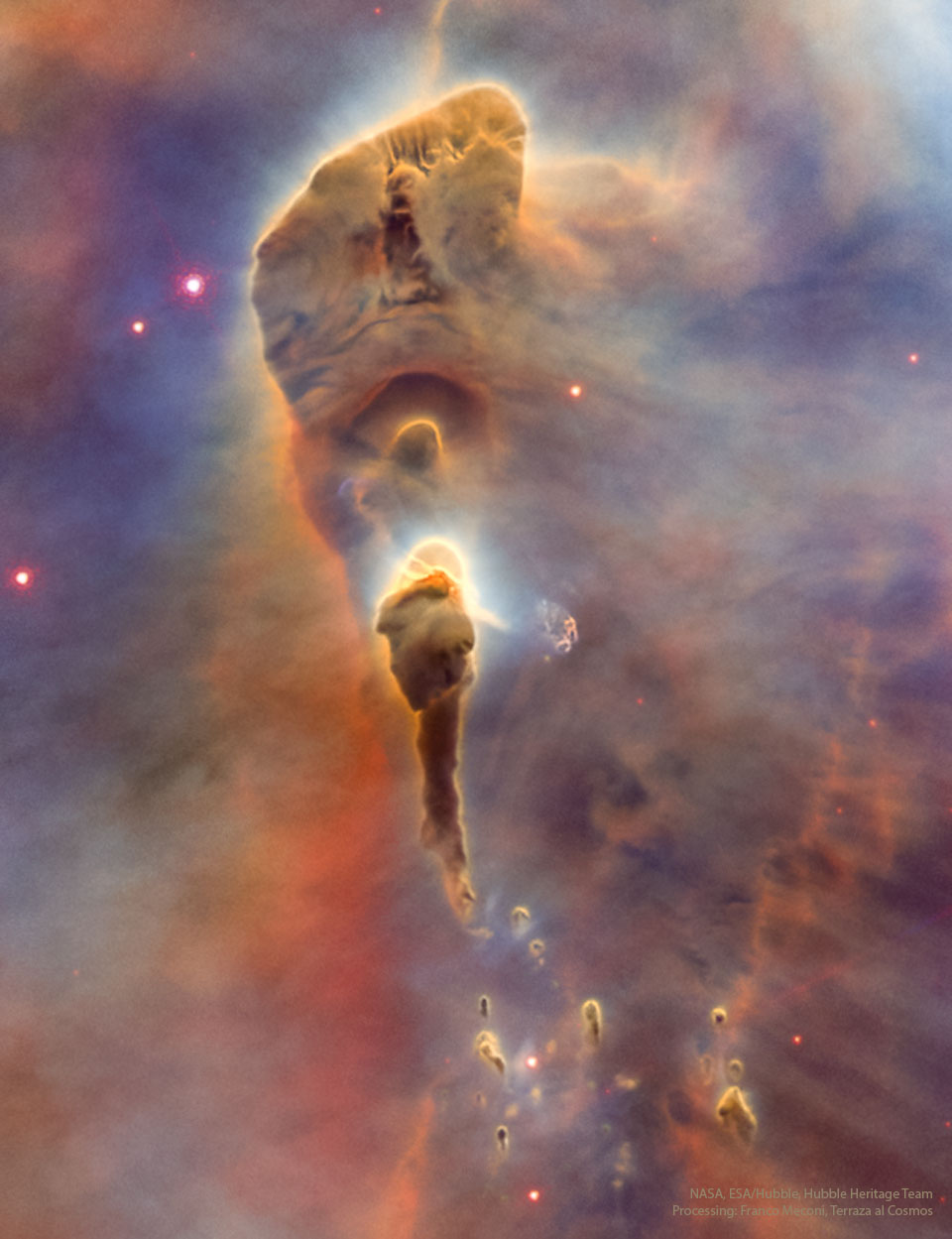
It's stars versus dust in the Carina Nebula and the stars are winning. More precisely, the energetic light and winds from massive newly formed stars are evaporating and dispersing the dusty stellar nurseries in which they formed. Located in the Carina Nebula and inside a region known informally as Mystic Mountain, these pillars' appearance is dominated by opaque brown dust even though it is composed mostly of clear hydrogen gas. Even though some of the dust pillars look like torches, their ends are not on fire -- rather, they are illuminated by nearby stars. About 7,500 light-years distant, the featured image was taken with the Hubble Space Telescope and highlights an interior region of Carina known as HH1066 which spans nearly a light year. Within a few million years, the stars will likely win out completely and the dust torches will completely evaporate.

https://apod.nasa.gov/apod/ap231206.html ( December 06, 2023)

ISS Daily Summary Report – 12/04/2023

iss-about-banner


86 Progress (86P) Docking: Following the completion of a 34-orbit rendezvous, 86P successfully docked to the MRM-2 Zenith port on Sunday morning at 5:25 AM CT. The crew then performed leak checks, opened hatches, and began unloading cargo. Carrying food, fuel, and supplies, 86P launched from the Baikonur Cosmodrome on Friday, December 1st at 3:25 … ...

December 04, 2023 at 11:00AM
From NASA: https://blogs.nasa.gov/stationreport/2023/12/04/iss-daily-summary-report-12-04-2023/

Monday, December 4, 2023


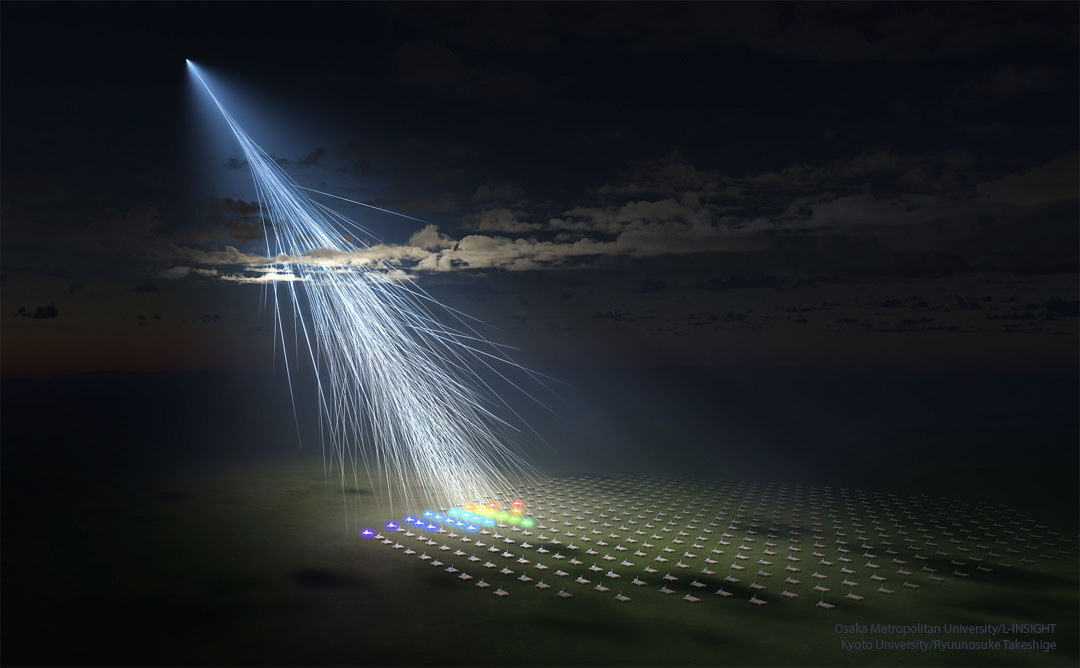
It was one of the most energetic particles ever known to strike the Earth -- but where did it come from? Dubbed Amaterasu after the Shinto sun goddess, this particle, as do all cosmic rays that strike the Earth's atmosphere, caused an air shower of electrons, protons, and other elementary particles to spray down onto the Earth below. In the featured illustration, a cosmic ray air shower is pictured striking the Telescope Array in Utah, USA, which recorded the Amaterasu event in 2021 May. Cosmic ray air showers are common enough that you likely have been in a particle spray yourself, although you likely wouldn't have noticed. The origin of this energetic particle, likely the nucleus of an atom, remains a mystery in two ways. First, it is not known how any single particle or atomic nucleus can practically acquire so much energy, and second, attempts to trace the particle back to where it originated did not indicate any likely potential source.

https://apod.nasa.gov/apod/ap231205.html ( December 05, 2023)

Sunday, December 3, 2023


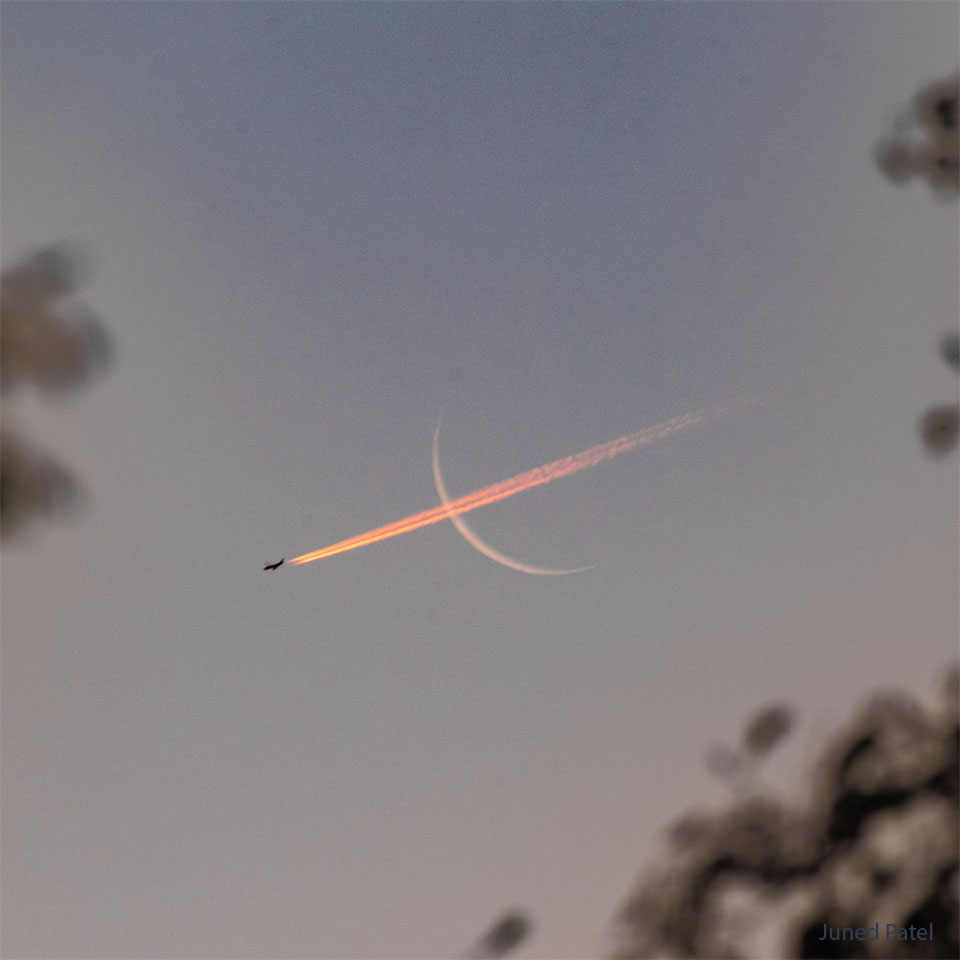
No, the Moon is not a bow, and no, it did not shoot out a plane like an arrow. What is pictured is a chance superposition. The plane's contrail would normally appear white, but the large volume of air toward the rising Sun preferentially knocked away blue light, not only making the sky blue, but giving the reflected trail a bright red hue. Far in the distance, well behind the plane, the crescent Moon also appears slightly reddened. Captured early last month from Bolton, UK, the featured image was taken so soon after sunrise that the plane was sunlit from below, as was its contrail. Within minutes, unfortunately, the impromptu sky show ended. The plane moved out of sight. The Moon kept rising but became harder to see through a brightening sky. And the contrail gradually dispersed.

https://apod.nasa.gov/apod/ap231204.html ( December 04, 2023)

Saturday, December 2, 2023


These people are not in danger. What is coming down from the left is just the Moon, far in the distance. Luna appears so large here because she is being photographed through a telescopic lens. What is moving is mostly the Earth, whose spin causes the Moon to slowly disappear behind Mount Teide, a volcano in the Canary Islands off the northwest coast of Africa. The people pictured are 16 kilometers away and many are facing the camera because they are watching the Sun rise behind the photographer. It is not a coincidence that a full moon rises just when the Sun sets because the Sun is always on the opposite side of the sky from a full moon. The featured video was made in 2018 during the full Milk Moon. The video is not time-lapse -- this was really how fast the Moon was setting.

https://apod.nasa.gov/apod/ap231203.html ( December 03, 2023)

Friday, December 1, 2023

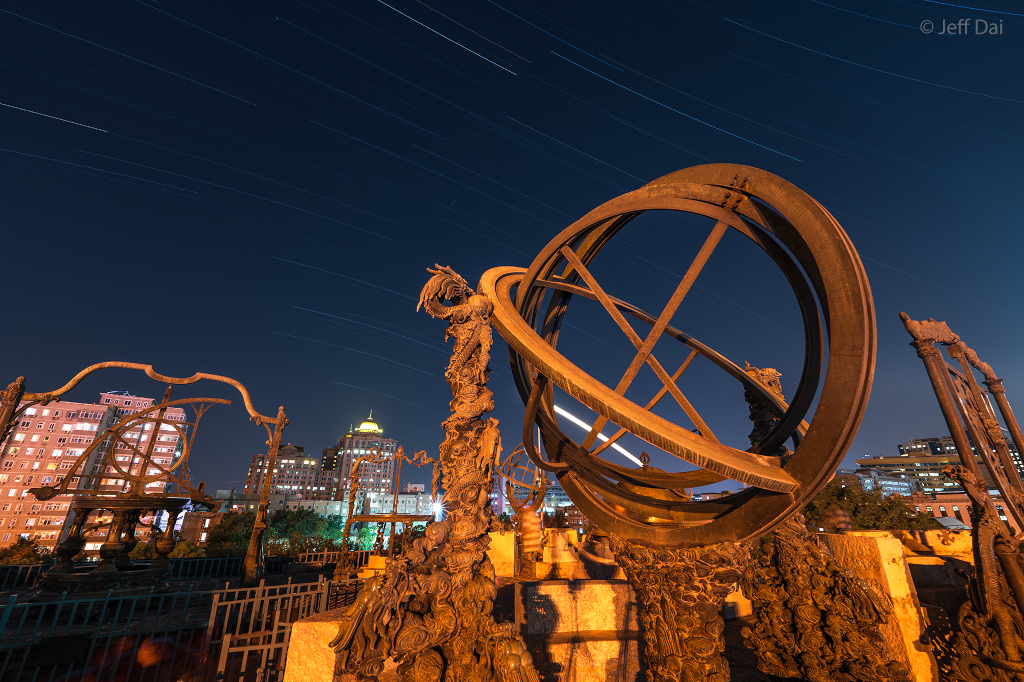
Startrails over Beijing Ancient Observatory


You can take a subway ride to visit this observatory in Beijing, China but you won't find any telescopes there. Starting in the 1400s astronomers erected devices at the Beijing Ancient Observatory site to enable them to accurately measure and track the positions of naked-eye stars and planets. Some of the large, ornate astronomical instruments are still standing. You can even see stars from the star observation platform today, but now only the very brightest celestial beacons are visible against the city lights. In this time series of exposures from a camera fixed to a tripod to record graceful arcing startrails, the brightest trail is actually the Moon. Its broad arc is seen behind the ancient observatory's brass armillary sphere. Compare this picture from the Beijing Ancient Observatory taken in September 2023 to one taken in 1895.

https://apod.nasa.gov/apod/ap231202.html ( December 02, 2023)

ISS Daily Summary Report – 11/30/2023

iss-about-banner


Payloads: BioFabrication Facility (BFF): Cardiac Tissue Cassettes were inserted into the BFF and printing of cardiac cells was initiated. Using 3D biological printers to produce usable human organs has long been a dream of scientists and doctors around the globe; however, printing the tiny, complex structures found inside human organs, such as capillary structures, has … ...

November 30, 2023 at 11:00AM
From NASA: https://blogs.nasa.gov/stationreport/2023/11/30/iss-daily-summary-report-11-30-2023/