Friday, July 7, 2023

ISS Daily Summary Report 7/06/2023

iss-about-banner


Payloads: Combustion Integration Rack (CIR): The crew gained access to the CIR, and replaced the CIR input/output processor (IOP). The current IOP has a failed cooling fan, which is needed to support CIR operations. CIR includes an optics bench, combustion chamber, fuel and oxidizer control, and five different cameras for performing combustion investigations in microgravity. … ...

July 06, 2023 at 12:00PM
From NASA: https://blogs.nasa.gov/stationreport/2023/07/06/iss-daily-summary-report-7-06-2023/

Thursday, July 6, 2023

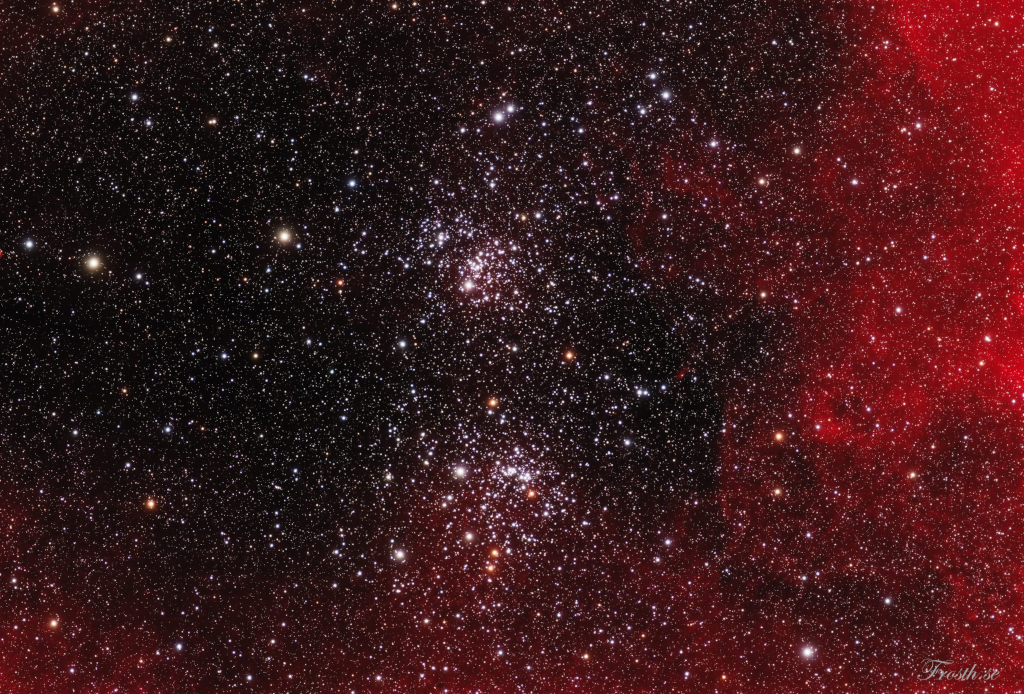
The Double Cluster in Perseus


This pretty starfield spans about three full moons (1.5 degrees) across the heroic northern constellation of Perseus. It holds the famous pair of open star clusters, h and Chi Persei. Also cataloged as NGC 869 (top) and NGC 884, both clusters are about 7,000 light-years away and contain stars much younger and hotter than the Sun. Separated by only a few hundred light-years, the clusters are both 13 million years young based on the ages of their individual stars, evidence that they were likely a product of the same star-forming region. Always a rewarding sight in binoculars, the Double Cluster is even visible to the unaided eye from dark locations.

https://apod.nasa.gov/apod/ap230707.html ( July 07, 2023)

The Last Rays of an Orbital Sunset


The last rays of an orbital sunset begin fading in Earth's atmosphere silhouetting the cloud tops.

from NASA http://www.nasa.gov/image-feature/the-last-rays-of-an-orbital-sunset
via IFTTT

Wednesday, July 5, 2023

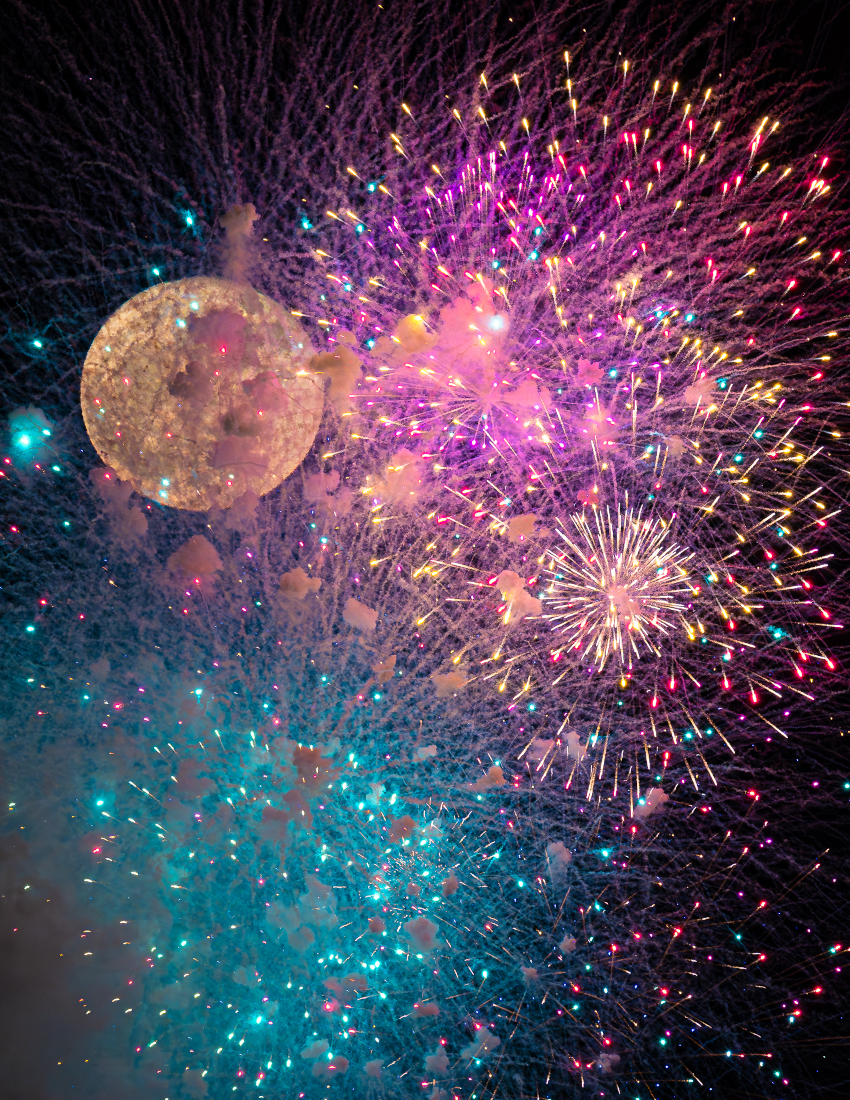
Fireworks vs Supermoon


On July 4, an almost Full Moon rose in planet Earth's evening skies. Also known as a Buck Moon, the full lunar phase (full on July 3 at 11:39 UTC) was near perigee, the closest point in the Moon's almost monthly orbit around planet Earth. That qualified this July's Full Moon as a supermoon, the first of four supermoons in 2023. Seen from Cocoa Beach along Florida's Space Coast on July 4, any big, bright, beautiful Full Moon would still have to compete for attention though. July's super-moonrise was captured here against a super-colorful fireworks display.

https://apod.nasa.gov/apod/ap230706.html ( July 06, 2023)

NASAs X-59 Makes a Critical Move


NASA’s X-59 research aircraft moves from its construction site to the flight line – or the space between the hangar and the runway – at Lockheed Martin Skunk Works in Palmdale, California, on June 16, 2023.

from NASA http://www.nasa.gov/image-feature/nasa-s-x-59-makes-a-critical-move
via IFTTT

Tuesday, July 4, 2023

Untitled


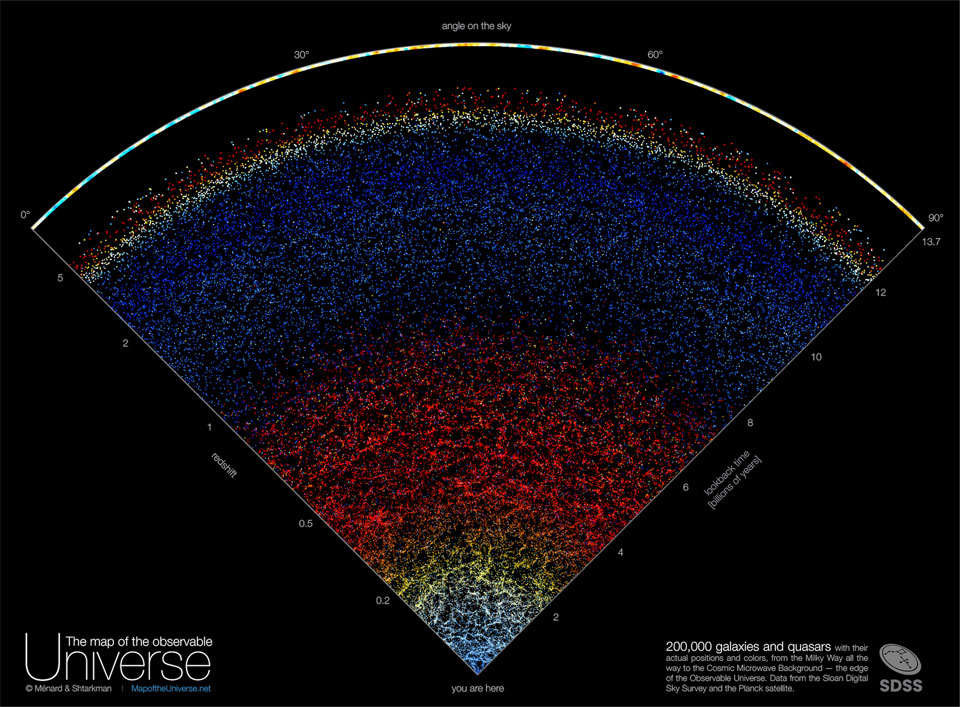
What if you could see out to the edge of the observable universe? You would see galaxies, galaxies, galaxies, and then, well, quasars, which are the bright centers of distant galaxies. To expand understanding of the very largest scales that humanity can see, a map of the galaxies and quasars found by the Sloan Digital Sky Survey from 2000 to 2020 -- out to near the edge of the observable universe -- has been composed. Featured here, one wedge from this survey encompasses about 200,000 galaxies and quasars out beyond a look-back time of 12 billion years and cosmological redshift 5. Almost every dot in the nearby lower part of the illustration represents a galaxy, with redness indicating increasing redshift and distance. Similarly, almost every dot on the upper part represents a distant quasar, with blue-shaded dots being closer than red. Clearly shown among many discoveries, gravity between galaxies has caused the nearby universe to condense and become increasingly more filamentary than the distant universe.

https://apod.nasa.gov/apod/ap230705.html ( July 05, 2023)

Monday, July 3, 2023

Untitled


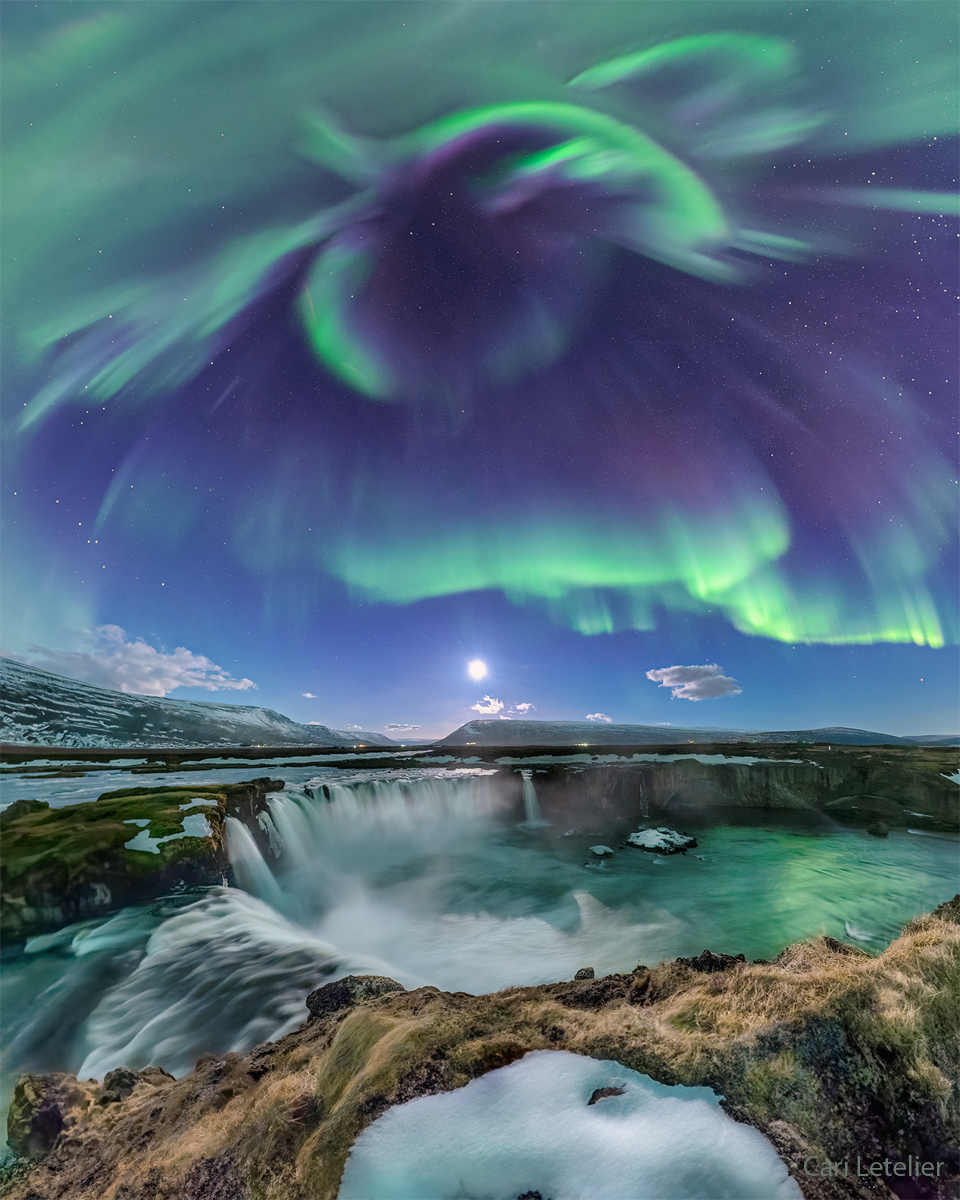
It seemed like the sky exploded. The original idea was to photograph an aurora over a waterfall. After waiting for hours under opaque clouds, though, hope was running out. Others left. Then, unexpectedly, the clouds moved away. Suddenly, particles from a large solar magnetic storm were visible impacting the Earth's upper atmosphere with full effect. The night sky filled with colors and motion in a thrilling auroral display. Struggling to steady the camera from high Earthly winds, the 34 exposures that compose the featured image were taken. The resulting featured composite image shows the photogenic Godafoss (Goðafoss) waterfall in northern Iceland in front of a very active aurora in late February. The solar surface explosion that expelled the energetic particles occurred a few days before. Our Sun is showing an impressive amount of surface activity as it approaches solar maximum, indicating that more impressive auroras are likely to appear in Earth's northern and southern sky over the next few years.

https://apod.nasa.gov/apod/ap230704.html ( July 04, 2023)

A Full Moon Illuminates Artemis I


A full moon was visible behind the Artemis I SLS (Space Launch System) rocket and Orion spacecraft at Launch Complex 39B at NASA's Kennedy Space Center in Florida on June 14, 2022. The first in an increasingly complex series of missions, Artemis I tested SLS and Orion as an integrated system prior to crewed flights to the Moon.

from NASA http://www.nasa.gov/image-feature/a-full-moon-illuminates-artemis-i
via IFTTT

Sunday, July 2, 2023

Untitled


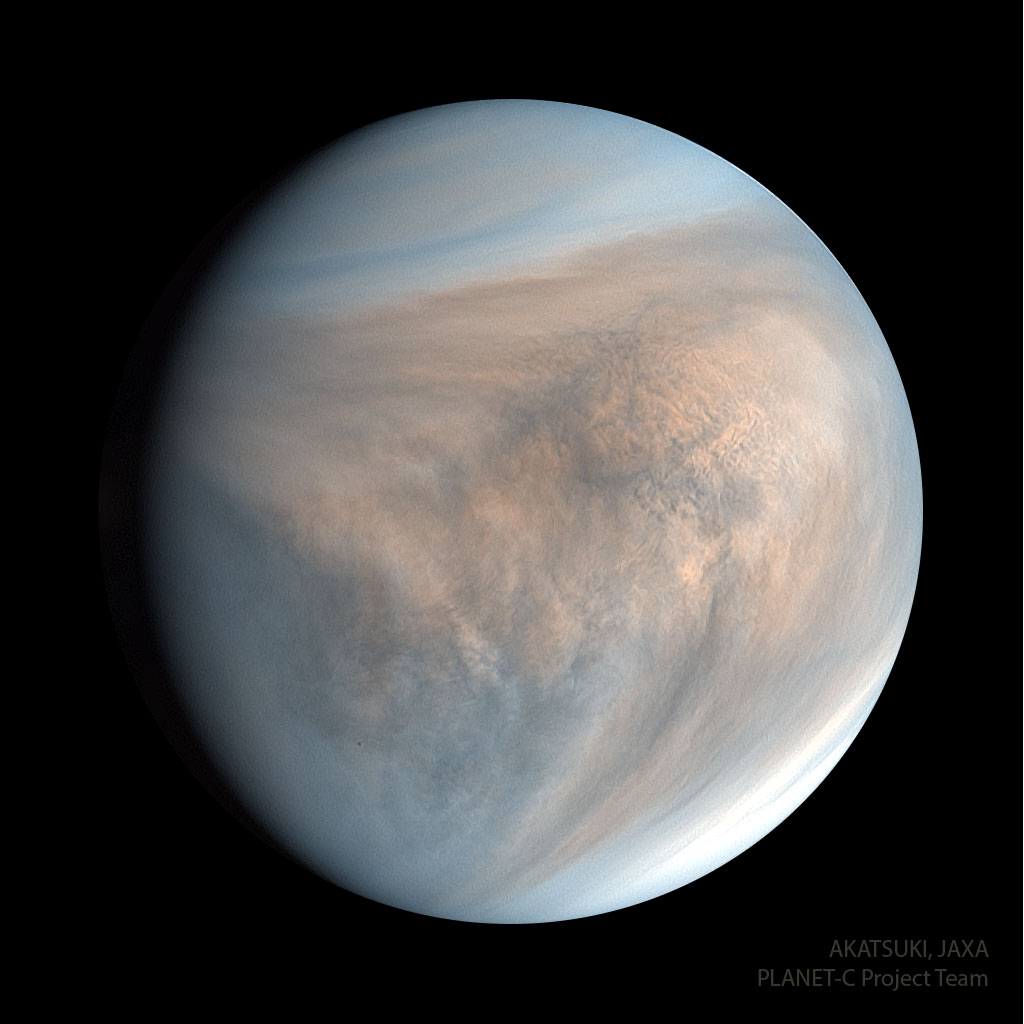
Why is Venus so different from Earth? To help find out, Japan launched the robotic Akatsuki spacecraft which entered orbit around Venus late in 2015 after an unplanned five-year adventure around the inner Solar System. Even though Akatsuki was past its original planned lifetime, the spacecraft and instruments were operating so well that much of its original mission was reinstated. Also known as the Venus Climate Orbiter, Akatsuki's instruments investigated unknowns about Earth's sister planet, including whether volcanoes are still active, whether lightning occurs in the dense atmosphere, and why wind speeds greatly exceed the planet's rotation speed. In the featured image taken by Akatsuki's UVI camera, the day-side of Venus is seen shown with planet-scale V-shaped cloud pattern. The image displays three ultraviolet colors and indicates a dip in the relative abundance of sulfur dioxide shown in faint blue. Analyses of Akatsuki images and data has shown, among other discoveries, that Venus has equatorial jet similar to Earth's jet stream.

https://apod.nasa.gov/apod/ap230703.html ( July 03, 2023)

Saturday, July 1, 2023

Untitled


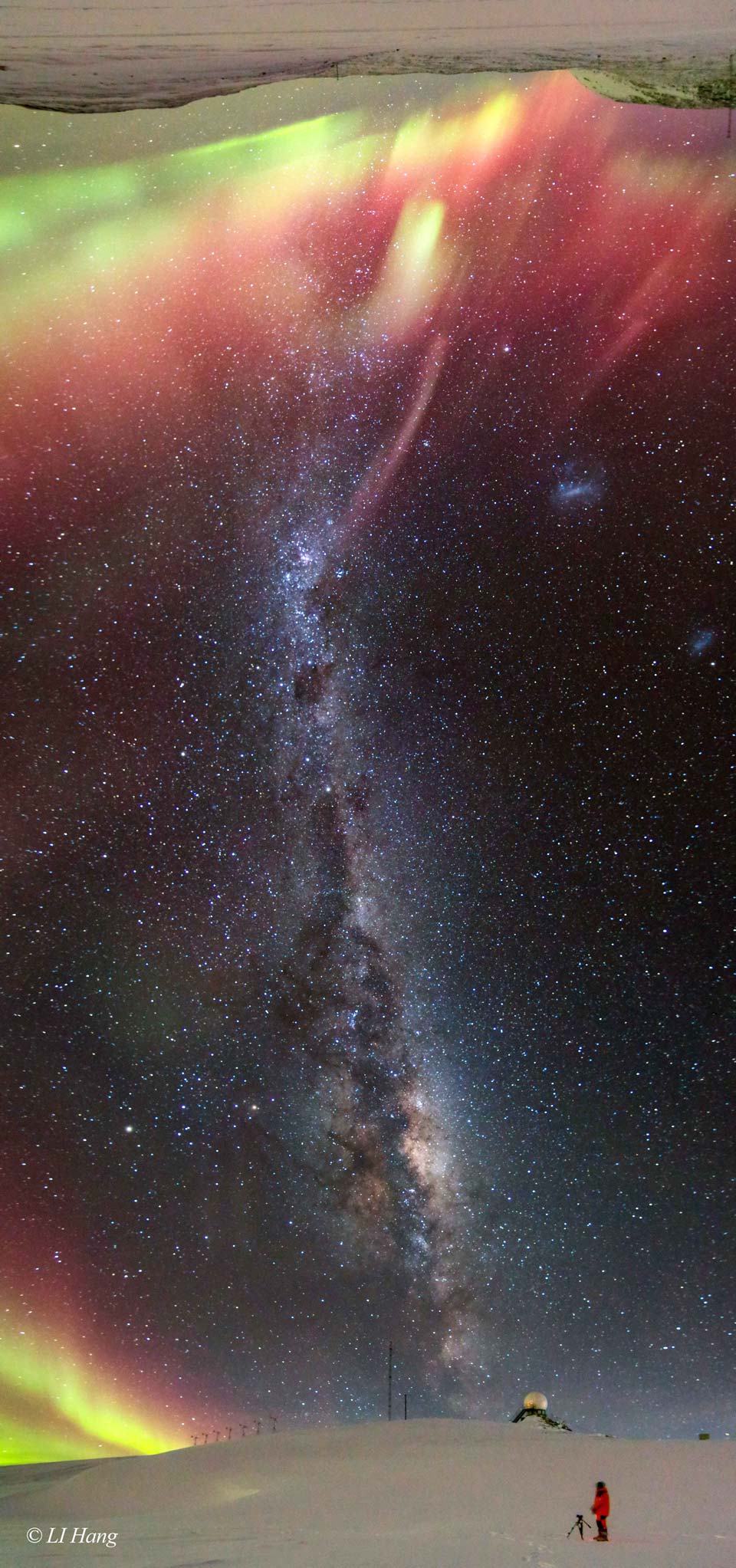
It was one of the better skies of this long night. In parts of Antarctica, not only is it winter, but the Sun can spend weeks below the horizon. At China's Zhongshan Station, people sometimes venture out into the cold to photograph a spectacular night sky. The featured image from one such outing was taken in mid-July of 2015, just before the end of this polar night. Pointing up, the wide angle lens captured not only the ground at the bottom, but at the top as well. In the foreground, a colleague is taking pictures. In the distance, a spherical satellite receiver and several windmills are visible. Numerous stars dot the night sky, including Sirius and Canopus. Far in the background, stretching overhead from horizon to horizon, is the central band of our Milky Way Galaxy. Even further in the distance, visible as extended smudges near the top, are the Large and Small Magellanic Clouds, satellite galaxies near our huge Milky Way Galaxy.

https://apod.nasa.gov/apod/ap230702.html ( July 02, 2023)