Friday, May 5, 2023

Eyes on Ice


Curtis Flack (left) and Paul von Hardenberg inspect the ice formation on the spinner of an Advanced Air Mobility proprotor model tested in the Icing Research Tunnel at NASA’s Glenn Research Center in Cleveland.

from NASA http://www.nasa.gov/aeroresearch/eyes-on-ice
via IFTTT

ISS Daily Summary Report – 5/04/2023

iss-about-banner


RS Extravehicular Activity (EVA) #57: Yesterday, ISS CDR Sergey Prokopyev (EV1) and FE-2 Dmitry Petelin (EV2) performed RS EVA #57 with Andrey Fedyaev supporting as the Intravehicular (IV) operator. The trio performed a multitude of tasks concurrently with ERA Mission 7 in order to relocate the Multipurpose Laboratory Module (MLM) science airlock from its stored … ...

May 04, 2023 at 12:00PM
From NASA: https://blogs.nasa.gov/stationreport/2023/05/04/iss-daily-summary-report-5-04-2023/

Thursday, May 4, 2023

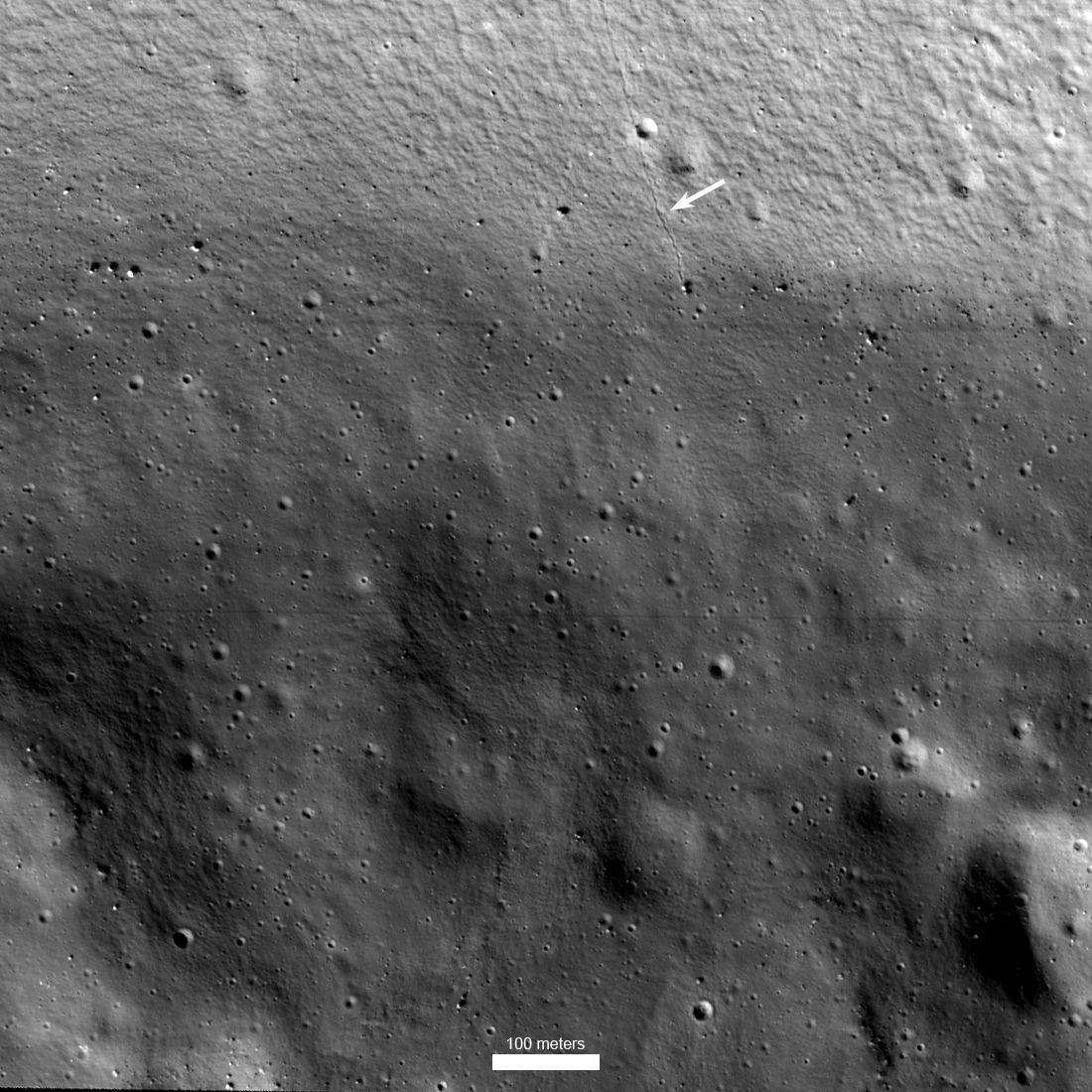
Shackleton from ShadowCam


Shackleton crater lies at the lunar south pole. Peaks along the 21 kilometer diameter are in sunlight, but Shackleton's floor is in dark permanent shadow. Still, this image of the shadowed rim wall and floor of Shackleton crater was captured from NASA's ShadowCam, an instrument on board the Korea Pathfinder Lunar Orbiter (KPLO) launched in August 2022. About 200 times more sensitive than, for example, the Lunar Reconnaissance Orbiter's Narrow Angle Camera, ShadowCam was designed image the permanently shadowed regions of the lunar surface. Avoiding direct sunlight, those regions are expected to be reservoirs of water-ice and other volatiles deposited by ancient cometary impacts and useful to future Moon missions. Of course, the permanently shadowed regions are still illuminated by reflections of sunlight from nearby lunar terrain. In this stunningly detailed ShadowCam image, an arrow marks the track made by a single boulder rolling down Shackleton crater's wall. The image scale is indicated at the bottom of the frame.

https://apod.nasa.gov/apod/ap230505.html ( May 05, 2023)

Exploring the Cosmos Together


Miloslav Stašek, Ambassador of the Czech Republic to the United States (left), Foreign Affairs Minister for the Czech Republic, Jan Lipavský (second from left), NASA Administrator Bill Nelson (second from right), and Acting Assistant Secretary of State for Oceans and International Environmental and Scientific Affairs Jennifer R. Littlejohn (right),

from NASA http://www.nasa.gov/image-feature/exploring-the-cosmos-together
via IFTTT

Wednesday, May 3, 2023

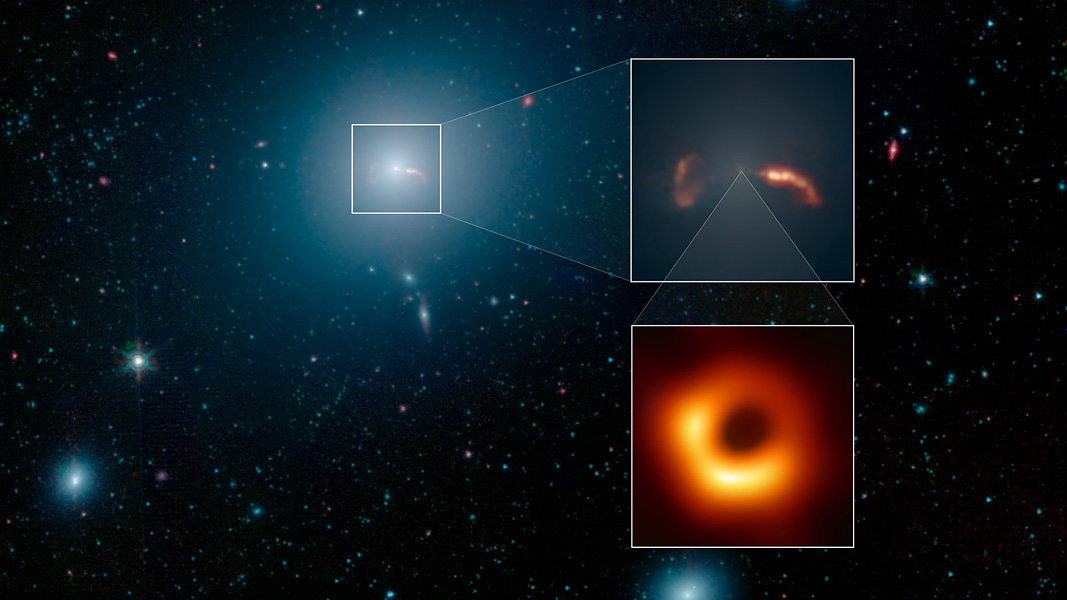
The Galaxy, the Jet, and a Famous Black Hole


Bright elliptical galaxy Messier 87 (M87) is home to the supermassive black hole captured in 2017 by planet Earth's Event Horizon Telescope in the first ever image of a black hole. Giant of the Virgo galaxy cluster about 55 million light-years away, M87 is the large galaxy rendered in blue hues in this infrared image from the Spitzer Space telescope. Though M87 appears mostly featureless and cloud-like, the Spitzer image does record details of relativistic jets blasting from the galaxy's central region. Shown in the inset at top right, the jets themselves span thousands of light-years. The brighter jet seen on the right is approaching and close to our line of sight. Opposite, the shock created by the otherwise unseen receding jet lights up a fainter arc of material. Inset at bottom right, the historic black hole image is shown in context, at the center of giant galaxy and relativistic jets. Completely unresolved in the Spitzer image, the supermassive black hole surrounded by infalling material is the source of enormous energy driving the relativistic jets from the center of active galaxy M87. The Event Horizon Telescope image of M87 has now been enhanced to reveal a sharper view of the famous supermassive black hole.

https://apod.nasa.gov/apod/ap230504.html ( May 04, 2023)

Hubble Captures Extraordinarily Bright Interacting Galaxies


This new image from NASA’s Hubble Space Telescope shows interacting galaxies known as AM 1214-255.

from NASA http://www.nasa.gov/image-feature/goddard/2023/hubble-captures-extraordinarily-bright-interacting-galaxies
via IFTTT

ISS Daily Summary Report – 5/02/2023

iss-about-banner


Payloads: BioFabrication Facility (BFF): The crew performed a series of steps designed to unclog the smart pump syringe components, and installed Bio-Ink Syringes inside the BFF. Using 3D biological printers to produce usable human organs has long been a dream of scientists and doctors around the globe. However, printing the tiny, complex structures found inside … ...

May 02, 2023 at 12:00PM
From NASA: https://blogs.nasa.gov/stationreport/2023/05/02/iss-daily-summary-report-5-02-2023/

Tuesday, May 2, 2023


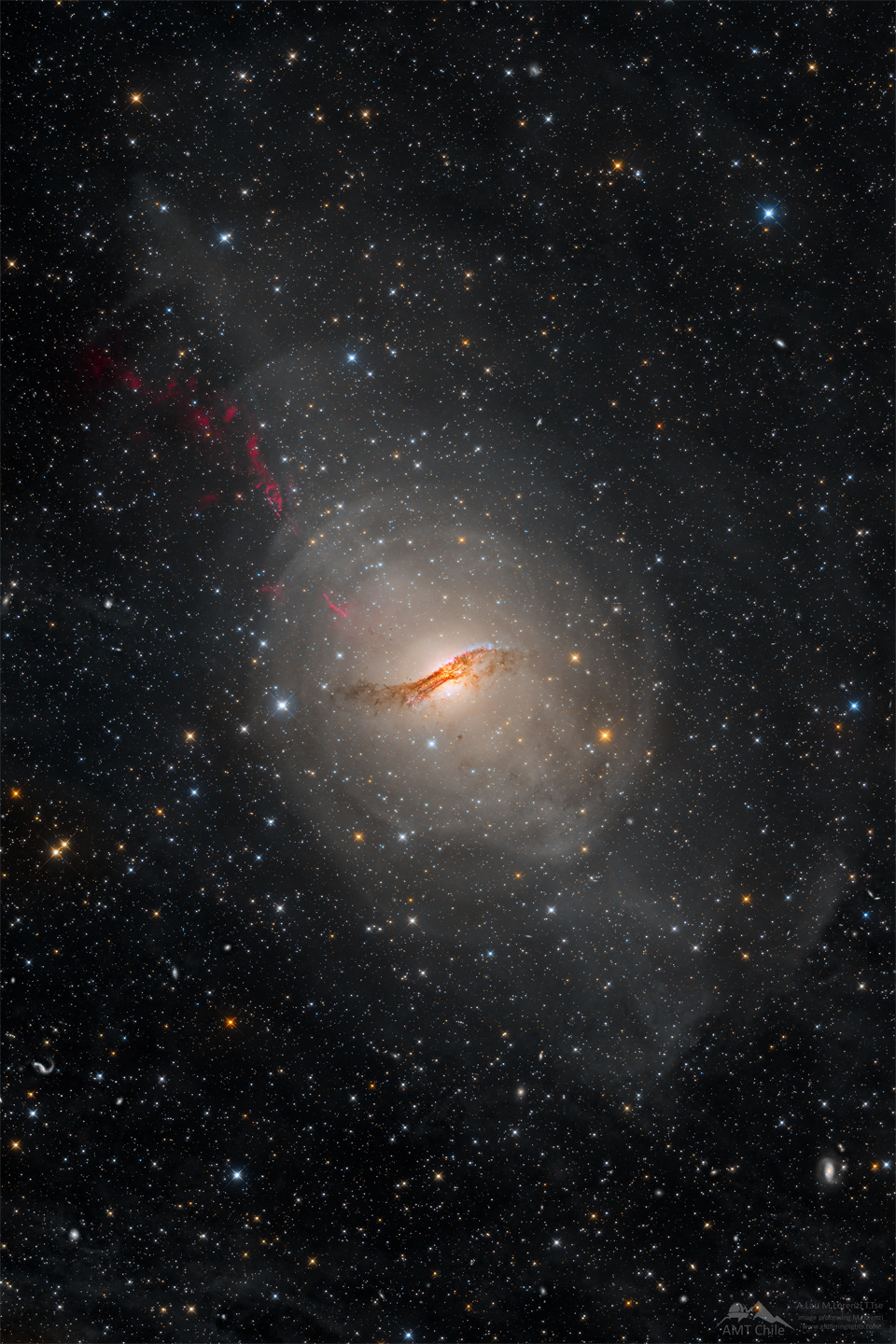
Galaxies are fascinating. In galaxies, gravity alone holds together massive collections of stars, dust, interstellar gas, stellar remnants and dark matter. Pictured is NGC 5128, better known as Centaurus A. Cen A is the fifth brightest galaxy on the sky and is located at a distance of about 12 million light years from Earth. The warped shape of Cen A is the result of a merger between an elliptical and a spiral galaxy. Its active galactic nucleus harbors a supermassive black hole that is about 55 million times more massive than our Sun. This central black hole ejects a fast jet visible in both radio and X-ray light. Filaments of the jet are visible in red in the upper left. New observations by the Event Horizon Telescope have revealed a brightening of the jet only towards its edges -- but for reasons that are currently unknown and an active topic of research.

https://apod.nasa.gov/apod/ap230503.html ( May 03, 2023)

Neutron Stars Collide


Two neutron stars begin to merge in this illustration, blasting a jet of high-speed particles and producing a cloud of debris.

from NASA http://www.nasa.gov/image-feature/neutron-stars-collide
via IFTTT

Monday, May 1, 2023


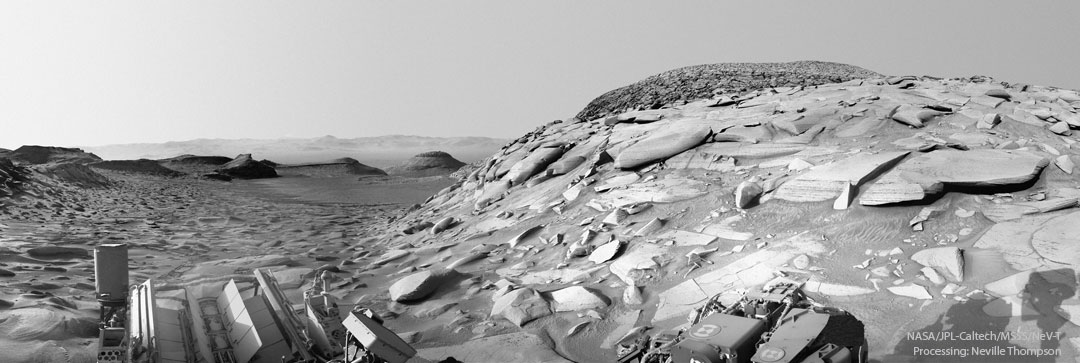
Why are there so many flat rocks on Mars? Some views of plains and hills on Mars show many rocks that are unusually flat when compared to rocks on Earth. One reason for this is a process that is common to both Mars and Earth: erosion. The carbon-dioxide wind on Mars can act like sandpaper when it blows around gritty Martian sand. This sand can create differential erosion, smoothing over some rocks, while wearing down the tops of other long-exposed stones. The featured image capturing several hills covered with flat-topped rocks was taken last month by NASA's Curiosity Rover on Mars. This robotic rover has now been rolling across Mars for ten years and has helped uncover many details of the wet and windy past of Earth's planetary neighbor. After taking this and other images, Curiosity carefully navigated stones and slippery sand to climb up Marker Band Valley.

https://apod.nasa.gov/apod/ap230502.html ( May 02, 2023)