Tuesday, April 11, 2023

ISS Daily Summary Report – 4/10/2023

iss-about-banner


Payloads: Cardinal Heart 2.0: The crew recorded microscopy video for the tissue samples in the Biocells. A previous investigation showed that four weeks of microgravity exposure caused significant changes in heart cell function and gene expression that could lead to long-term damage or cardiac muscle atrophy. Effect of Microgravity on Drug Responses Using Heart Organoids … ...

April 10, 2023 at 12:00PM
From NASA: https://blogs.nasa.gov/stationreport/2023/04/10/iss-daily-summary-report-4-10-2023/

Monday, April 10, 2023


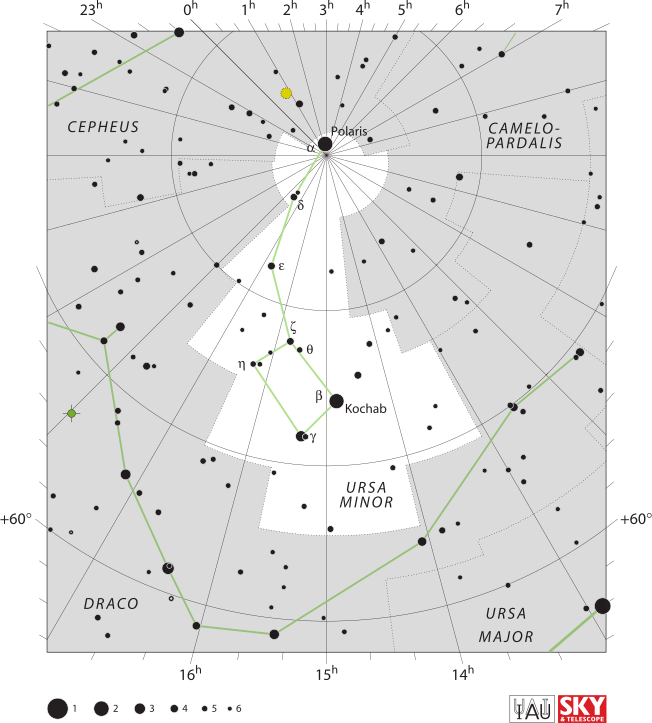
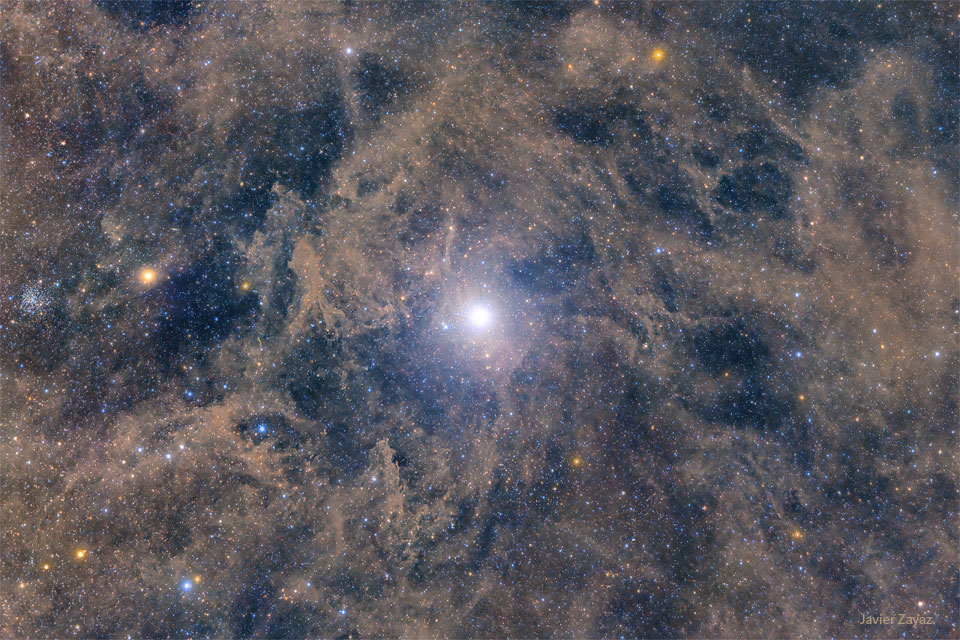
Why is Polaris called the North Star? First, Polaris is the nearest bright star toward the north spin axis of the Earth. Therefore, as the Earth turns, stars appear to revolve around Polaris, but Polaris itself always stays in the same northerly direction -- making it the North Star. Since no bright star is near the south spin axis of the Earth, there is currently no bright South Star. Thousands of years ago, Earth's spin axis pointed in a slightly different direction so that Vega was the North Star. Although Polaris is not the brightest star on the sky, it is easily located because it is nearly aligned with two stars in the cup of the Big Dipper. Polaris is near the center of the eight-degree wide featured image, a digital composite of hundreds of exposures that brings out faint gas and dust of the Integrated Flux Nebula (IFN) all over the frame as well as the globular star cluster NGC 188 on the far left. The surface of Cepheid Polaris slowly pulsates, causing the famous star to change its brightness by a few percent over the course of a few days.

https://apod.nasa.gov/apod/ap230411.html ( April 11, 2023)

Schulz, Snoopy Visit NASA Headquarters


NASA Administrator Bill Nelson (left), Jeannie Schulz, widow of Peanuts creator Charles M. Schulz, and Snoopy are all smiles during a Wednesday, April 5, 2023, visit to NASA Headquarters in Washington

from NASA http://www.nasa.gov/image-feature/schulz-snoopy-visit-nasa-headquarters
via IFTTT

Sunday, April 9, 2023


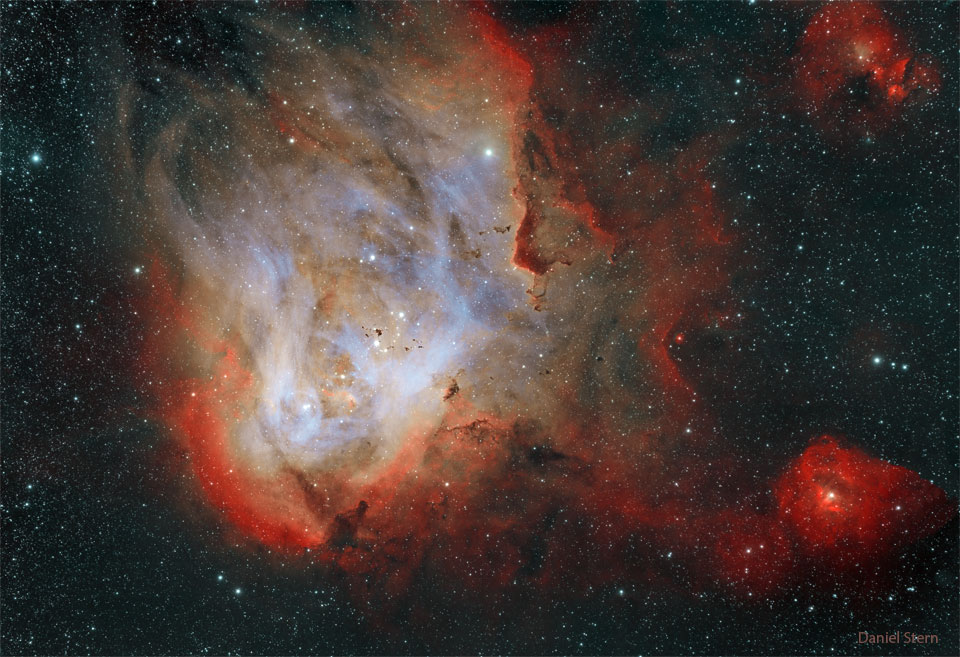
To some, it looks like a giant chicken running across the sky. To others, it looks like a gaseous nebula where star formation takes place. Cataloged as IC 2944, the Running Chicken Nebula spans about 100 light years and lies about 6,000 light years away toward the constellation of the Centaur (Centaurus). The featured image, shown in scientifically assigned colors, was captured recently in a 16-hour exposure over three nights. The star cluster Collinder 249 is visible embedded in the nebula's glowing gas. Although difficult to discern here, several dark molecular clouds with distinct shapes can be found inside the nebula.

https://apod.nasa.gov/apod/ap230410.html ( April 10, 2023)

Saturday, April 8, 2023


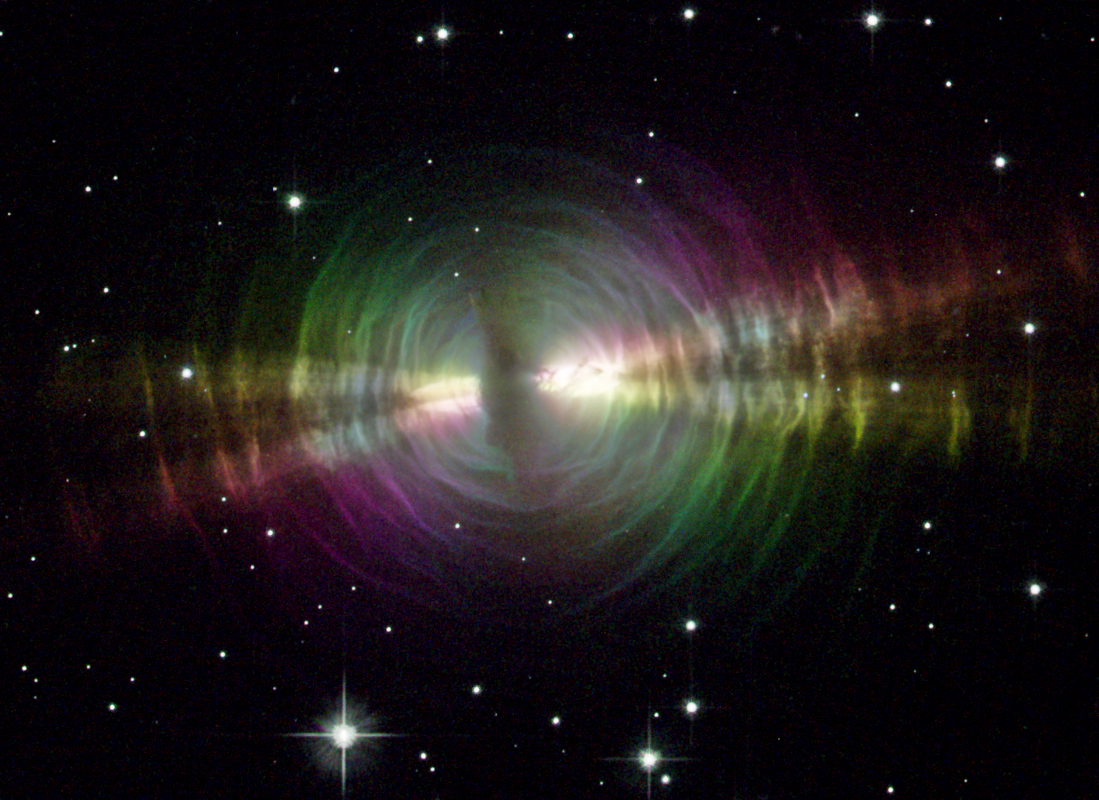
Where is the center of the Egg Nebula? Emerging from a cosmic egg, the star in the center of the Egg Nebula is casting away shells of gas and dust as it slowly transforms itself into a white dwarf star. The Egg Nebula is a rapidly evolving pre- planetary nebula spanning about one light year. It lies some 3,000 light-years away toward the northern constellation Cygnus. Thick dust blocks the center star from view, while the dust shells farther out reflect light from this star. Light vibrating in the plane defined by each dust grain, the central star, and the observer is preferentially reflected, causing an effect known as polarization. Measuring the orientation of the polarized light for the Egg Nebula gives clues to location of the hidden source. Taken by Hubble's Advanced Camera for Surveys in 2002, this image is rendered in artifical "Easter-Egg" colors coded to highlight the orientation of polarization.

https://apod.nasa.gov/apod/ap230409.html ( April 09, 2023)

Friday, April 7, 2023


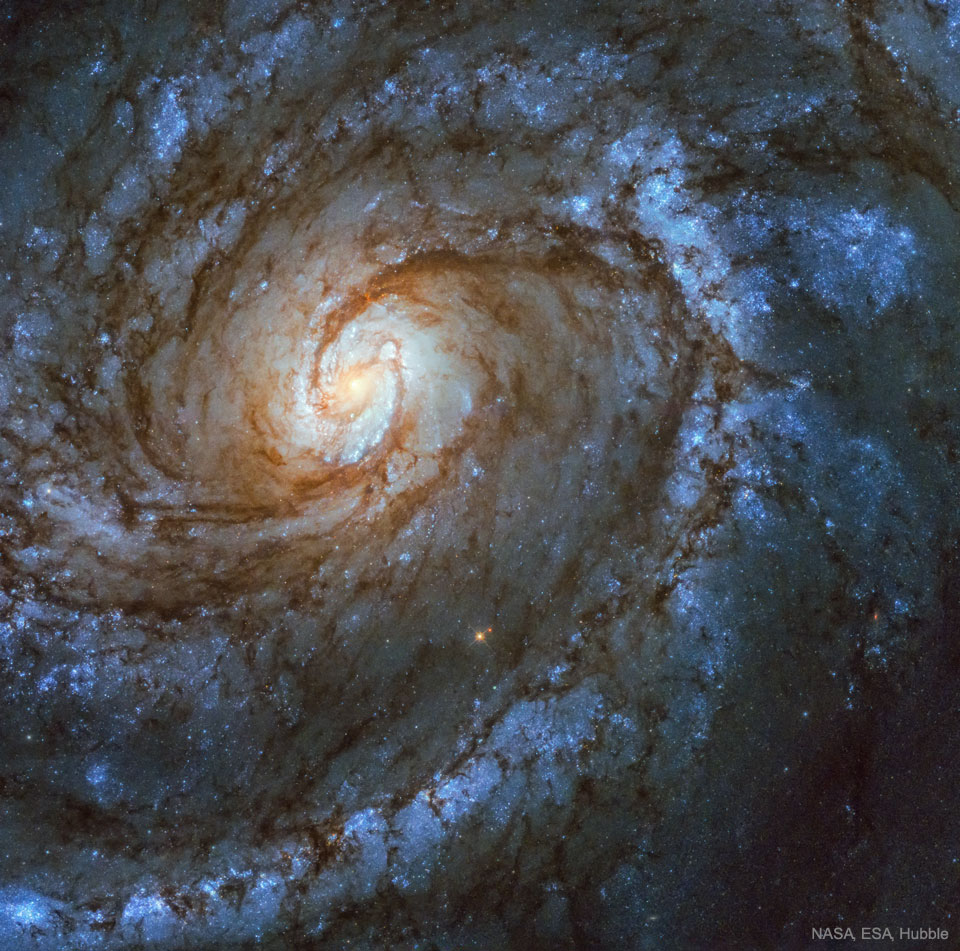
Majestic on a truly cosmic scale, M100 is appropriately known as a grand design spiral galaxy. It is a large galaxy of over 100 billion stars with well-defined spiral arms that is similar to our own Milky Way Galaxy. One of the brightest members of the Virgo Cluster of galaxies, M100 (alias NGC 4321) is 56 million light-years distant toward the constellation of Berenice's Hair (Coma Berenices). This Hubble Space Telescope image of M100 was taken with the Wide Field Camera 3 and accentuates bright blue star clusters and intricate winding dust lanes which are hallmarks of this class of galaxies. Studies of variable stars in M100 have played an important role in determining the size and age of the Universe.

https://apod.nasa.gov/apod/ap230408.html ( April 08, 2023)

ISS Daily Summary Report – 4/06/2023

iss-about-banner


Payloads: Human Research Facility Veggie Profile of Mood States (Veggie POMS): A POMS short form questionnaire was completed using the Data Collection Tool (DCT). The Pick-and-Eat Salad-Crop Productivity, Nutritional Value, and Acceptability to Supplement the ISS Food System (Veggie) investigation is a phased research project that includes Veg-04A, Veg-04B, Veg-05, and HRF Veg including HRF … ...

April 06, 2023 at 12:00PM
From NASA: https://blogs.nasa.gov/stationreport/2023/04/06/iss-daily-summary-report-4-06-2023/

Battling Bots


Industrial-size robots built by high school teams compete against each other in a game at Rocket City Regional, Alabama’s annual FIRST Robotics Competition, in this March 16, 2018, image.

from NASA http://www.nasa.gov/image-feature/battling-bots
via IFTTT

Thursday, April 6, 2023

Rigel Wide


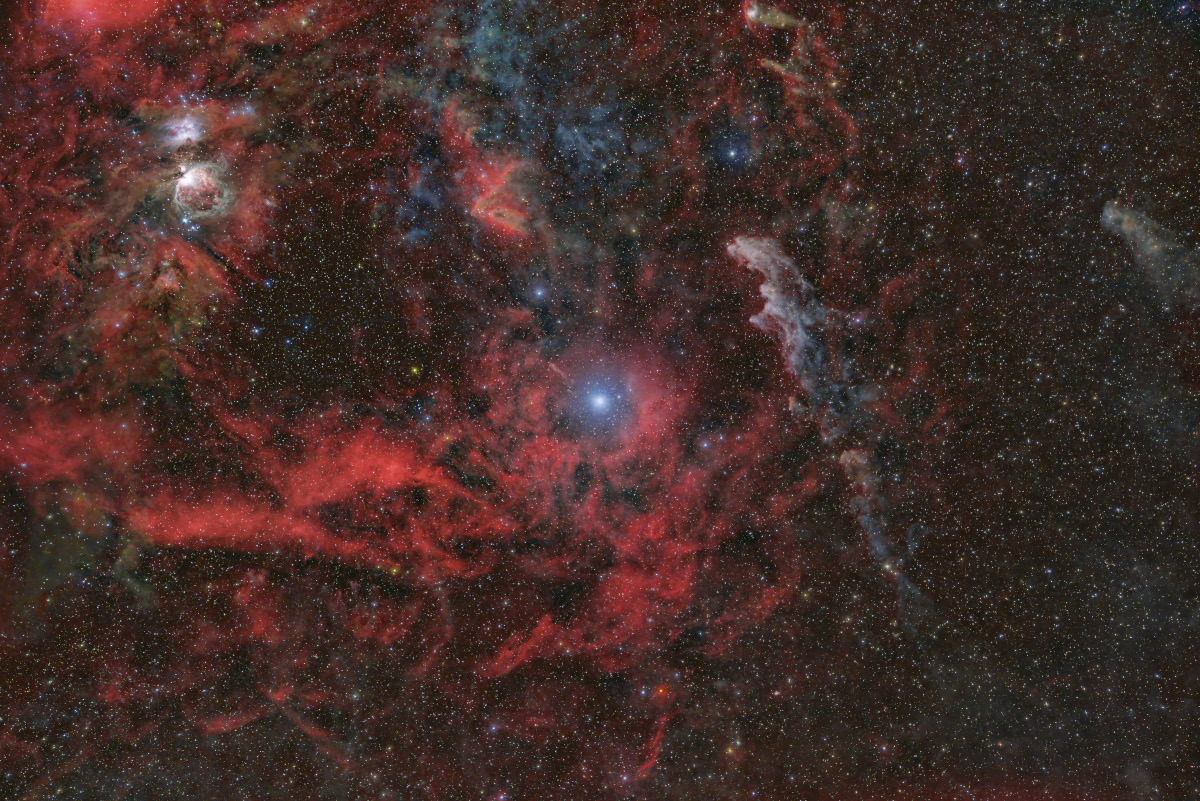
Brilliant, blue, supergiant star Rigel marks the foot of Orion the Hunter in planet Earth's night. Designated Beta Orionis, it's at the center of this remarkably deep and wide field of view. Rigel's blue color indicates that it is much hotter than its rival supergiant in Orion the yellowish Betelgeuse (Alpha Orionis), though both stars are massive enough to eventually end their days as core collapse supernovae. Some 860 light-years away, Rigel is hotter than the Sun too and extends to about 74 times the solar radius. That's about the size of the orbit of Mercury. In the 10 degree wide frame toward the nebula rich constellation, the Orion Nebula is at the upper left. To the right of Rigel and illuminated by its brilliant blue starlight lies the dusty Witch Head Nebula. Rigel is part of a multiple star system, though its companion stars are much fainter.

https://apod.nasa.gov/apod/ap230407.html ( April 07, 2023)

ISS Daily Summary Report – 4/05/2023

iss-about-banner


Payloads: Manufacturing Device (ManD): The crew replaced the feedstock canister, extruder, and build platform in ManD to enable a test object to be printed. Following a failed print attempt, the crew manually fed the feedstock into the extruder to allow another print attempt. The Additive Manufacturing Facility (AMF) enables the production of components on the … ...

April 05, 2023 at 12:00PM
From NASA: https://blogs.nasa.gov/stationreport/2023/04/05/iss-daily-summary-report-4-05-2023/