Thursday, October 6, 2022

Solid Science from Serena Auñón-Chancellor


Astronaut Serena Auñón-Chancellor installs samples for the Microgravity Investigation of Cement Solidification (MICS) experiment aboard the International Space Station (ISS) in this image from Nov. 27, 2018.

from NASA http://www.nasa.gov/image-feature/solid-science-from-serena-au-n-chancellor
via IFTTT

Wednesday, October 5, 2022

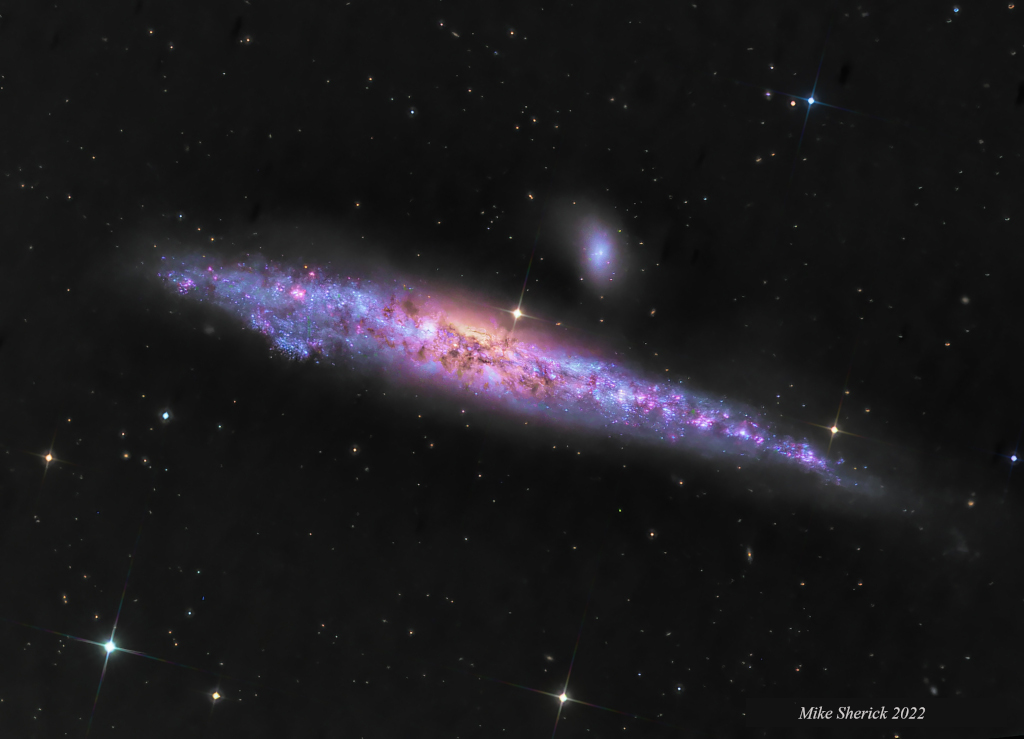
NGC 4631: The Whale Galaxy


NGC 4631 is a big beautiful spiral galaxy. Seen edge-on, it lies only 25 million light-years away in the well-trained northern constellation Canes Venatici. The galaxy's slightly distorted wedge shape suggests to some a cosmic herring and to others its popular moniker, The Whale Galaxy. Either way, it is similar in size to our own Milky Way. In this sharp color image, the galaxy's yellowish core, dark dust clouds, bright blue star clusters, and red star forming regions are easy to spot. A companion galaxy, the small elliptical NGC 4627 is just above the Whale Galaxy. Faint star streams seen in deep images are the remnants of small companion galaxies disrupted by repeated encounters with the Whale in the distant past. The Whale Galaxy is also known to have spouted a halo of hot gas glowing in X-rays.

https://apod.nasa.gov/apod/ap221006.html ( October 06, 2022)

Astronaut Nicole Mann Trains in T-38


Astronaut Nicole Mann sits inside a T-38 trainer jet at Ellington Field in Houston, Texas in this image from Nov. 15, 2018.

from NASA http://www.nasa.gov/image-feature/astronaut-nicole-mann-trains-in-t-38
via IFTTT

ISS Daily Summary Report – 10/04/2022

iss-about-banner


Payloads: Autonomous Systems and Operations – EXPRESS 2.5 (AMO-EXPRESS 2.5): The crew performed simulated EXPRESS Rack 7 activities within the AMO EXPRESS software. AMO-EXPRESS 2.5 conducts tests using automation and decision support software to help crew members manage spacecraft subsystems. The ability to perform such tasks without assistance from Mission Control is vital for future … ...

October 04, 2022 at 12:00PM
From NASA: https://blogs.nasa.gov/stationreport/2022/10/04/iss-daily-summary-report-10-04-2022/

Tuesday, October 4, 2022

Expanding Plume from DARTs Impact


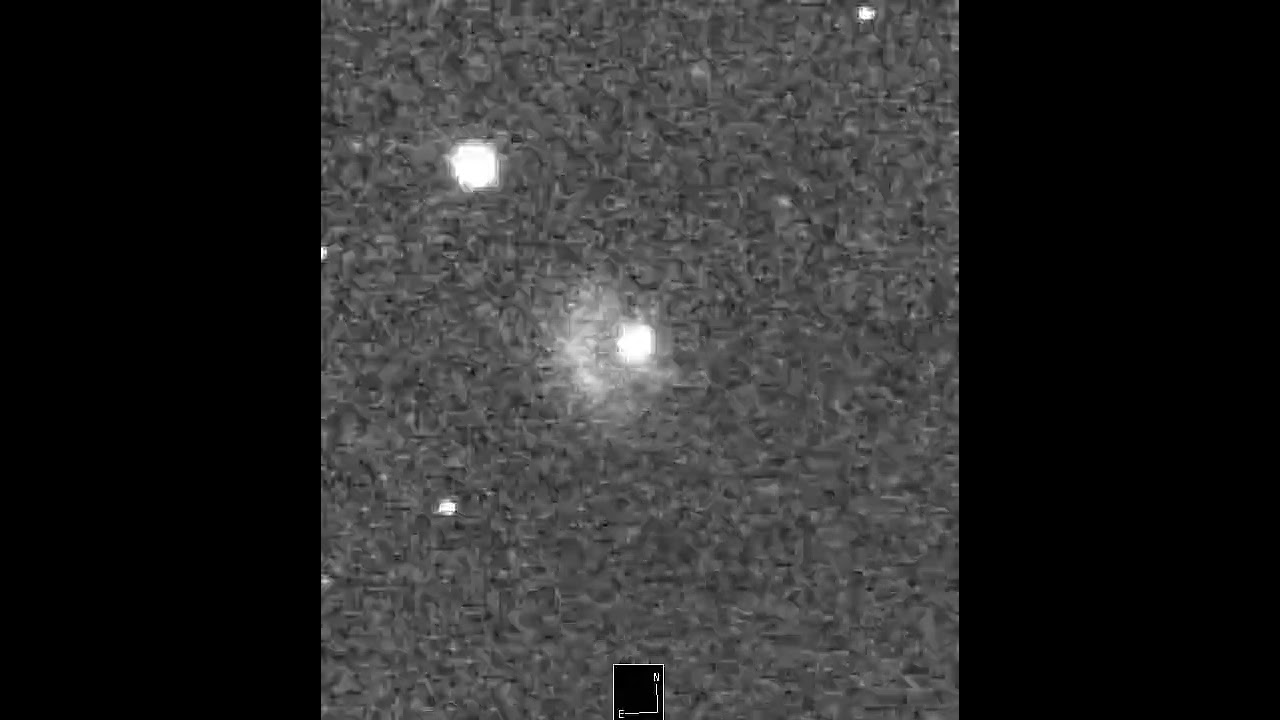
What happens if you crash a spaceship into an asteroid? In the case of NASA's DART spaceship and the small asteroid Dimorphos, as happened last week, you get quite a plume. The goal of the planned impact was planetary protection -- to show that the path of an asteroid can be slightly altered, so that, if done right, a big space rock will miss the Earth. The high brightness of the plume, though, was unexpected by many, and what it means remains a topic of research. One possibility is that 170-meter wide Dimorphos is primarily a rubble pile asteroid and the collision dispersed some of the rubble in the pile. The featured time-lapse video covers about 20 minutes and was taken from the Les Makes Observatory on France's Reunion Island, off the southeast coast of southern Africa. One of many Earth-based observatories following the impact, the initial dot is primarily Dimorphos's larger companion: asteroid Didymos. Most recently, images show that the Didymos - Dimorphos system has developed comet-like tails.

https://apod.nasa.gov/apod/ap221005.html ( October 05, 2022)

Staring Into the Hurricane's Eye


On September 28, the Landsat 8 satellite passed directly over Ian’s eye as the storm approached southwest Florida. The natural-color image above was acquired by the Operational Land Imager (OLI) at 11:57 a.m. local time (15:57 Universal Time), three hours before the storm made landfall in Caya Costa.

from NASA http://www.nasa.gov/image-feature/staring-into-the-hurricanes-eye
via IFTTT

Monday, October 3, 2022

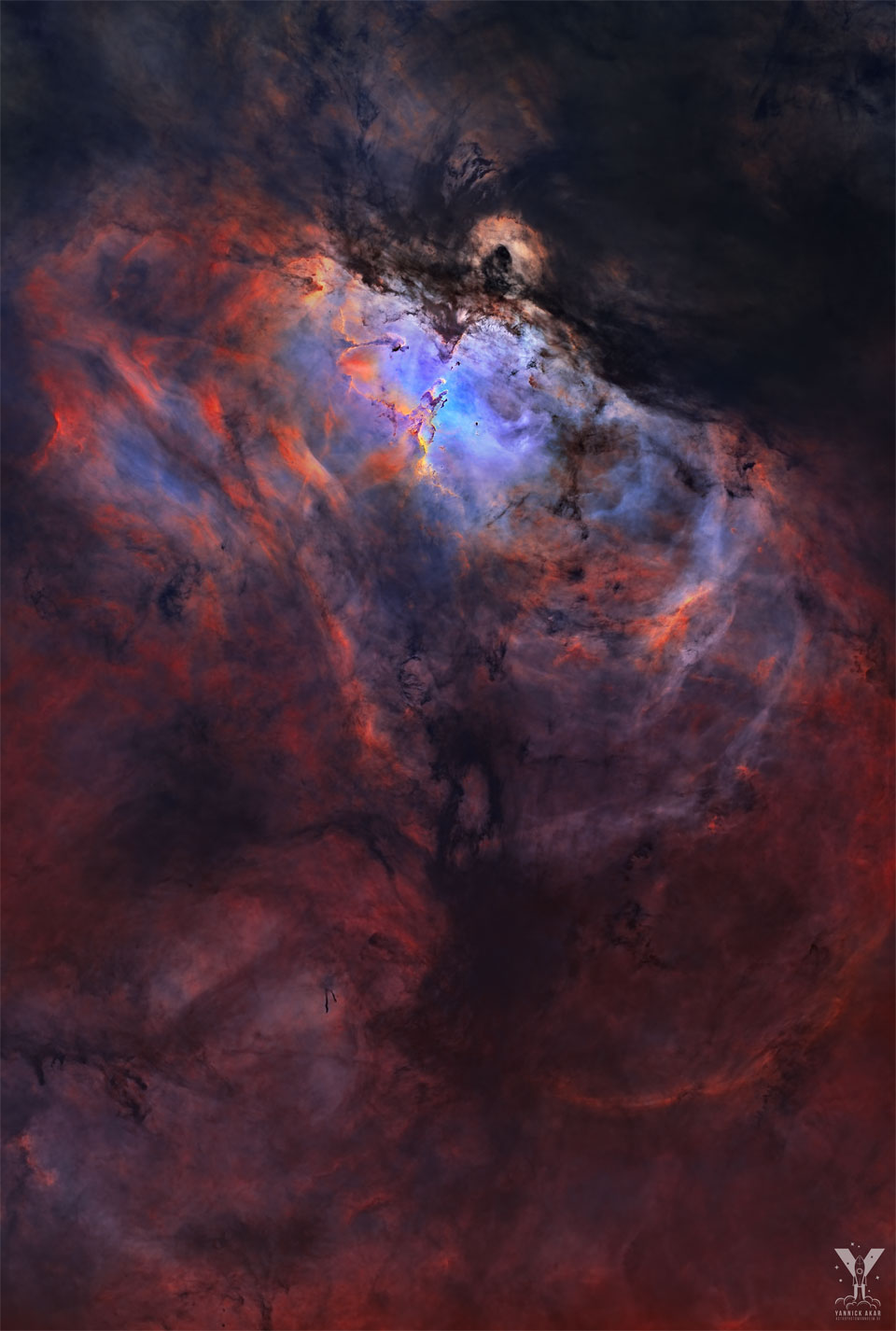
Star Forming Eagle Nebula without Stars


The whole thing looks like an eagle. A closer look at the Eagle Nebula's center, however, shows the bright region is actually a window into the center of a larger dark shell of dust. Through this window, a brightly-lit workshop appears where a whole open cluster of stars is being formed. In this cavity tall pillars and round globules of dark dust and cold molecular gas remain where stars are still forming. Paradoxically, it is perhaps easier to appreciate this impressive factory of star formation by seeing it without its stars -- which have been digitally removed in the featured image. The Eagle emission nebula, tagged M16, lies about 6500 light years away, spans about 20 light-years, and is visible with binoculars toward the constellation of the Serpent (Serpens). Creating this picture involved over 22 hours of imaging and combining colors emitted specifically by hydrogen (red), and oxygen (blue).

https://apod.nasa.gov/apod/ap221004.html ( October 04, 2022)

DART’s Penultimate View


This is the last complete image of the asteroid Dimorphos, as seen by our Double Asteroid Redirection Test (DART) 2 seconds before impact.

from NASA http://www.nasa.gov/image-feature/dart-s-penultimate-view
via IFTTT

Sunday, October 2, 2022

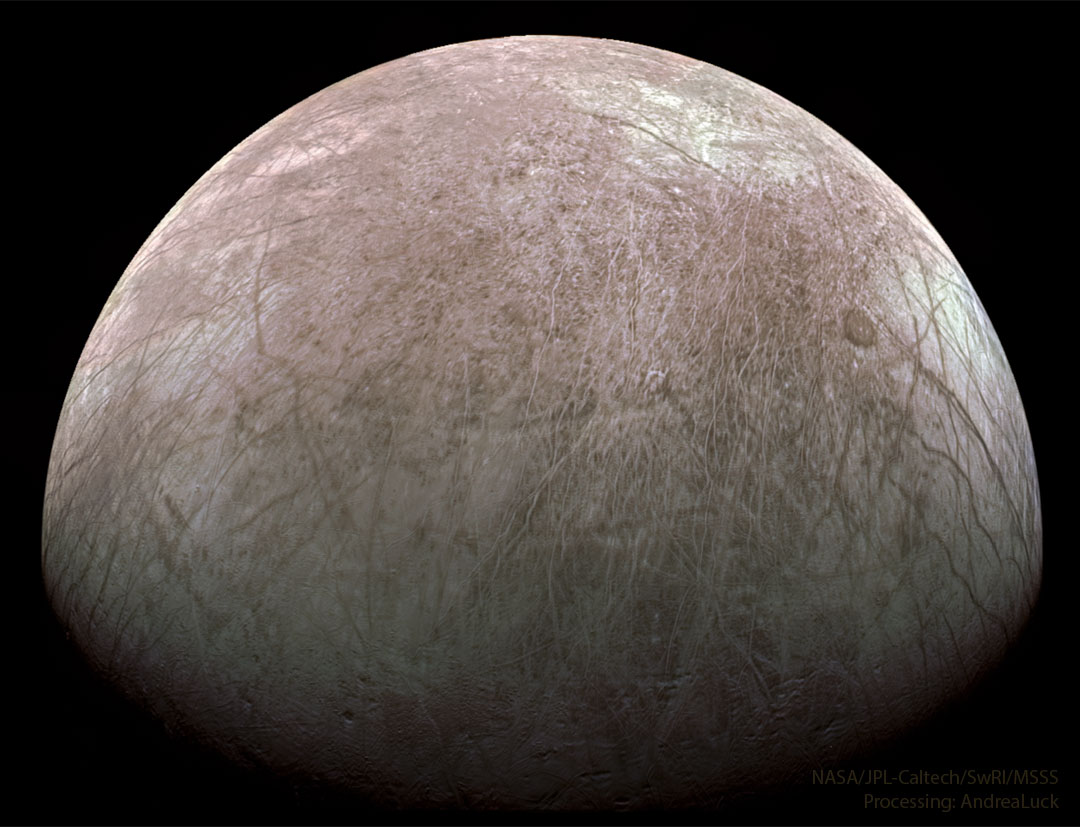
Jupiters Europa from Spacecraft Juno


What mysteries might be solved by peering into this crystal ball? In this case, the ball is actually a moon of Jupiter, the crystals are ice, and the moon is not only dirty but cracked beyond repair. Nevertheless, speculation is rampant that oceans exist under Europa's fractured ice-plains that could support life. Europa, roughly the size of Earth's Moon, is pictured here in an image taken a few days ago when the Jupiter-orbiting robotic spacecraft Juno passed within 325 kilometers of its streaked and shifting surface. Underground oceans are thought likely because Europa undergoes global flexing due to its changing gravitational attraction with Jupiter during its slightly elliptical orbit, and this flexing heats the interior. Studying Juno's close-up images may further humanity's understanding not only of Europa and the early Solar System but also of the possibility that life exists elsewhere in the universe.

https://apod.nasa.gov/apod/ap221003.html ( October 03, 2022)

Saturday, October 1, 2022

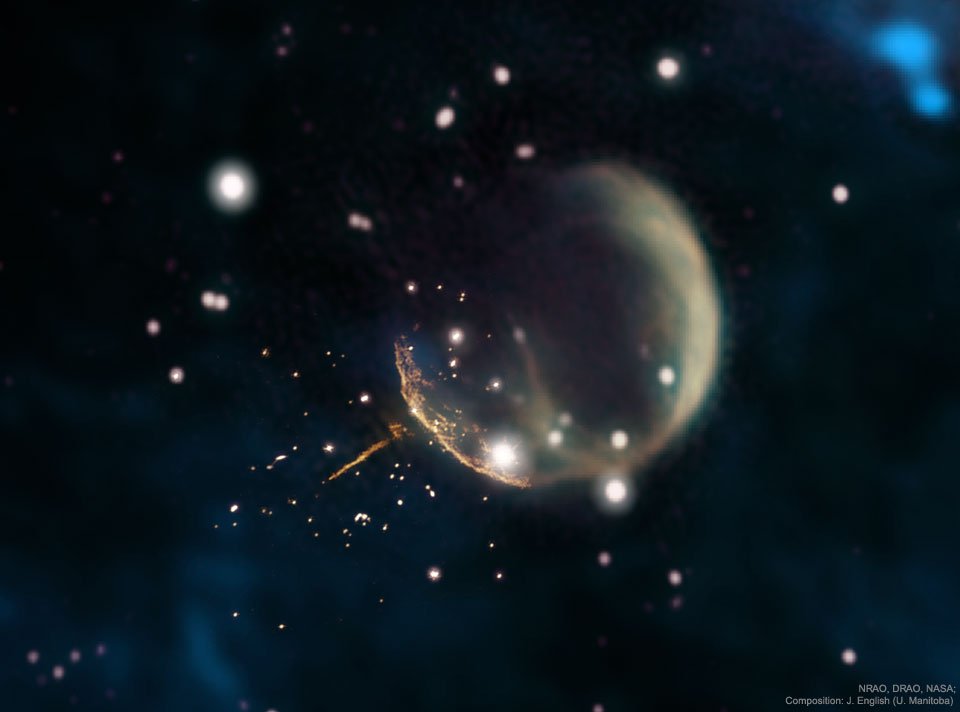
Supernova Cannon Expels Pulsar J0002


What could shoot out a neutron star like a cannon ball? A supernova. About 10,000 years ago, the supernova that created the nebular remnant CTB 1 not only destroyed a massive star but blasted its newly formed neutron star core -- a pulsar -- out into the Milky Way Galaxy. The pulsar, spinning 8.7 times a second, was discovered using downloadable software Einstein@Home searching through data taken by NASA's orbiting Fermi Gamma-Ray Observatory. Traveling over 1,000 kilometers per second, the pulsar PSR J0002+6216 (J0002 for short) has already left the supernova remnant CTB 1, and is even fast enough to leave our Galaxy. Pictured, the trail of the pulsar is visible extending to the lower left of the supernova remnant. The featured image is a combination of radio images from the VLA and DRAO radio observatories, as well as data archived from NASA's orbiting IRAS infrared observatory. It is well known that supernovas can act as cannons, and even that pulsars can act as cannonballs -- what is not known is how supernovas do it.

https://apod.nasa.gov/apod/ap221002.html ( October 02, 2022)