Tuesday, July 12, 2022

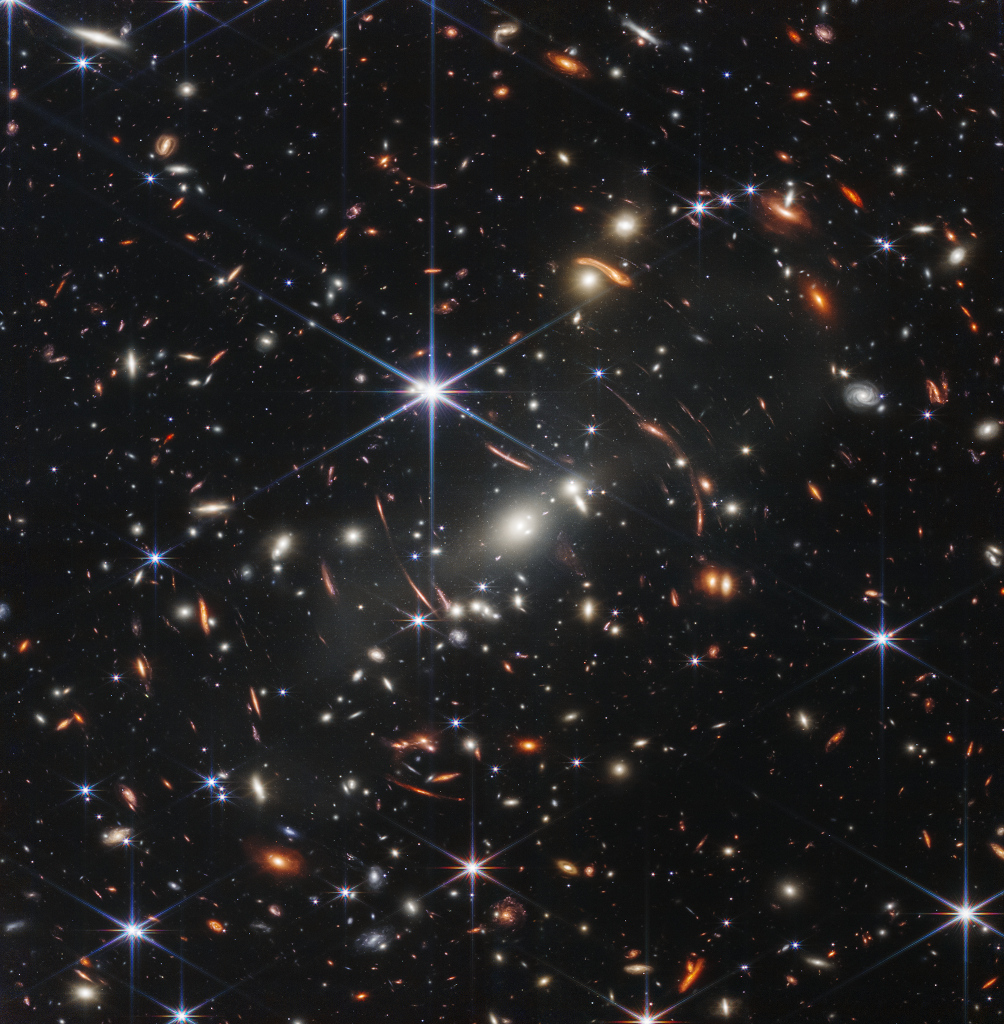
Webb s First Deep Field


This is the deepest, sharpest infrared image of the cosmos so far. The view of the early Universe toward the southern constellation Volans was achieved in 12.5 hours of exposure with the NIRCam instrument on the James Webb Space Telescope. Of course the stars with six visible spikes are well within our own Milky Way. That diffraction pattern is characteristic of Webb's 18 hexagonal mirror segments operating together as a single 6.5 meter diameter primary mirror. The thousands of galaxies flooding the field of view are members of the distant galaxy cluster SMACS0723-73, some 4.6 billion light-years away. Luminous arcs that seem to infest the deep field are even more distant galaxies though. Their images are distorted and magnified by the dark matter dominated mass of the galaxy cluster, an effect known as gravitational lensing. Analyzing light from two separate arcs below the bright spiky star, Webb's NIRISS instrument indicates the arcs are both images of the same background galaxy. And that galaxy's light took about 9.5 billion years to reach the James Webb Space Telescope.

https://apod.nasa.gov/apod/ap220713.html ( July 13, 2022)

President Biden and the World Preview Webb Telescope's First Image


NASA Administrator Bill Nelson describes the first full-color image from NASA’s James Webb Space Telescope.

from NASA http://www.nasa.gov/image-feature/president-biden-and-the-world-preview-webb-telescopes-first-image
via IFTTT

ISS Daily Summary Report – 7/11/2022

iss-about-banner


Payloads: Astrobee-Zero Robotics: The US LAB module was cleared of stowage and the Astrobee flyers were prepped for Zero-Robotics remote mapping operations which was controlled by the ground. For Astrobee-Zero Robotics, students write software to control one of the space station’s Astrobee free-flying robots. The first several rounds of the competition, co-led by the Massachusetts … ...

July 11, 2022 at 12:00PM
From NASA: https://blogs.nasa.gov/stationreport/2022/07/11/iss-daily-summary-report-7-11-2022/

Monday, July 11, 2022

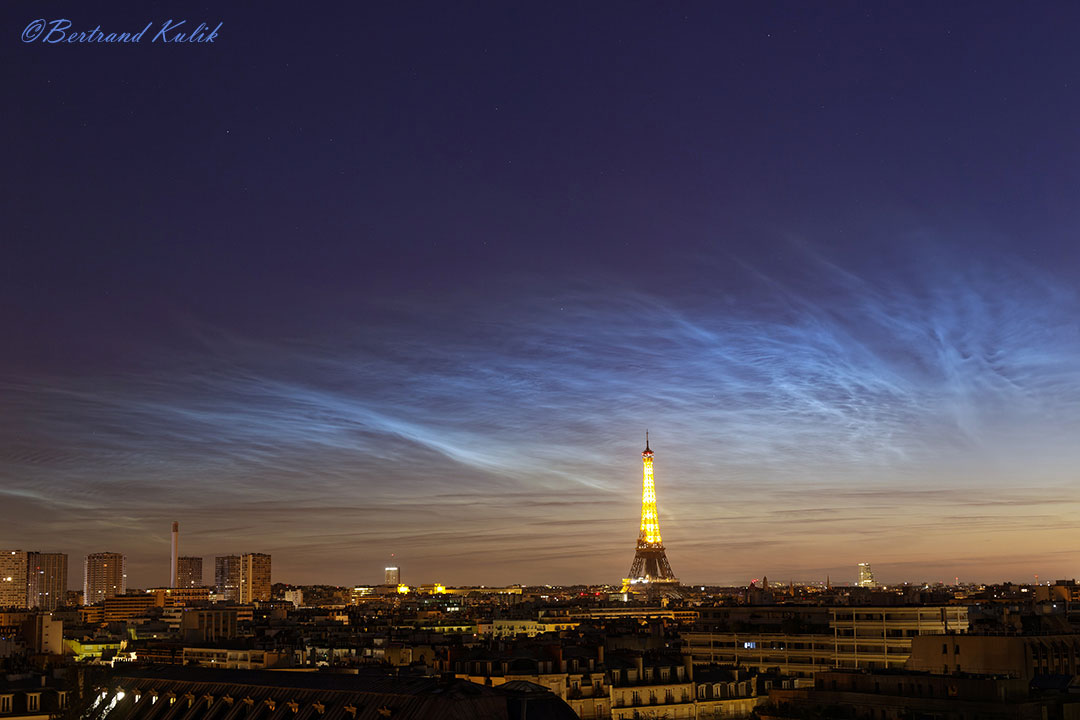
Noctilucent Clouds over Paris


It's northern noctilucent cloud season. Composed of small ice crystals forming only during specific conditions in the upper atmosphere, noctilucent clouds may become visible at sunset during late summer when illuminated by sunlight from below. Noctilucent clouds are the highest clouds known and now established to be polar mesospheric clouds observed from the ground. Although observed with NASA's AIM satellite since 2007, much about noctilucent clouds remains unknown and so a topic of active research. The featured image shows expansive and rippled noctilucent clouds wafting over Paris, France. This year, several northern locations are already reporting especially vivid displays of noctilucent clouds.

https://apod.nasa.gov/apod/ap220712.html ( July 12, 2022)

Behold: The Carina Nebula's 'Mystic Mountain'


Within the tempestuous Carina Nebula lies “Mystic Mountain.” This three-light-year-tall cosmic pinnacle, imaged by Hubble in 2010.

from NASA http://www.nasa.gov/image-feature/behold-the-carina-nebulas-mystic-mountain
via IFTTT

Sunday, July 10, 2022

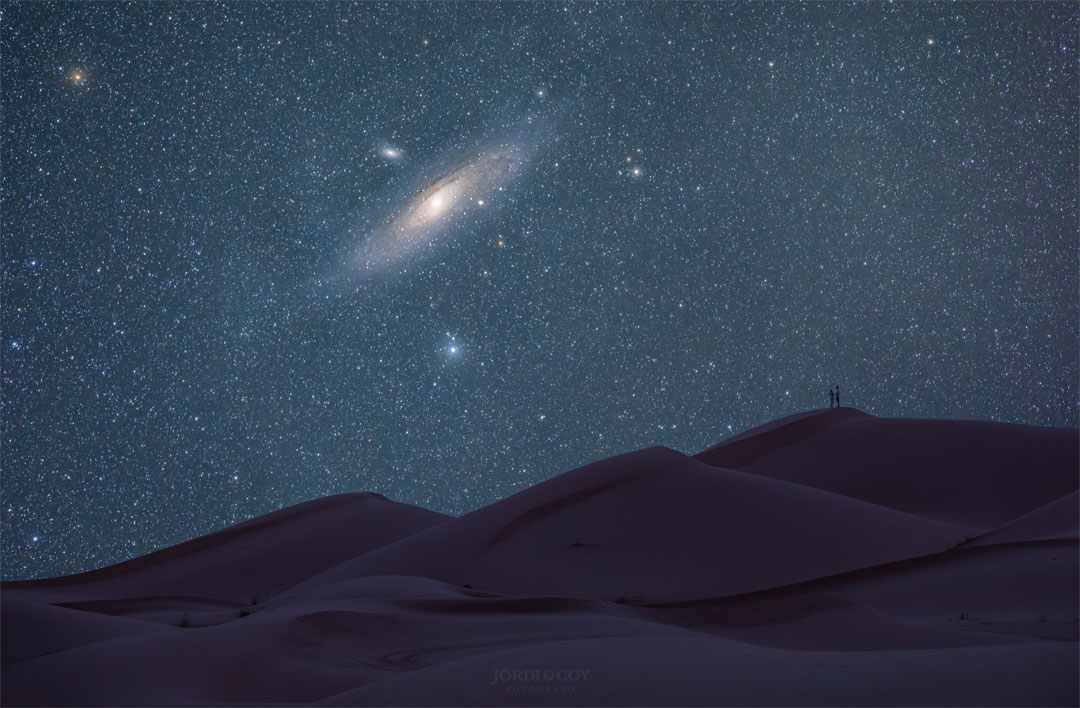
Andromeda over the Sahara Desert


What is the oldest thing you can see? At 2.5 million light years distant, the answer for the unaided eye is the Andromeda galaxy, because its photons are 2.5 million years old when they reach you. Most other apparent denizens of the night sky -- stars, clusters, and nebulae -- appear as they were only a few hundred to a few thousand years ago, as they lie well within our own Milky Way Galaxy. Given its distance, light from Andromeda is likely also the farthest object that you can see. Also known as M31, the Andromeda Galaxy dominates the center of the featured zoomed image, taken from the Sahara Desert in Morocco last month. The featured image is a combination of three background and one foreground exposure -- all taken with the same camera and from the same location and on the same calendar day -- with the foreground image taken during the evening blue hour. M110, a satellite galaxy of Andromenda is visible just above and to the left of M31's core. As cool as it may be to see this neighboring galaxy to our Milky Way with your own eyes, long duration camera exposures can pick up many faint and breathtaking details. Recent data indicates that our Milky Way Galaxy will collide and combine with the similarly-sized Andromeda galaxy in a few billion years.

https://apod.nasa.gov/apod/ap220711.html ( July 11, 2022)

Saturday, July 9, 2022

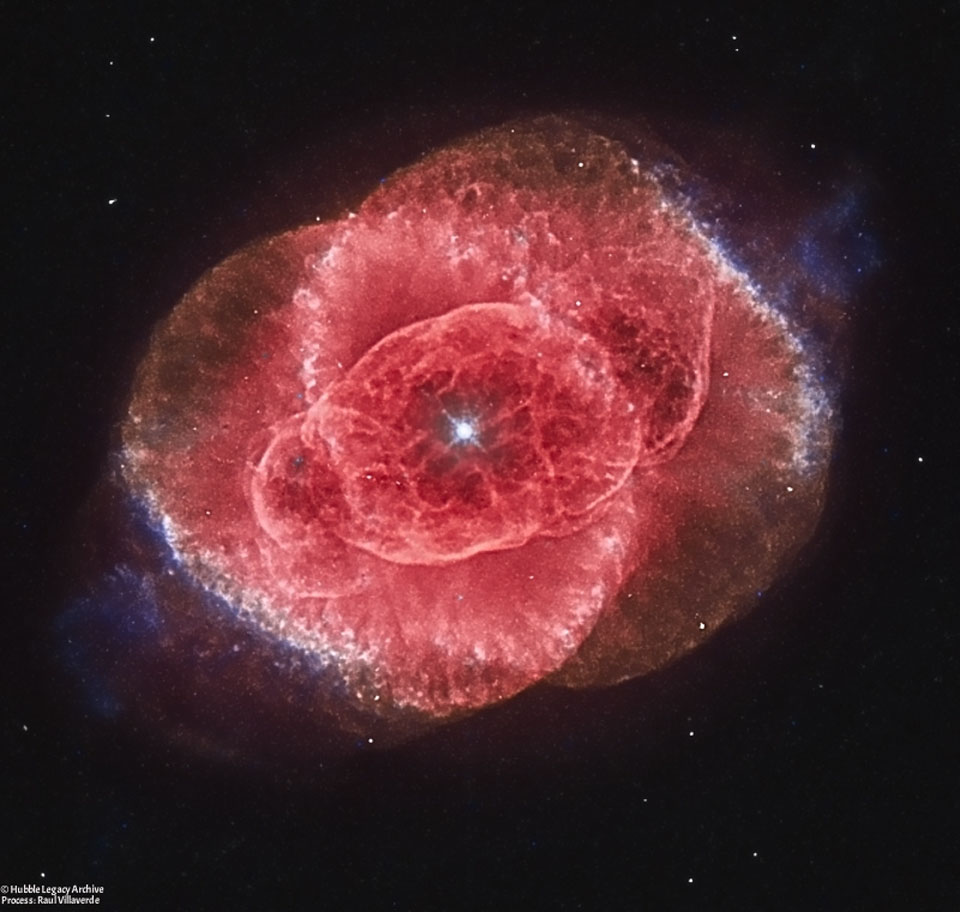
In the Center of the Cats Eye Nebula


Three thousand light-years away, a dying star throws off shells of glowing gas. This image from the Hubble Space Telescope reveals the Cat's Eye Nebula (NGC 6543), to be one of the most complex planetary nebulae known. Spanning half a light-year, the features seen in the Cat's Eye are so complex that astronomers suspect the bright central object may actually be a binary star system. The term planetary nebula, used to describe this general class of objects, is misleading. Although these objects may appear round and planet-like in small telescopes, high resolution images with large telescopes reveal them to be stars surrounded by cocoons of gas blown off in the late stages of stellar evolution. Gazing into this Cat's Eye, astronomers may well be seeing more than detailed structure, they may be seeing the fate of our Sun, destined to enter its own planetary nebula phase of evolution ... in about 5 billion years.

https://apod.nasa.gov/apod/ap220710.html ( July 10, 2022)

Friday, July 8, 2022

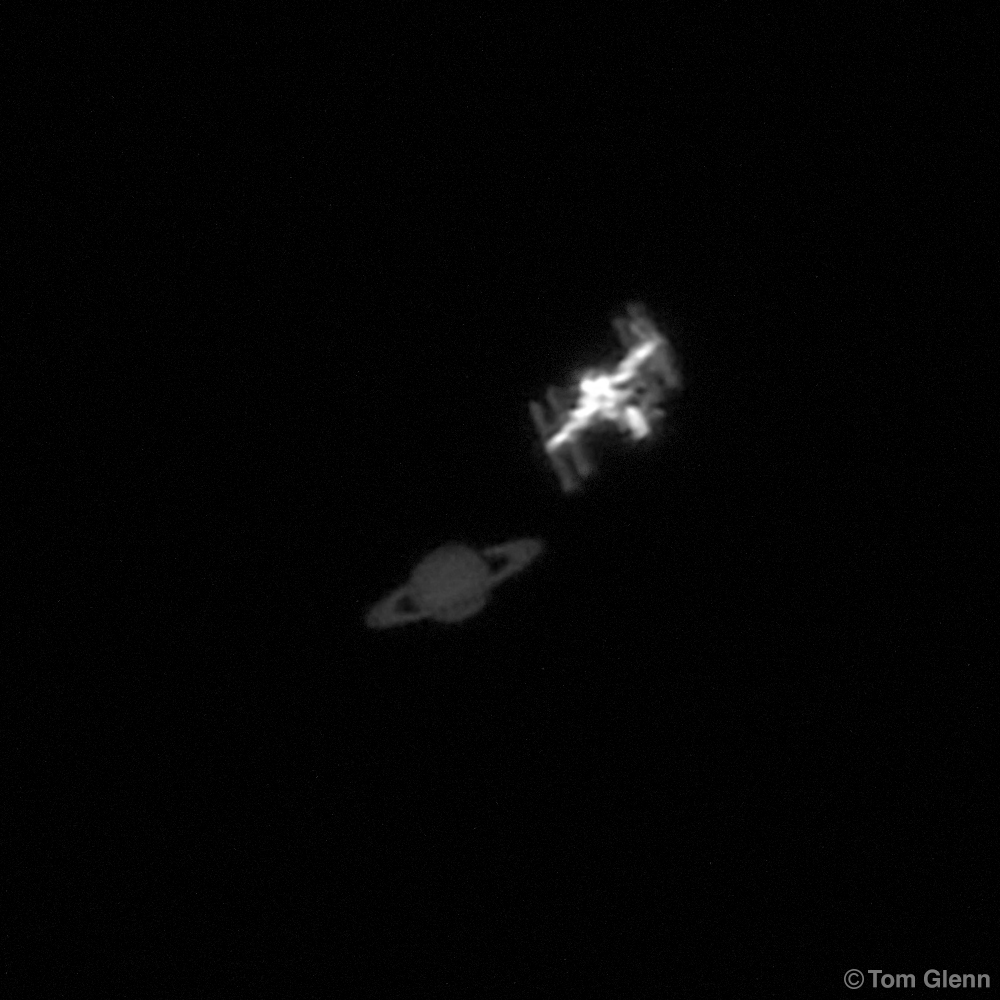
Saturn and ISS


Soaring high in skies around planet Earth, bright planet Saturn was a star of June's morning planet parade. But very briefly on June 24 it posed with a bright object in low Earth orbit, the International Space Station. On that date from a school parking lot in Temecula, California the ringed-planet and International Space Station were both caught in this single high-speed video frame. Though Saturn was shining at +0.5 stellar magnitude the space station was an even brighter -3 on the magnitude scale. That difference in brightness is faithfully represented in the video capture frame. In the challenging image, the orbiting ISS was at a range of 602 kilometers. Saturn was about 1.4 billion kilometers from the school parking lot.

https://apod.nasa.gov/apod/ap220709.html ( July 09, 2022)

ISS Daily Summary Report – 7/07/2022

iss-about-banner


Payloads: Grip: The crew performed the third and final day of the experiment session, transferred the data, and stowed the experiment hardware. The Grip experiment studies the long-duration spaceflight effects on the abilities of human subjects to regulate grip force and upper limbs trajectories when manipulating objects during different kinds of movements: oscillatory movements, rapid … ...

July 07, 2022 at 12:00PM
From NASA: https://blogs.nasa.gov/stationreport/2022/07/07/iss-daily-summary-report-7-07-2022/

Hubble Spots a Merging Galactic Gem


This NASA/ESA Hubble Space Telescope observation has captured the galaxy CGCG 396-2, an unusual multi-armed galaxy merger which lies around 520 million light-years from Earth in the constellation Orion.

from NASA http://www.nasa.gov/image-feature/goddard/2022/hubble-spots-a-merging-galactic-gem
via IFTTT