Thursday, February 10, 2022

ISS Daily Summary Report – 2/09/2022

iss-about-banner


Payloads: Grip: After reviewing the big picture words and setting up the appropriate hardware, two sessions of Grip seated science 1 were performed. From an upright seated posture, the crew performed experiment tasks looking at friction, oscillations, targeted and sensors verification.  The Grip experiment studies the long-duration spaceflight effects on the abilities of human subjects … ...

February 09, 2022 at 11:00AM
From NASA: https://blogs.nasa.gov/stationreport/2022/02/09/iss-daily-summary-report-2-09-2022/

Wednesday, February 9, 2022

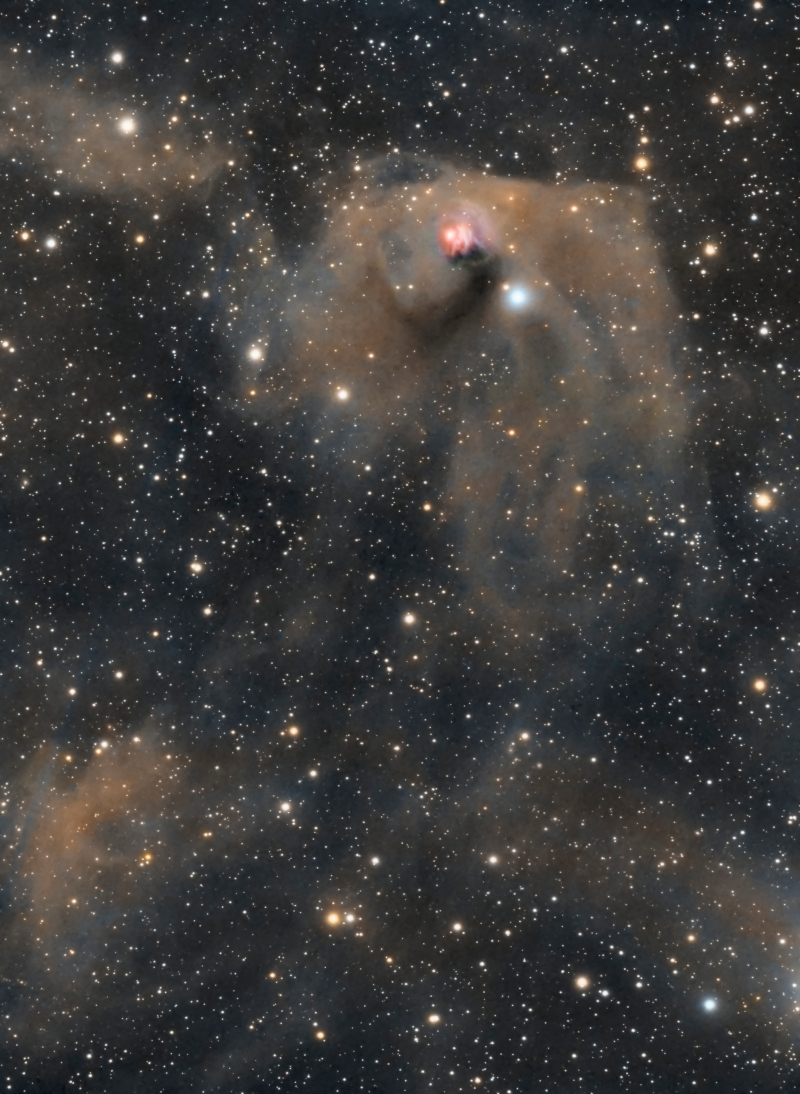
T Tauri and Hind s Variable Nebula


The star with an orange tint near top center in this dusty telescopic frame is T Tauri, prototype of the class of T Tauri variable stars. Next to it (right) is a yellow cosmic cloud historically known as Hind's Variable Nebula (NGC 1555). About 650 light-years away, at the boundary of the local bubble and the Taurus molecular cloud, both star and nebula are seen to vary significantly in brightness but not necessarily at the same time, adding to the mystery of the intriguing region. T Tauri stars are now generally recognized as young (less than a few million years old), sun-like stars still in the early stages of formation. To further complicate the picture, infrared observations indicate that T Tauri itself is part of a multiple system and suggest that the associated Hind's Nebula may also contain a very young stellar object. The well-composed image spans about 8 light-years at the estimated distance of T Tauri.

https://apod.nasa.gov/apod/ap220210.html ( February 10, 2022)

ISS Daily Summary Report – 2/08/2022

iss-about-banner


Payloads: Behavioral Core Measures (BCM): A crewmember completed a ROBoT-r Research session consisting of a set of 12 runs/tests.  The Standardized Behavioral Measures for Detecting Behavioral Health Risks during Exploration Missions (Behavioral Core Measures) experiment initially examined a suite of measurements to reliably assess the risk of adverse cognitive or behavioral conditions and psychiatric disorders during … ...

February 08, 2022 at 11:00AM
From NASA: https://blogs.nasa.gov/stationreport/2022/02/08/iss-daily-summary-report-2-08-2022/

Mark Vande Hei's Window to the World


Astronaut Mark Vande Hei peers at the Earth below from inside the seven-windowed cupola, the International Space Station's window to the world.

from NASA http://www.nasa.gov/image-feature/mark-vande-heis-window-to-the-world
via IFTTT

Tuesday, February 8, 2022

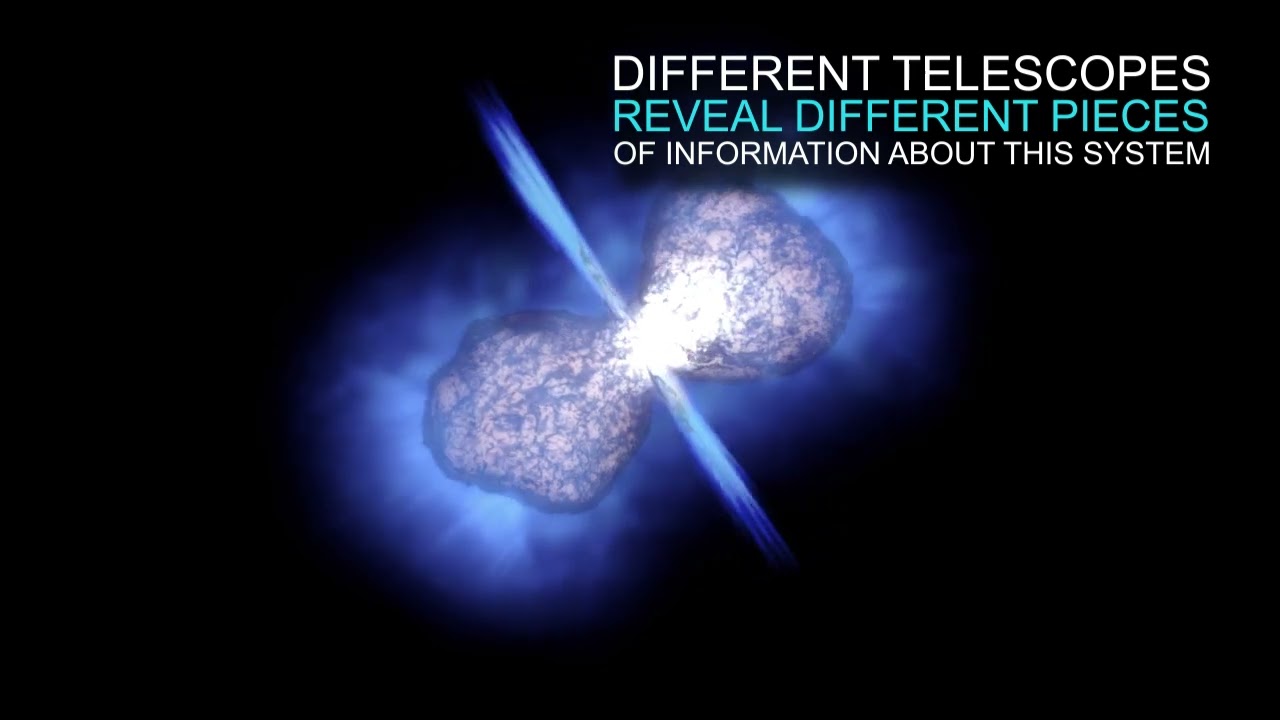
Eta Car: 3D Model of the Most Dangerous Star Known


What's the most dangerous star near earth? Many believe it's Eta Carinae, a binary star system about 100 times the mass of the Sun, just 10,000 light years from earth. Eta Carinae is a ticking time bomb, set to explode as a supernova in only a few million years, when it may bathe the earth in dangerous gamma rays. The star suffered a notorious outburst in the 1840s when it became the brightest star in the southern sky, only to fade to obscurity within decades. The star was not destroyed, but lies hidden behind a thick, expanding, double-lobed structure called the Homunculus which now surrounds the binary. Studies of this ejecta provide forensic clues about the explosion. Using observations from NASA satellites we can now visualize the 3D distribution of the shrapnel, all the way from the infrared, through optical and UV, to the outermost shell of million-degree material, visible only in X-rays.

https://apod.nasa.gov/apod/ap220209.html ( February 09, 2022)

ISS Daily Summary Report – 2/07/2021

iss-about-banner


Payloads: Airborne Particulate Monitor (APM): A data transfer was initiated from the experiment memory card to a Station Support Computer (SSC) for the APM system.  Air quality in crewed spacecraft is important for keeping astronauts healthy and comfortable. Although requirements exist for maximum allowable concentrations of particulate matter, currently no measurement capability verifies whether these … ...

February 07, 2022 at 11:00AM
From NASA: https://blogs.nasa.gov/stationreport/2022/02/07/iss-daily-summary-report-2-07-2021/

Daniel G. Nichols


Mathematician Daniel G. Nichols, who worked in the Real-Time Program Development Branch, Mission Planning and Analysis Division, is photographed in NASA's Manned Space Center.

from NASA http://www.nasa.gov/image-feature/daniel-g-nichols
via IFTTT

Monday, February 7, 2022

First Rays of an Orbital Sunrise


Ths January 2022 image shows the first rays of an orbital sunrise as seen from the International Space Station as it orbited above Venezuela.

from NASA http://www.nasa.gov/image-feature/first-rays-of-an-orbital-sunrise
via IFTTT

Sunday, February 6, 2022

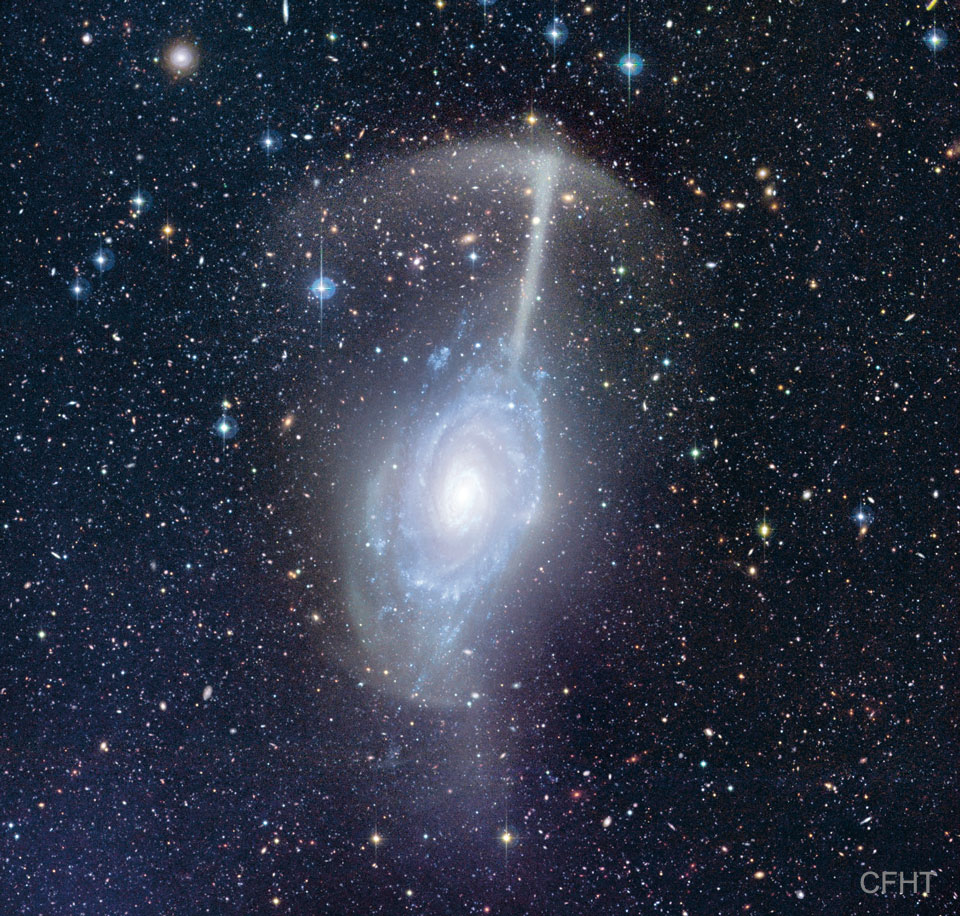
NGC 4651: The Umbrella Galaxy


It's raining stars. What appears to be a giant cosmic umbrella is now known to be a tidal stream of stars stripped from a small satellite galaxy. The main galaxy, spiral galaxy NGC 4651, is about the size of our Milky Way, while its stellar parasol appears to extend some 100 thousand light-years above this galaxy's bright disk. A small galaxy was likely torn apart by repeated encounters as it swept back and forth on eccentric orbits through NGC 4651. The remaining stars will surely fall back and become part of a combined larger galaxy over the next few million years. The featured image was captured by the Canada-France-Hawaii Telescope (CFHT) in Hawaii, USA. The Umbrella Galaxy lies about 50 million light-years distant toward the well-groomed northern constellation Coma Berenices.

https://apod.nasa.gov/apod/ap220207.html ( February 07, 2022)

Saturday, February 5, 2022

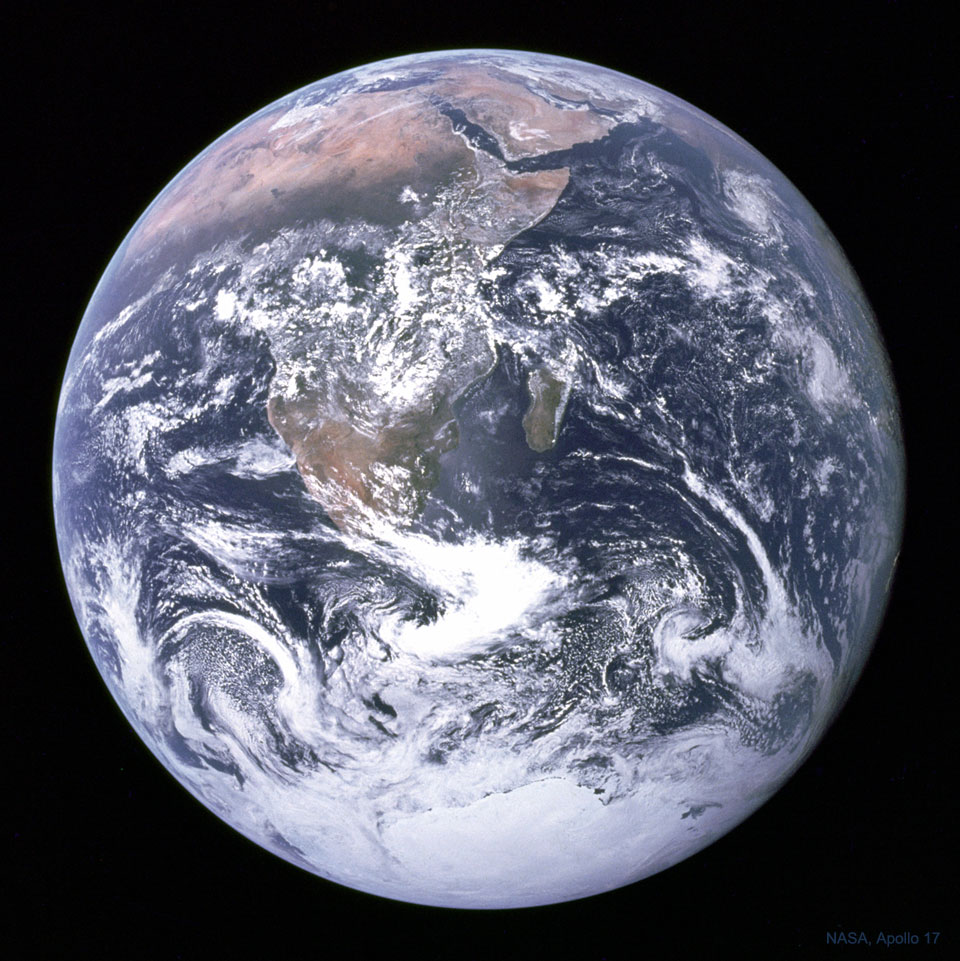
Blue Marble Earth


Welcome to planet Earth, the third planet from a star named the Sun. The Earth is shaped like a sphere and composed mostly of rock. Over 70 percent of the Earth's surface is water. The planet has a relatively thin atmosphere composed mostly of nitrogen and oxygen. The featured picture of Earth, dubbed The Blue Marble, was taken from Apollo 17 in 1972 and features Africa and Antarctica. It is thought to be one of the most widely distributed photographs of any kind. Earth has a single large Moon that is about 1/4 of its diameter and, from the planet's surface, is seen to have almost exactly the same angular size as the Sun. With its abundance of liquid water, Earth supports a large variety of life forms, including potentially intelligent species such as dolphins and humans. Please enjoy your stay on planet Earth.

https://apod.nasa.gov/apod/ap220206.html ( February 06, 2022)