Tuesday, October 5, 2021

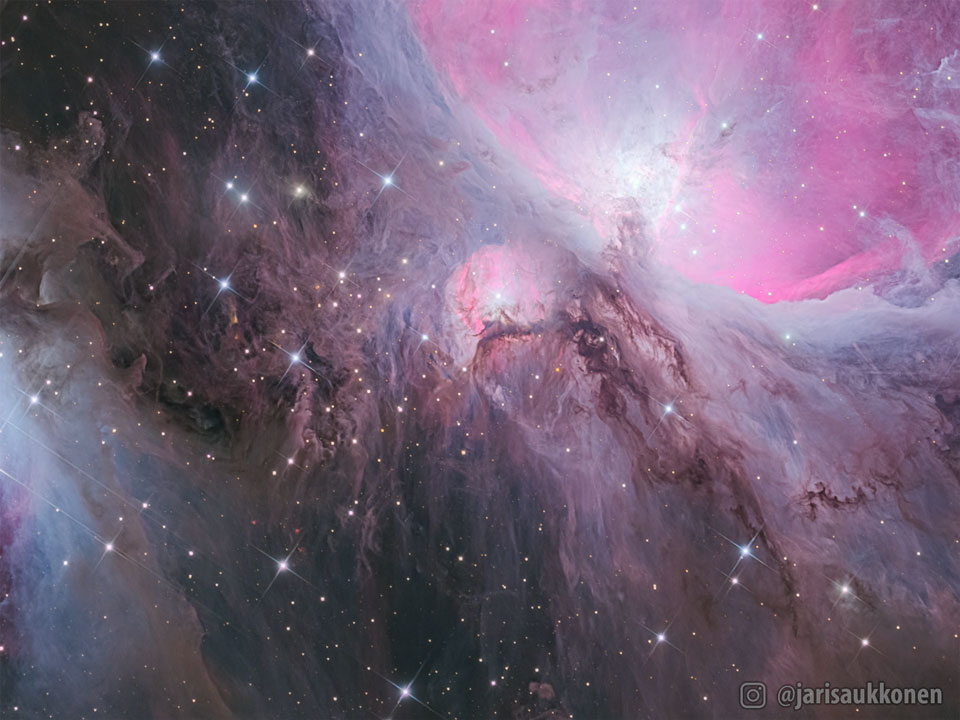
M43: Streams of Orion


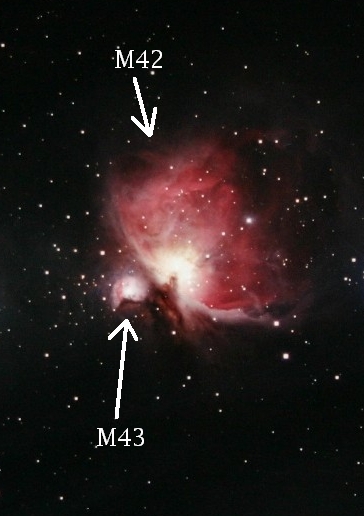
Where do the dark streams of dust in the Orion Nebula originate? This part of the Orion Molecular Cloud Complex, M43, is the often imaged but rarely mentioned neighbor of the more famous M42. M42, seen in part to the upper right, includes many bright stars from the Trapezium star cluster. M43 is itself a star forming region that displays intricately-laced streams of dark dust -- although it is really composed mostly of glowing hydrogen gas. The entire Orion field is located about 1600 light years away. Opaque to visible light, the picturesque dark dust is created in the outer atmosphere of massive cool stars and expelled by strong outer winds of protons and electrons.

https://apod.nasa.gov/apod/ap211006.html ( October 06, 2021)

A Colorful Departure From the Station


SpaceX Cargo Dragon resupply ship is pictured as it backs away from the International Space Station.

from NASA http://www.nasa.gov/image-feature/a-colorful-departure-from-the-station
via IFTTT

ISS Daily Summary Report – 10/04/2021

iss-about-banner


Payloads: Cool Flames Investigation with Gases:  A crewmember replaced the bottle in CIR Manifold #4 with 100 percent C4H10 (Butane).  Cool diffusion flames were discovered during droplet combustion experiments aboard the ISS in 2012, and this initiated a rapidly growing field of combustion research.  A cool flame is one that burns at about 600 degrees … ...

October 04, 2021 at 12:00PM
From NASA: https://blogs.nasa.gov/stationreport/2021/10/04/iss-daily-summary-report-10-04-2021/

Monday, October 4, 2021

Sunrise at the South Pole


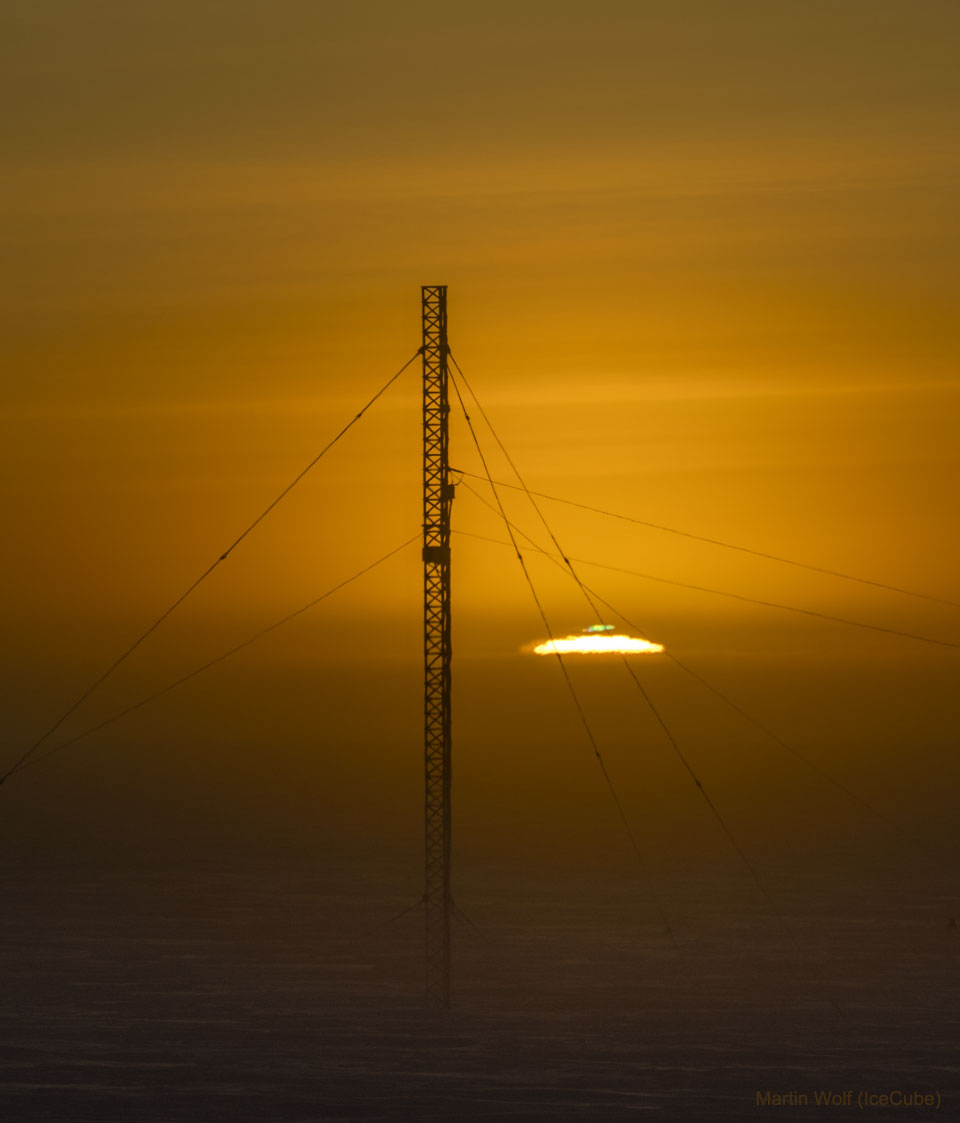
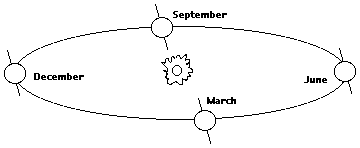
Sunrise at the South Pole is different. Usually a welcome sight, it follows months of darkness -- and begins months of sunshine. At Earth's poles, it can take weeks for the Sun to rise, in contrast with just minutes at any mid-latitude location. Sunrise at a pole is caused by the tilt of the Earth as it orbits the Sun, not by the rotation of the Earth. Although at a pole, an airless Earth would first see first Sun at an equinox, the lensing effect of the Earth's atmosphere and the size of the solar disk causes the top of the Sun to appear about two-weeks early. Pictured two weeks ago, the Sun peaks above the horizon of a vast frozen landscape at Earth's South Pole. The true South Pole is just a few meters to the left of the communications tower. This polar sunrise capture was particularly photogenic as the Sun appeared capped by a green flash.

https://apod.nasa.gov/apod/ap211005.html ( October 05, 2021)

Psyche Mission to an Asteroid: Electric Propulsion Comes of Age


When it comes time for NASA’s Psyche spacecraft to power itself through deep space, it’ll be more brain than brawn that does the work.

from NASA http://www.nasa.gov/image-feature/psyche-mission-to-an-asteroid-electric-propulsion-comes-of-age
via IFTTT

Sunday, October 3, 2021

NGC 4676: When Mice Collide


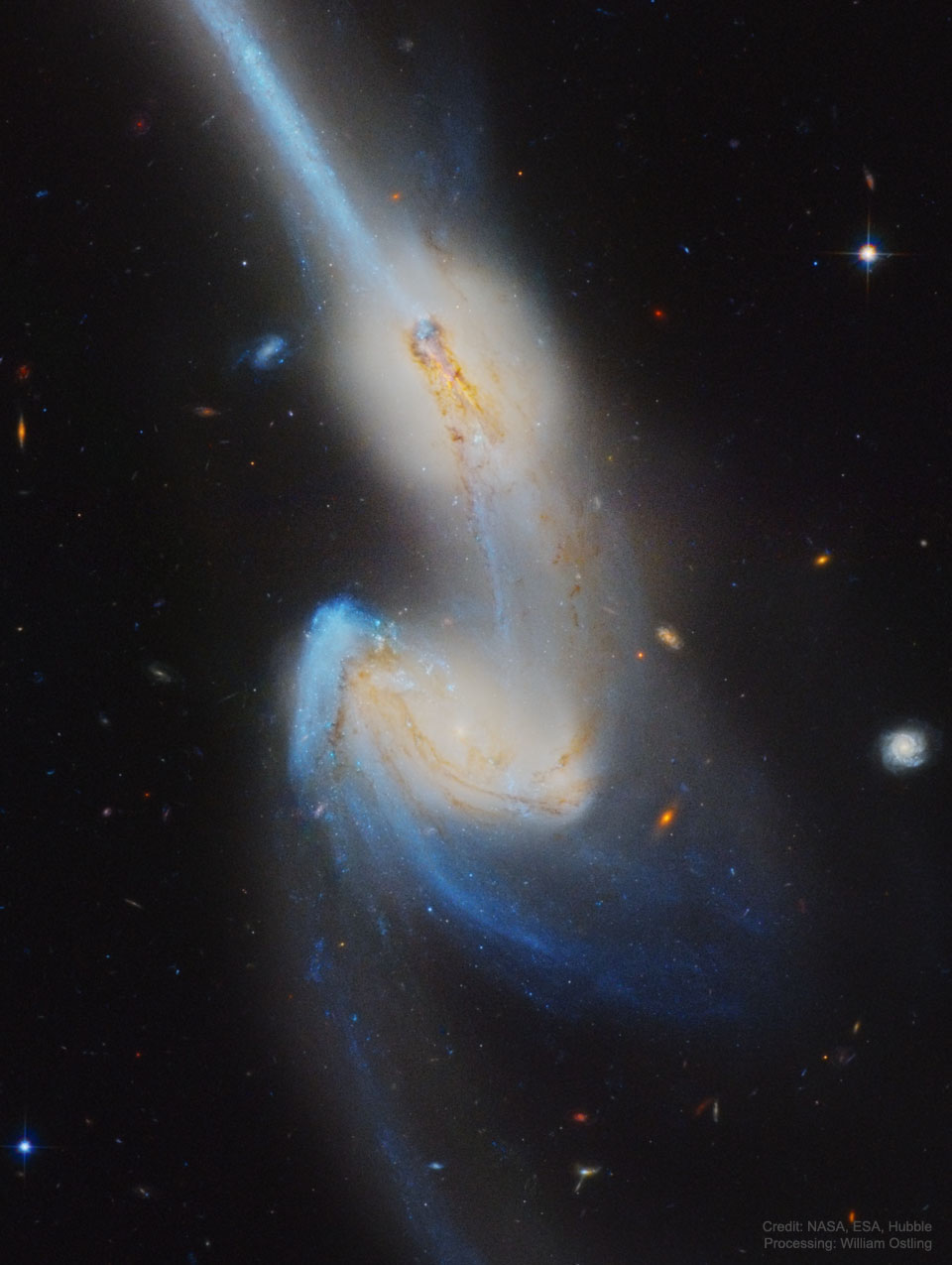
These two mighty galaxies are pulling each other apart. Known as the "Mice" because they have such long tails, each spiral galaxy has likely already passed through the other. The long tails are created by the relative difference between gravitational pulls on the near and far parts of each galaxy. Because the distances are so large, the cosmic interaction takes place in slow motion -- over hundreds of millions of years. NGC 4676 lies about 300 million light-years away toward the constellation of Bernice's Hair (Coma Berenices) and are likely members of the Coma Cluster of Galaxies. The featured picture was taken with the Hubble Space Telescope's Advanced Camera for Surveys in 2002. These galactic mice will probably collide again and again over the next billion years so that, instead of continuing to pull each other apart, they coalesce to form a single galaxy.

https://apod.nasa.gov/apod/ap211004.html ( October 04, 2021)

Saturday, October 2, 2021

The Holographic Principle and a Teapot


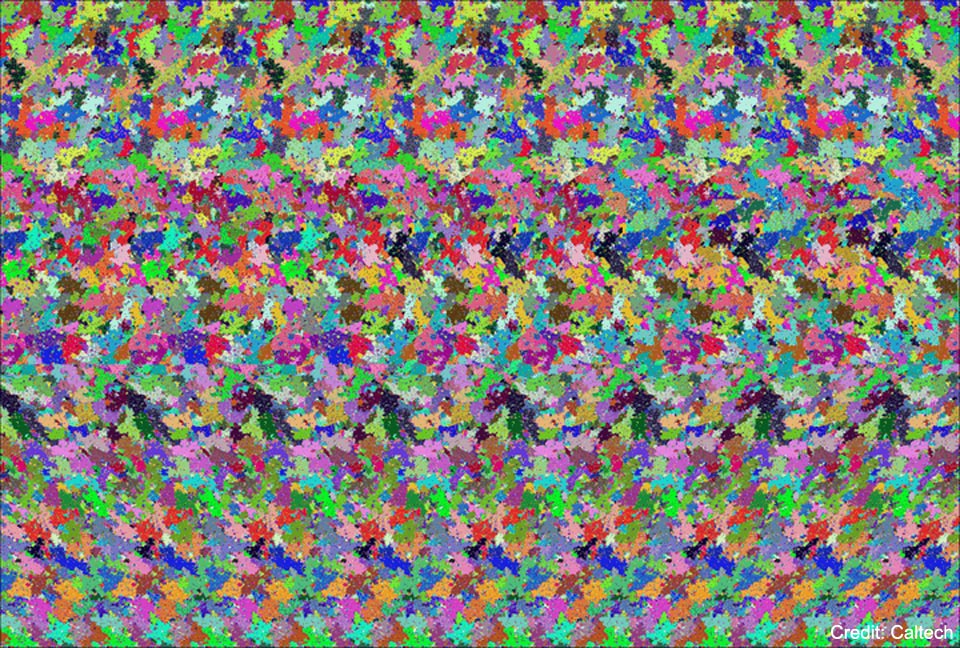
Sure, you can see the 2D rectangle of colors, but can you see deeper? Counting color patches in the featured image, you might estimate that the most information that this 2D digital image can hold is about 60 (horizontal) x 50(vertical) x 256 (possible colors) = 768,000 bits. However, the yet-unproven Holographic Principle states that, counter-intuitively, the information in a 2D panel can include all of the information in a 3D room that can be enclosed by the panel. The principle derives from the idea that the Planck length, the length scale where quantum mechanics begins to dominate classical gravity, is one side of an area that can hold only about one bit of information. The limit was first postulated by physicist Gerard 't Hooft in 1993. It can arise from generalizations from seemingly distant speculation that the information held by a black hole is determined not by its enclosed volume but by the surface area of its event horizon. The term "holographic" arises from a hologram analogy where three-dimension images are created by projecting light through a flat screen. Beware, some people staring at the featured image may not think it encodes just 768,000 bits -- nor even 2563,000 bit permutations -- rather they might claim it encodes a three-dimensional teapot.

https://apod.nasa.gov/apod/ap211003.html ( October 03, 2021)

Friday, October 1, 2021

A Light and Dusty Night


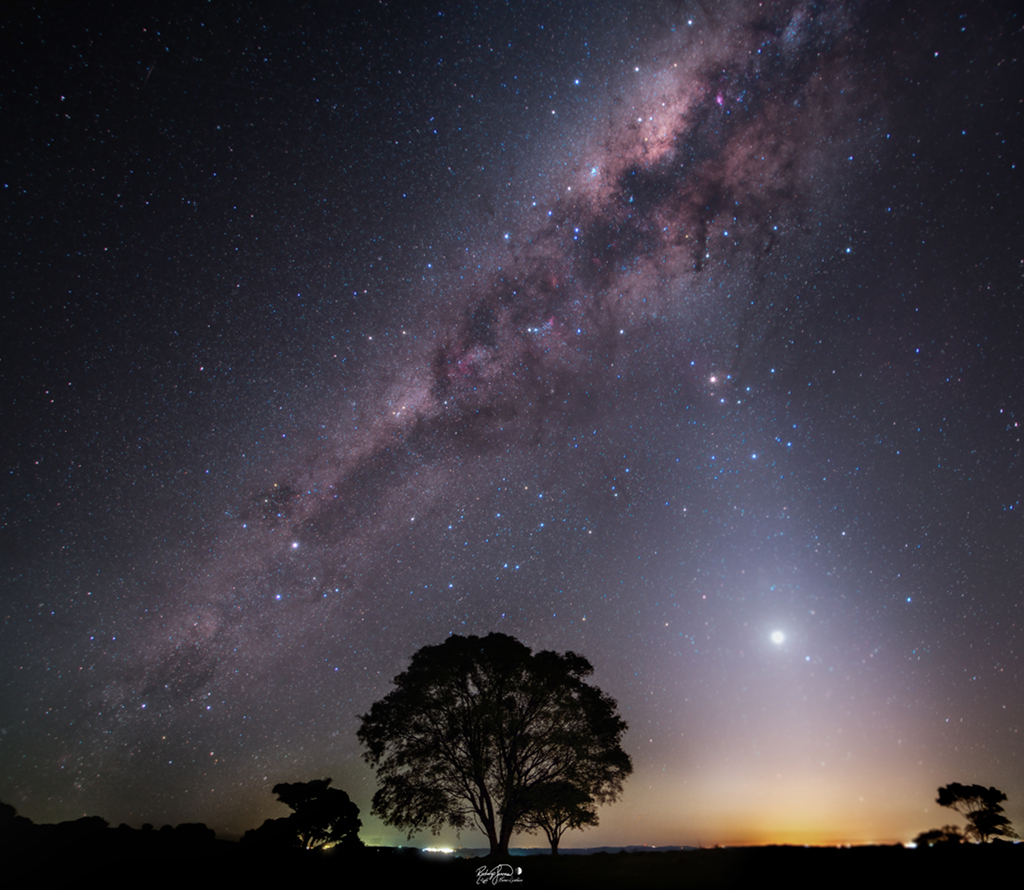
Posing as a brilliant evening star, Venus lies near the western horizon in this southern hemisphere, early spring, night skyscape. To create the composite view exposures tracking the sky and fixed for the foreground were taken on September 25 from Cascavel in southern Brazil. In view after sunset, Venus appears immersed in a cone of zodiacal light, sunlight scattered from dust along the Solar System's ecliptic plane. In fact from either hemisphere of planet Earth, zodiacal light is most visible after sunset near a spring equinox, (or before sunrise near an autumn equinox) when its luminous arc lies at steep angles to the horizon. Extending above the sunset on this night, the zodiacal light reaches toward rich starfields and immense interstellar dust clouds in the bulge of the central Milky Way. Follow along the Milky Way from the central bulge back toward the horizon and you'll spot the closest star system to the Sun, Alpha Centauri, a mere 4.37 light-years away.

https://apod.nasa.gov/apod/ap211002.html ( October 02, 2021)

ISS Daily Summary Report – 9/30/2021

iss-about-banner


SpaceX-23 Undock and Return: Cargo Dragon SpaceX-23 (SpX-23) undocked from the ISS today at 8:07 AM CT to return cargo and payloads to the ground concluding the 32-day mission aboard the ISS. SpX-23 will complete departure phasing throughout the day, jettison the Trunk for destructive re-entry, deorbit, and then splash down off the coast of … ...

September 30, 2021 at 12:00PM
From NASA: https://blogs.nasa.gov/stationreport/2021/09/30/iss-daily-summary-report-9-30-2021/

Remembering the Gallaudet Eleven and Their Contributions to Spaceflight


Before NASA could send humans to space, the agency needed to better understand the effects of prolonged weightlessness on the human body.

from NASA http://www.nasa.gov/image-feature/remembering-the-gallaudet-eleven-and-their-contributions-to-spaceflight
via IFTTT