Friday, September 3, 2021

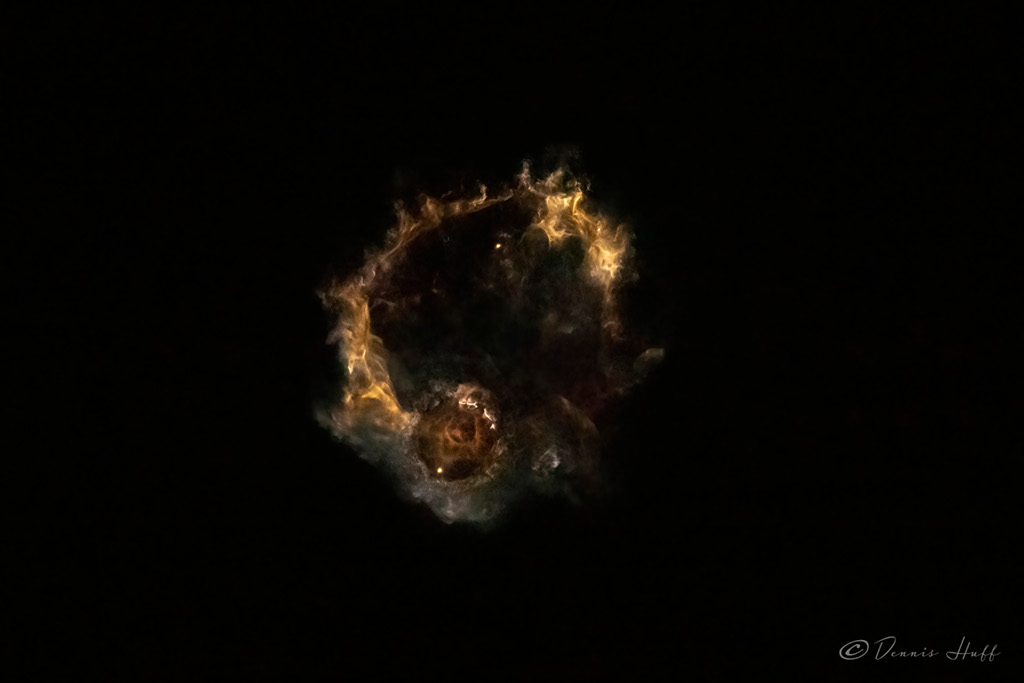
A Falcon 9 Nebula


Not the Hubble Space Telescope's latest view of a distant galactic nebula, this illuminated cloud of gas and dust dazzled early morning spacecoast skygazers on August 29. The snapshot was taken at 3:17am from Space View Park in Titusville, Florida. That's about 3 minutes after the launch of a SpaceX Falcon 9 rocket on the CRS-23 mission to resupply the International Space Station. It captures drifting plumes and exhaust from the separated first and second stage of the rocket rising through still dark skies. The lower bright dot is the second stage continuing on to low Earth orbit. The upper one is the rocket's first stage performing a boostback burn. Of course the first stage booster returned to make the first landing on the latest autonomous drone ship to arrive in the Atlantic, A Short Fall of Gravitas.

https://apod.nasa.gov/apod/ap210904.html ( September 04, 2021)

Mars Perseverance Rover Gathers Rock Sample


This Mastcam-Z image shows a sample of Mars rock inside the sample tube on Sept. 1, 2021 – the 190th sol, or Martian day, of the mission.

from NASA http://www.nasa.gov/image-feature/mars-perseverance-rover-gathers-rock-sample
via IFTTT

ISS Daily Summary Report – 9/02/2021

iss-about-banner


Payloads Blob: Following the conclusion of the 7-day experiment session, the crew removed the Blob box hardware and transferred the experiment data.  Unfortunately, corrupted data files were found; so, the experiment will be extended to gather more data.  The goal of the Blob investigation is to observe the influence of microgravity on the Blob’s (a … ...

September 02, 2021 at 12:00PM
From NASA: https://blogs.nasa.gov/stationreport/2021/09/02/iss-daily-summary-report-9-02-2021/

Mars Perseverance Rover Collects First Sample


This Mastcam-Z image shows a sample of Mars rock inside the sample tube on Sept. 1, 2021 – the 190th sol, or Martian day, of the mission.

from NASA http://www.nasa.gov/image-feature/mars-perseverance-rover-collects-first-sample
via IFTTT

Thursday, September 2, 2021

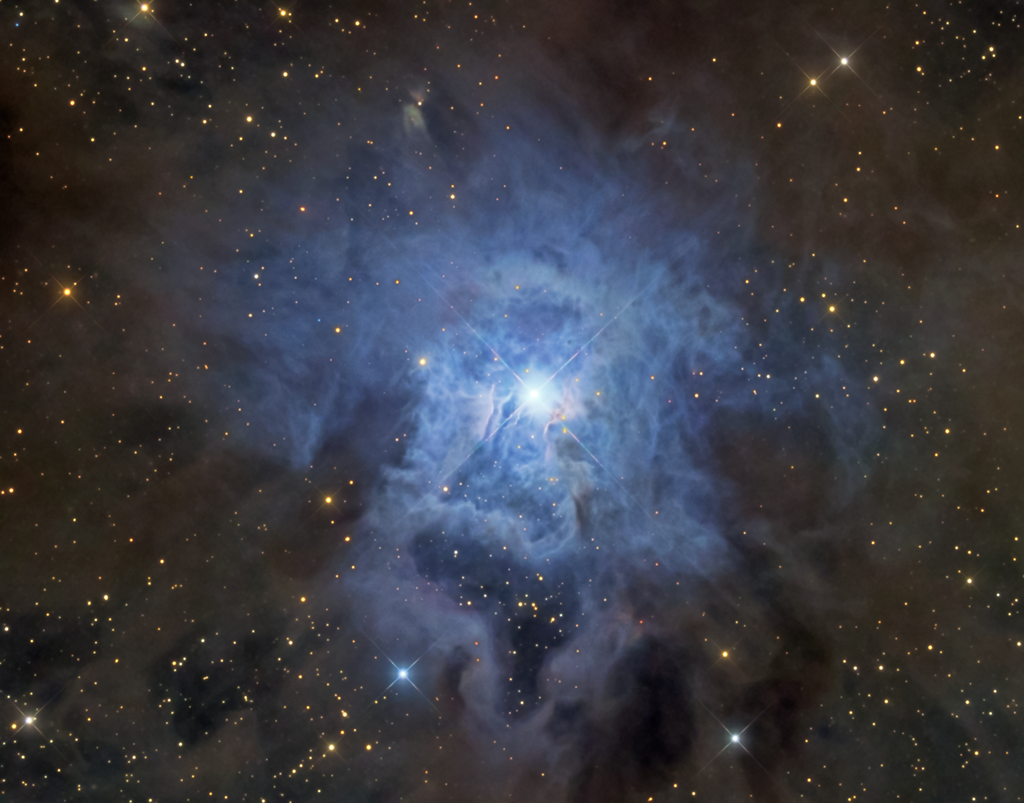
NGC 7023: The Iris Nebula


These cosmic clouds have blossomed 1,300 light-years away, in the fertile starfields of the constellation Cepheus. Called the Iris Nebula, NGC 7023 is not the only nebula to evoke the imagery of flowers. Still, this deep telescopic image shows off the Iris Nebula's range of colors and symmetries, embedded in surrounding fields of interstellar dust. Within the Iris itself, dusty nebular material surrounds a hot, young star. The dominant color of the brighter reflection nebula is blue, characteristic of dust grains reflecting starlight. Central filaments of the reflection nebula glow with a faint reddish photoluminesence as some dust grains effectively convert the star's invisible ultraviolet radiation to visible red light. Infrared observations indicate that this nebula contains complex carbon molecules known as PAHs. The dusty blue petals of the Iris Nebula span about six light-years.

https://apod.nasa.gov/apod/ap210903.html ( September 03, 2021)

ISS Daily Summary Report – 9/01/2021

iss-about-banner


Payloads APEX-8: The crew gathered the appropriate hardware and installed thirty APEX-08 petri plate plant growth chambers into the Veggie facility.  Compounds known as polyamines contribute to plant stress mitigation on Earth, and plants grown in microgravity display evidence of stress at the morphological level and gene-expression changes suggestive of stress response. Advanced Plant EXperiment-08 … ...

September 01, 2021 at 12:00PM
From NASA: https://blogs.nasa.gov/stationreport/2021/09/01/iss-daily-summary-report-9-01-2021/

On Approach to the Space Station


In this image from Aug, 30, 2021, the SpaceX Cargo Dragon vehicle approaches the International Space Station.

from NASA http://www.nasa.gov/image-feature/on-approach-to-the-space-station
via IFTTT

Wednesday, September 1, 2021

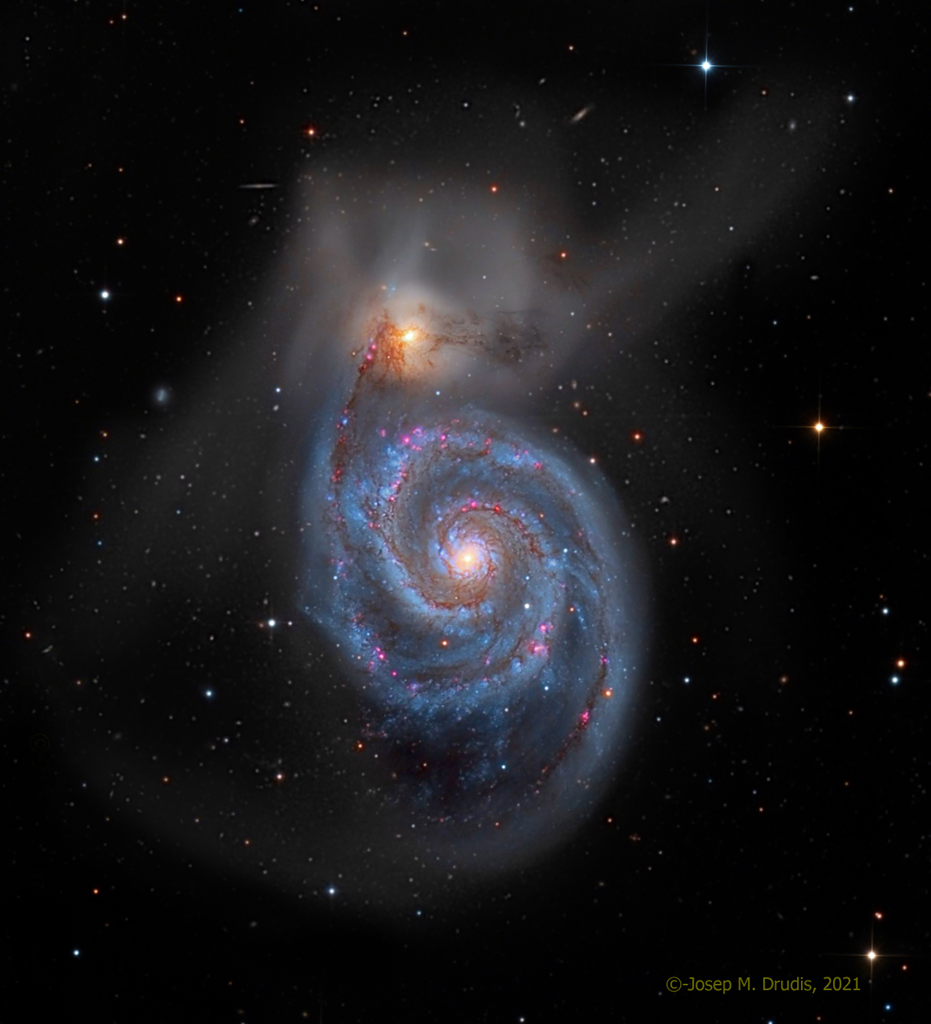
M51: The Whirlpool Galaxy


Find the Big Dipper and follow the handle away from the dipper's bowl until you get to the last bright star. Then, just slide your telescope a little south and west and you'll come upon this stunning pair of interacting galaxies, the 51st entry in Charles Messier's famous catalog. Perhaps the original spiral nebula, the large galaxy with well defined spiral structure is also cataloged as NGC 5194. Its spiral arms and dust lanes clearly sweep in front of its companion galaxy (top), NGC 5195. The pair are about 31 million light-years distant and officially lie within the angular boundaries of the small constellation Canes Venatici. Though M51 looks faint and fuzzy to the eye, deep images like this one reveal its striking colors and galactic tidal debris.

https://apod.nasa.gov/apod/ap210902.html ( September 02, 2021)

ISS Daily Summary Report – 8/31/2021

iss-about-banner


Payloads: ESA Biofilms: The crew reviewed the big picture words and then installed the Biofilm Experiment Containers (ECs) into the appropriate locations in Kubik 5 and Kubik 6.  The goal of the Biofilm Inhibition On Flight Equipment and On Board the ISS Using Microbiologically Lethal Metal Surfaces (ESA-Biofilms) investigation is to compare how biofilms are … ...

August 31, 2021 at 12:00PM
From NASA: https://blogs.nasa.gov/stationreport/2021/08/31/iss-daily-summary-report-8-31-2021/

Johanna Lucht: Engineer Extraordinaire


Johanna Lucht, who was born deaf, never thought she would work for NASA.

from NASA http://www.nasa.gov/image-feature/johanna-lucht-engineer-extraordinaire
via IFTTT