Thursday, May 6, 2021

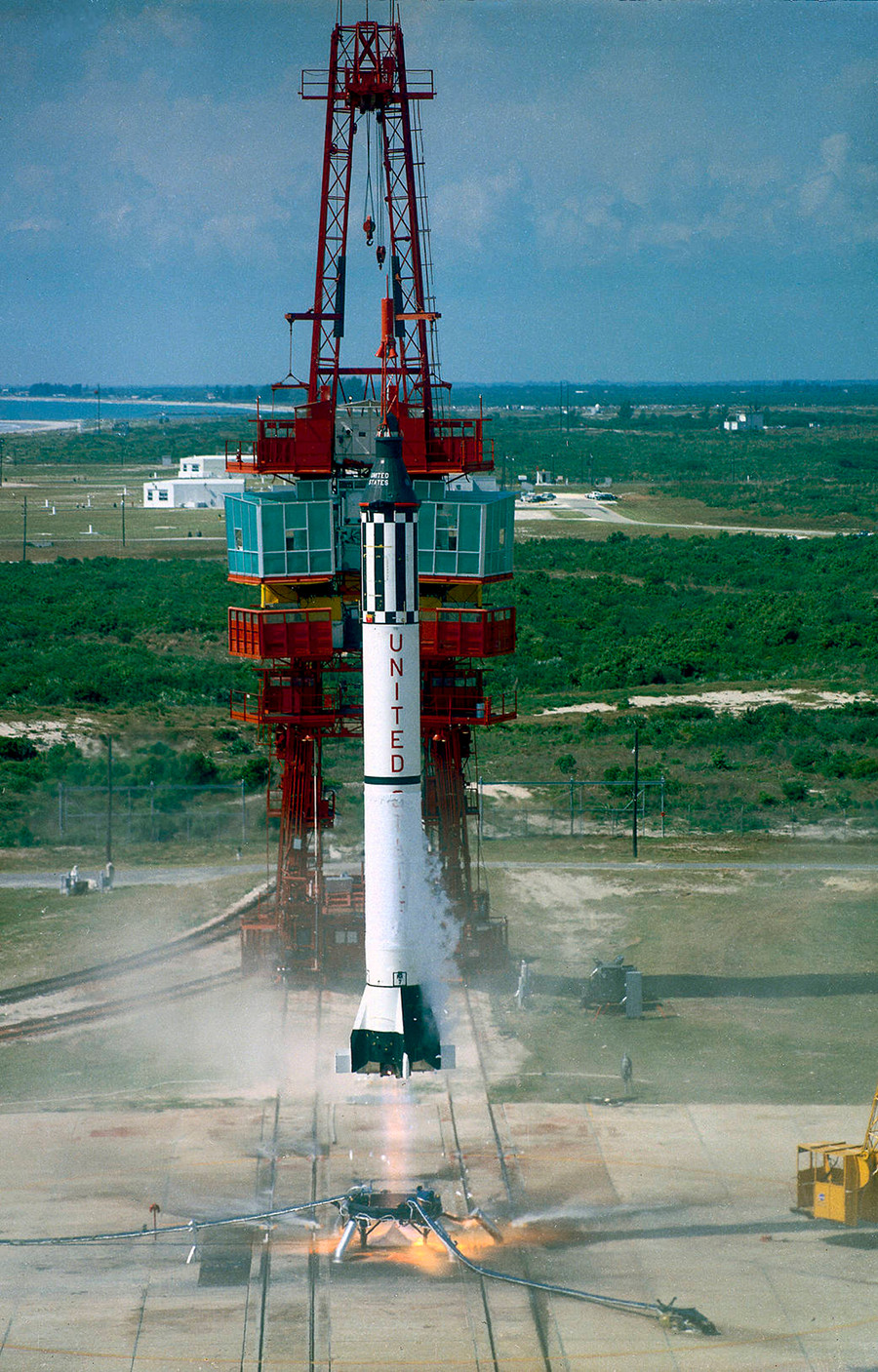
Mercury Redstone 3 Launch


Sixty years ago, near the dawn of the space age, NASA controllers "lit the candle" and sent Mercury astronaut Alan Shepard arcing into space atop a Redstone rocket. His cramped space capsule was dubbed Freedom 7. Broadcast live to a global television audience, the historic Mercury-Redstone 3 (MR-3) spacecraft was launched from Cape Canaveral Florida at 9:34 a.m. Eastern Time on May 5, 1961. The flight of Freedom 7, the first space flight by an American, followed less than a month after the first human venture into space by Soviet Cosmonaut Yuri Gagarin. The 15 minute sub-orbital flight achieved an altitude of 116 miles and a maximum speed of 5,134 miles per hour. As Shepard looked back near the peak of Freedom 7's trajectory, he could see the outlines of the west coast of Florida, Lake Okeechobe in central Florida, the Gulf of Mexico, and the Bahamas. Shepard would later view planet Earth from a more distant perspective and walk on the Moon as commander of the Apollo 14 mission.

https://apod.nasa.gov/apod/ap210507.html ( May 07, 2021)

Hey Ricky: It's Teacher Appreciation Week!


Astronaut and teacher Ricky Arnold is shown on his first spacewalk as a crewmember on STS-119.

from NASA http://www.nasa.gov/image-feature/hey-ricky-its-teacher-appreciation-week
via IFTTT

Wednesday, May 5, 2021

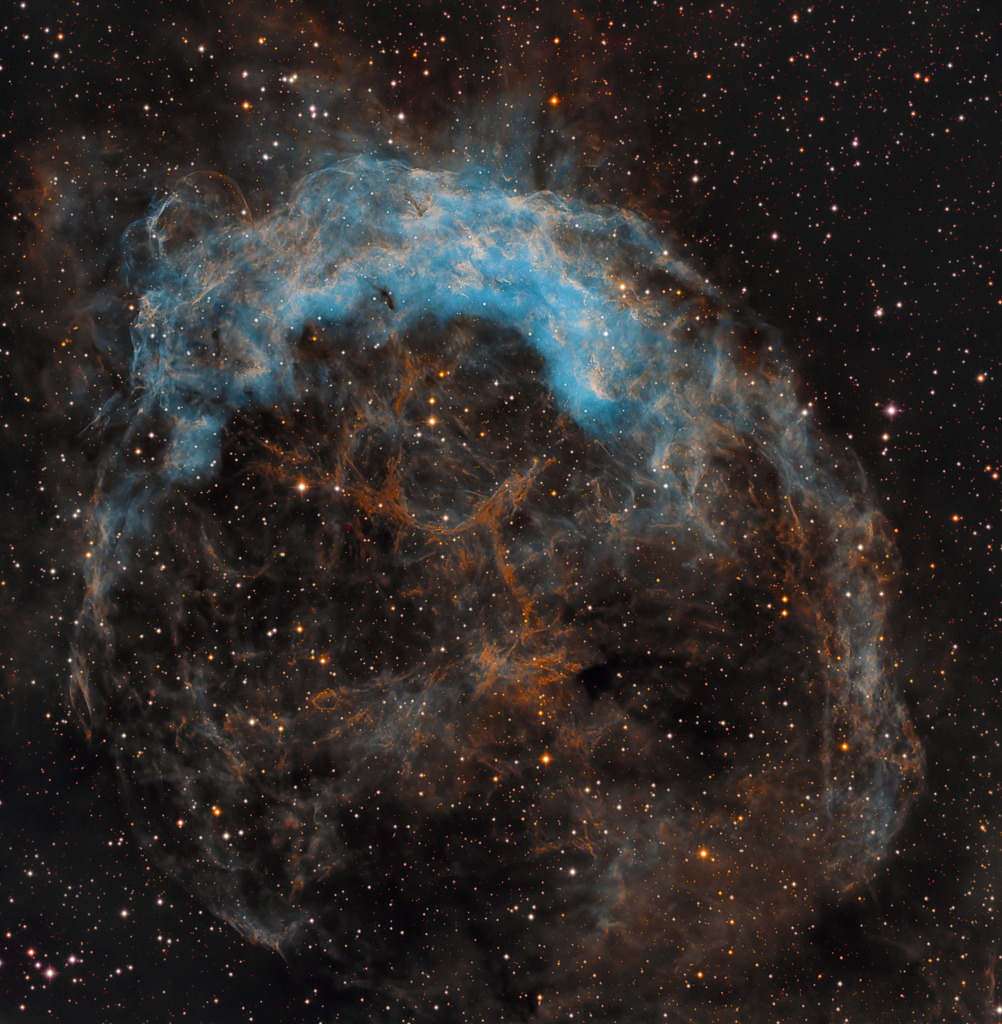
Windblown NGC 3199

NGC 3199 lies about 12,000 light-years away, a glowing cosmic cloud in the nautical southern constellation of Carina. The nebula is about 75 light-years across in this narrowband, false-color view. Though the deep image reveals a more or less complete bubble shape, it does look very lopsided with a much brighter edge along the top. Near the center is a Wolf-Rayet star, a massive, hot, short-lived star that generates an intense stellar wind. In fact, Wolf-Rayet stars are known to create nebulae with interesting shapes as their powerful winds sweep up surrounding interstellar material. In this case, the bright edge was thought to indicate a bow shock produced as the star plowed through a uniform medium, like a boat through water. But measurements have shown the star is not really moving directly toward the bright edge. So a more likely explanation is that the material surrounding the star is not uniform, but clumped and denser near the bright edge of windblown NGC 3199. https://apod.nasa.gov/apod/ap210506.html

President Kennedy Awards Alan Shepard NASA's Distinguished Service Medal


A U.S. Marine helicopter recovery team hoists astronaut Alan Shepard from his Mercury spacecraft after a successful flight and splashdown in the Atlantic Ocean.

from NASA http://www.nasa.gov/image-feature/president-kennedy-awards-alan-shepard-nasas-distinguished-service-medal
via IFTTT

Tuesday, May 4, 2021

Discovering Circumbinary Star Systems


When the the first Star Wars movie was released in 1977, it featured the now-iconic two-sun, “circumbinary” planet Tatooine.

from NASA http://www.nasa.gov/image-feature/discovering-circumbinary-star-systems
via IFTTT

Monday, May 3, 2021

Alan Shepard Completes His Mission


On May 5, 1961, NASA astronaut Alan Shepard piloted his Freedom 7 Mercury capsule in a 15-minute suborbital flight, becoming America's first astronaut. In this image, he is shown being hoisted aboard a U.S. Marine helicopter after splashdown. The flight carried him to an altitude of 116 statute miles.

from NASA http://www.nasa.gov/multimedia/imagegallery/image_feature_1344.html
via IFTTT

Friday, April 30, 2021

Hubble Views a Dazzling Cosmic Necklace


The interaction of two doomed stars has created this spectacular ring adorned with bright clumps of gas ­– a diamond necklace of cosmic proportions.

from NASA http://www.nasa.gov/image-feature/goddard/2021/hubble-views-a-dazzling-cosmic-necklace
via IFTTT

Thursday, April 29, 2021

Space Launch System Core Stage Arrives at the Kennedy Space Center


After its journey from NASA’s Stennis Space Center aboard the Pegasus barge, the core stage of the Space Launch System (SLS) rocket arrived at the agency’s Kennedy Space Center on April 27, 2021.

from NASA https://ift.tt/3vuBBpv
via IFTTT

Wednesday, April 28, 2021

Constant Gardening on the Space Station


Astronauts on the space station recently enjoyed a fresh supply of leafy greens, thanks in large part to the efforts of astronaut Michael Hopkins.

from NASA https://ift.tt/32VaAiD
via IFTTT

Thursday, March 6, 2014

Our G+ Presence

You can get to my Google Plus Page by following this link: http://gplus.to/TTI


Join the conversation on Google Plus.