Tuesday, June 7, 2022

ISS Daily Summary Report – 6/06/2022

iss-about-banner


Payloads: Astrorad: The crew gathered the appropriate items and prepared for the upcoming science activities.  Comfort and Human Factors AstroRad Radiation Garment Evaluation (CHARGE) tests a special vest designed to protect astronauts from radiation caused by unpredictable Solar Particle Events (SPEs). Astronauts provide input on the garment as they wear it while performing daily tasks, … ...

June 06, 2022 at 12:00PM
From NASA: https://blogs.nasa.gov/stationreport/2022/06/06/iss-daily-summary-report-6-06-2022/

Dickinson Crater on Venus


This November 1996 image from Magellan shows Dickinson, an impact crater in the northeastern Atalanta Region of Venus.

from NASA http://www.nasa.gov/image-feature/dickinson-crater-on-venus
via IFTTT

Monday, June 6, 2022

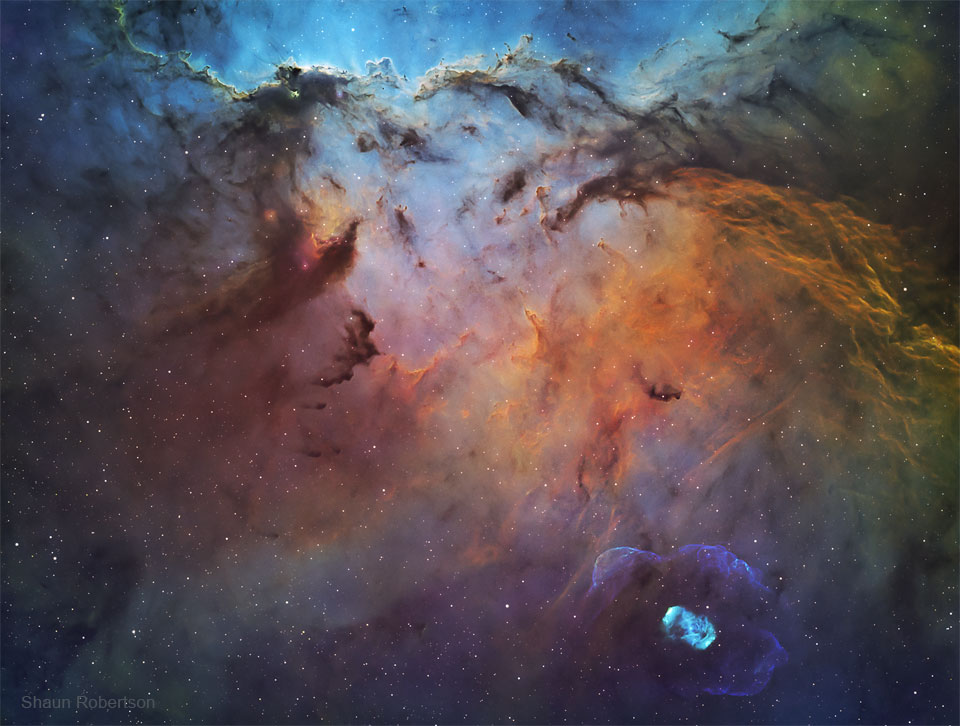
NGC 6188: Dragons of Ara


Do dragons fight on the altar of the sky? Although it might appear that way, these dragons are illusions made of thin gas and dust. The emission nebula NGC 6188, home to the glowing clouds, is found about 4,000 light years away near the edge of a large molecular cloud unseen at visible wavelengths, in the southern constellation Ara (the Altar). Massive, young stars of the embedded Ara OB1 association were formed in that region only a few million years ago, sculpting the dark shapes and powering the nebular glow with stellar winds and intense ultraviolet radiation. The recent star formation itself was likely triggered by winds and supernova explosions, from previous generations of massive stars, that swept up and compressed the molecular gas. Joining NGC 6188 on this cosmic canvas, visible toward the lower right, is rare emission nebula NGC 6164, also created by one of the region's massive O-type stars. Similar in appearance to many planetary nebulae, NGC 6164's striking, symmetric gaseous shroud and faint halo surround its bright central star near the bottom edge. This impressively wide field of view spans over 2 degrees (four full Moons), corresponding to over 150 light years at the estimated distance of NGC 6188.

https://apod.nasa.gov/apod/ap220607.html ( June 07, 2022)

Artemis I Moon Rocket Heads Back to Launch Pad for Testing


The rocket is scheduled to launch later in 2022.

from NASA http://www.nasa.gov/image-feature/artemis-i-moon-rocket-heads-back-to-launch-pad-for-testing
via IFTTT

Sunday, June 5, 2022

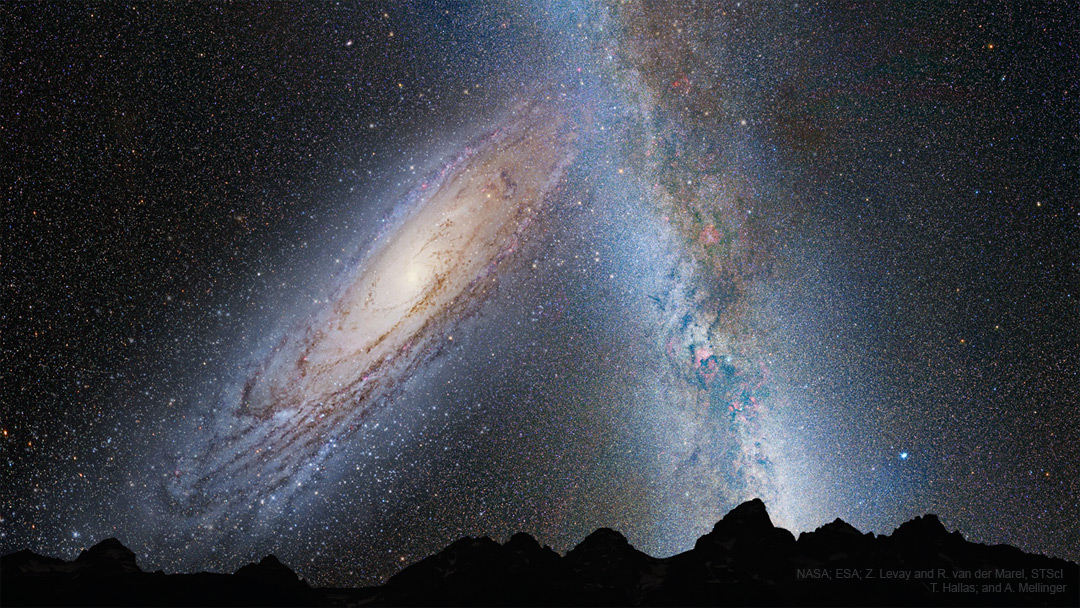
Milky Way Galaxy Doomed: Collision with Andromeda Pending


Will our Milky Way Galaxy collide one day with its larger neighbor, the Andromeda Galaxy? Most likely, yes. Careful plotting of slight displacements of M31's stars relative to background galaxies on recent Hubble Space Telescope images indicate that the center of M31 could be on a direct collision course with the center of our home galaxy. Still, the errors in sideways velocity appear sufficiently large to admit a good chance that the central parts of the two galaxies will miss, slightly, but will become close enough for their outer halos to become gravitationally entangled. Once that happens, the two galaxies will become bound, dance around, and eventually merge to become one large elliptical galaxy -- over the next few billion years. Pictured here is a combination of images depicting the sky of a world (Earth?) in the distant future when the outer parts of each galaxy begin to collide. The exact future of our Milky Way and the entire surrounding Local Group of Galaxies is likely to remain an active topic of research for years to come.

https://apod.nasa.gov/apod/ap220606.html ( June 06, 2022)

Saturday, June 4, 2022

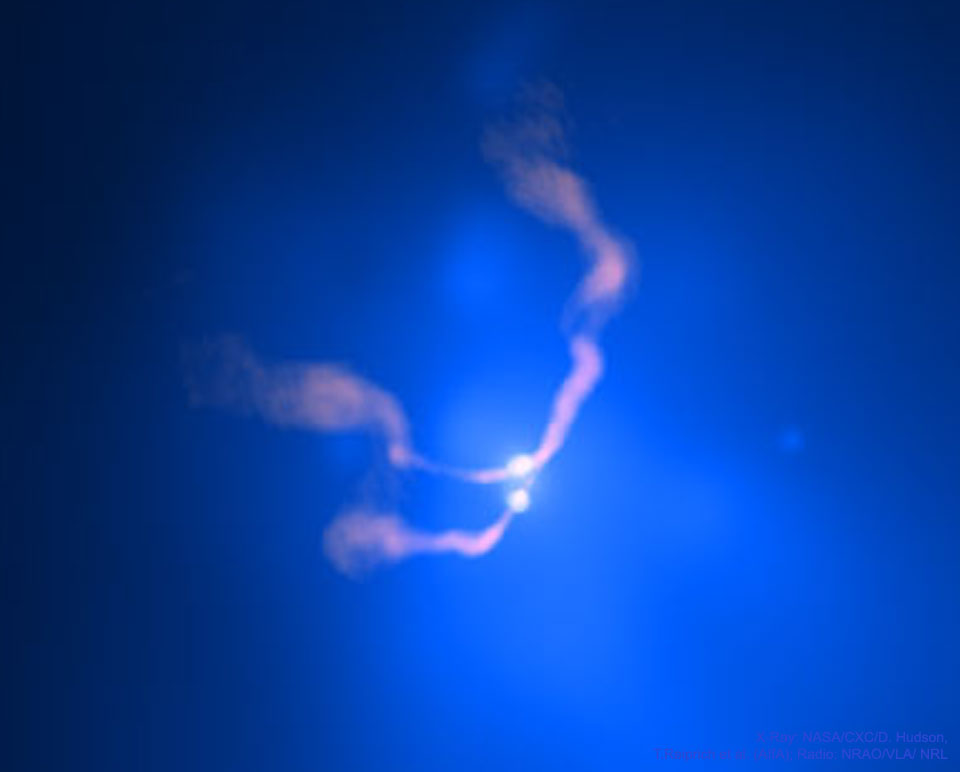
Two Black Holes Dancing in 3C 75


What's happening at the center of active galaxy 3C 75? The two bright sources at the center of this composite x-ray (blue)/ radio (pink) image are co-orbiting supermassive black holes powering the giant radio source 3C 75. Surrounded by multimillion degree x-ray emitting gas, and blasting out jets of relativistic particles the supermassive black holes are separated by 25,000 light-years. At the cores of two merging galaxies in the Abell 400 galaxy cluster they are some 300 million light-years away. Astronomers conclude that these two supermassive black holes are bound together by gravity in a binary system in part because the jets' consistent swept back appearance is most likely due to their common motion as they speed through the hot cluster gas at about 1200 kilometers per second. Such spectacular cosmic mergers are thought to be common in crowded galaxy cluster environments in the distant universe. In their final stages, the mergers are expected to be intense sources of gravitational waves.

https://apod.nasa.gov/apod/ap220605.html ( June 05, 2022)

Friday, June 3, 2022

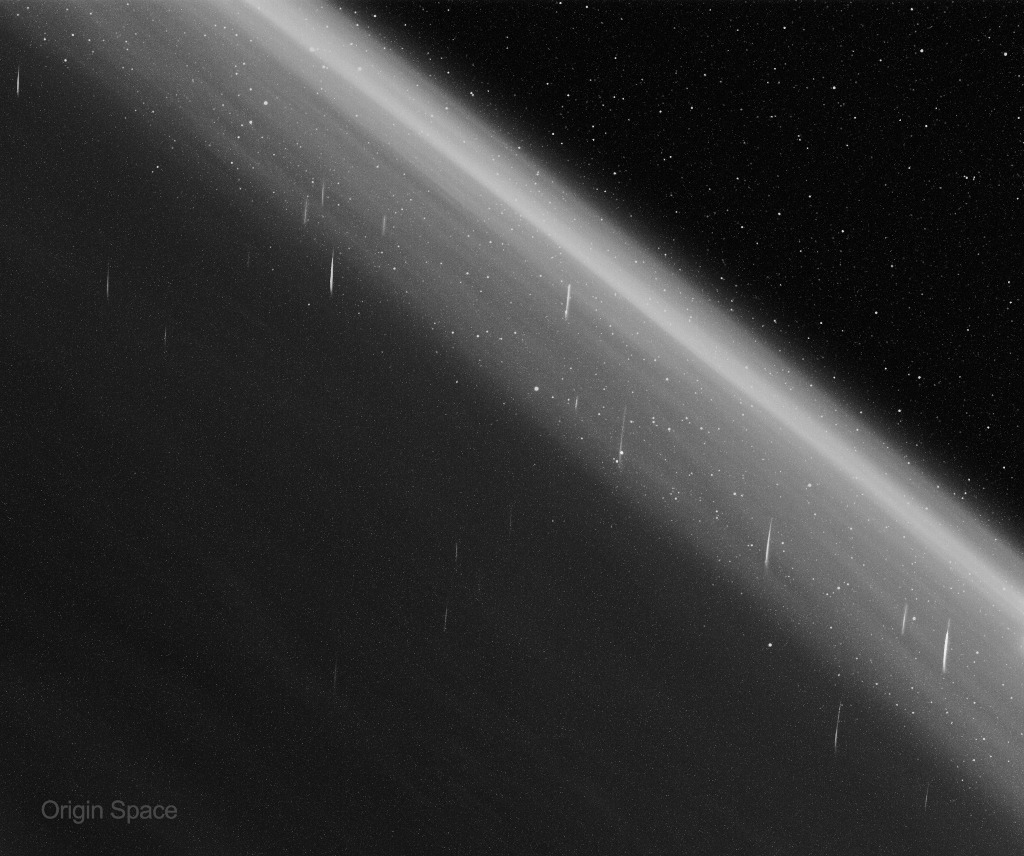
Tau Herculids from Space


On May 31 tens of parallel meteor streaks were recorded in this 8 degree wide field of view of planet Earth's limb from space. The image is one of a series of 5 minute long observations by the orbiting Yangwang-1 space telescope. It was captured at 03:43 UT, near the peak of the Tau Herculid meteor shower. As predicted, the meteor shower was an active one this year, caused as Earth swept through a relatively dense stream of debris from disintegrating Comet 73P/Schwassmann-Wachmann 3, but was lacking bright meteors. Nearly all of the Tau Herculid meteors in the Yangwang-1 image are too faint to be detected by groundbased instruments. But on that date patient earthbound skywatchers under clear skies still enjoyed a memorable showing of the Tau Herculids.

https://apod.nasa.gov/apod/ap220604.html ( June 04, 2022)

Apollo 1 Monument Dedication


The Apollo 1 monument at Arlington National Cemetery was dedicated on Thursday, June 2, 2022, in Arlington, Va.

from NASA http://www.nasa.gov/image-feature/apollo-1-monument-dedication
via IFTTT

Thursday, June 2, 2022

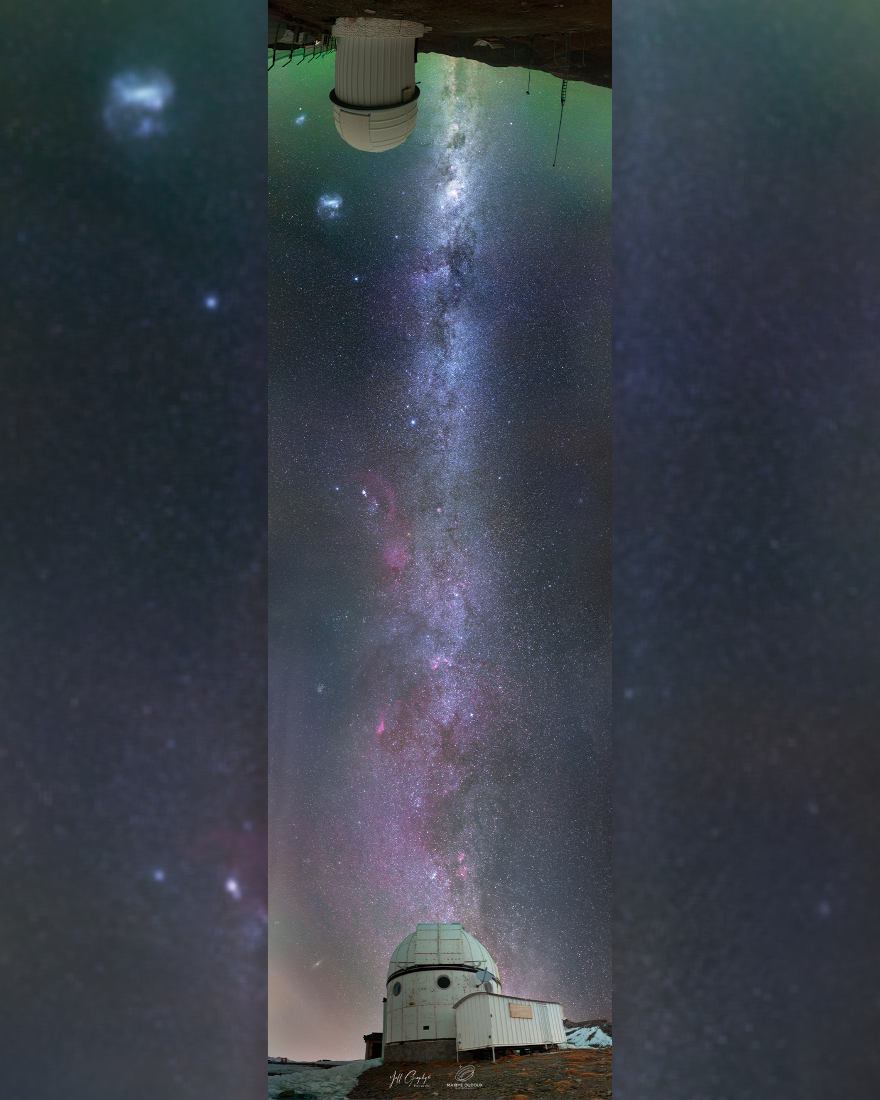
A 10 000 Kilometer Galactic Bridge


With this creative astro-collaboration you can follow the plane of our Milky Way Galaxy as it bridges northern and southern hemisphere skies. To construct the expansive composite nightscape, skies over Observatorio El Sauce in Chile (top) were imaged on the same date but 6 hours later than the skies over the Saint-Veran observatory in the French Alps. The 6 hour time-lag allowed Earth's rotation to align the Milky Way above domes at the two sites. All exposures were made with similar cameras and lenses mounted on simple tripods. A faint greenish airglow is visible in the dark Chilean sky that also features the Large and Small Magellanic Clouds near the observatory dome. In the French Alps light pollution is apparent, but the distant Andromeda Galaxy can still be spotted near the horizon in the northern night. On planet Earth the two observatories are separated by about 10,000 kilometers.

https://apod.nasa.gov/apod/ap220603.html ( June 03, 2022)

Huge Rings Around a Black Hole


This image features a spectacular set of rings around a black hole.

from NASA http://www.nasa.gov/image-feature/huge-rings-around-a-black-hole
via IFTTT