Friday, November 4, 2022

Thumbs Up from NASA Astronaut Nicole A. Mann


Selected as an astronaut candidate in June 2013, Nicole A. Mann is the first Native American woman from NASA in space.

from NASA http://www.nasa.gov/image-feature/thumbs-up-from-nasa-astronaut-nicole-a-mann
via IFTTT

ISS Daily Summary Report – 11/03/2022

iss-about-banner


X2R21 Transition Activities: As part of the X2R21 software updates occurring this week, ground teams loaded and transitioned the S3 and P3 Multiplexer/Demultiplexers (MDMs) to S3P3 R7 and installed the CCS R21 Timeliner bundle to the primary Command and Control (C&C) MDM. Today’s activities concluded the X2R21 software transition, and the ISS is now using … ...
November 03, 2022 at 12:00PM
From NASA: https://blogs.nasa.gov/stationreport/2022/11/03/iss-daily-summary-report-11-03-2022/

Thursday, November 3, 2022

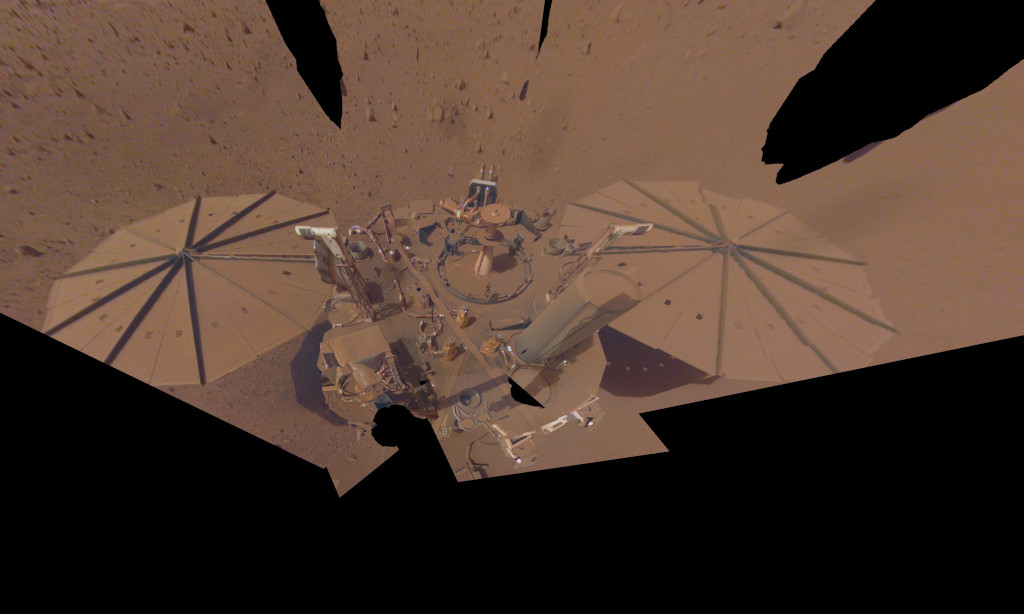
InSight's Final Selfie


The Mars InSight lander returned its first image from the Red Planet's flat, equatorial Elysium Planitia after a successful touchdown on November 26, 2018. The history making mission to explore the martian Interior using Seismic investigations, geodesy, and heat transport has been operating for over 1,400 martian days or sols. In that time the InSight mission has detected more than 1,300 marsquakes and recorded data from Mars-shaking meteoroid impacts, observing how the seismic waves travel to provide a glimpse inside Mars. Analyzing the archive of data collected is expected to yield discoveries for decades. But InSight's final operational sol is likely not far off. The reason is evident in this selfie recorded earlier this year showing its deck and large, 2-meter-wide solar panels covered with dust. Kicked up by martian winds the dust continues to accumulate and drastically reduce the power that can be generated by InSight's solar panels.

https://apod.nasa.gov/apod/ap221104.html ( November 04, 2022)

NASA ABoVE Team Studies Thawing Permafrost, Lakes


Since 2015, scientists participating in NASA’s Arctic Boreal Vulnerability Experiment (ABoVE) have been studying the impacts of climate change on Earth’s far northern regions and how those changes are intertwined.

from NASA http://www.nasa.gov/image-feature/nasa-above-team-studies-thawing-permafrost-lakes
via IFTTT

ISS Daily Summary Report – 11/02/2022

iss-about-banner


X2R1 Transition Activities: As part of the X2R21 software updates occurring this week, ground teams loaded and transitioned the Power Management Controller Unit (PMCU) Multiplexer/Demultiplexer (MDM) to PMCA R7 and the N3-1 MDM to N3SYS1 R5. Today’s X2R21 activities will conclude with ground teams loading the CCS R21 Timeliner files to all three Command and … ...
November 02, 2022 at 12:00PM
From NASA: https://blogs.nasa.gov/stationreport/2022/11/02/iss-daily-summary-report-11-02-2022/

Wednesday, November 2, 2022

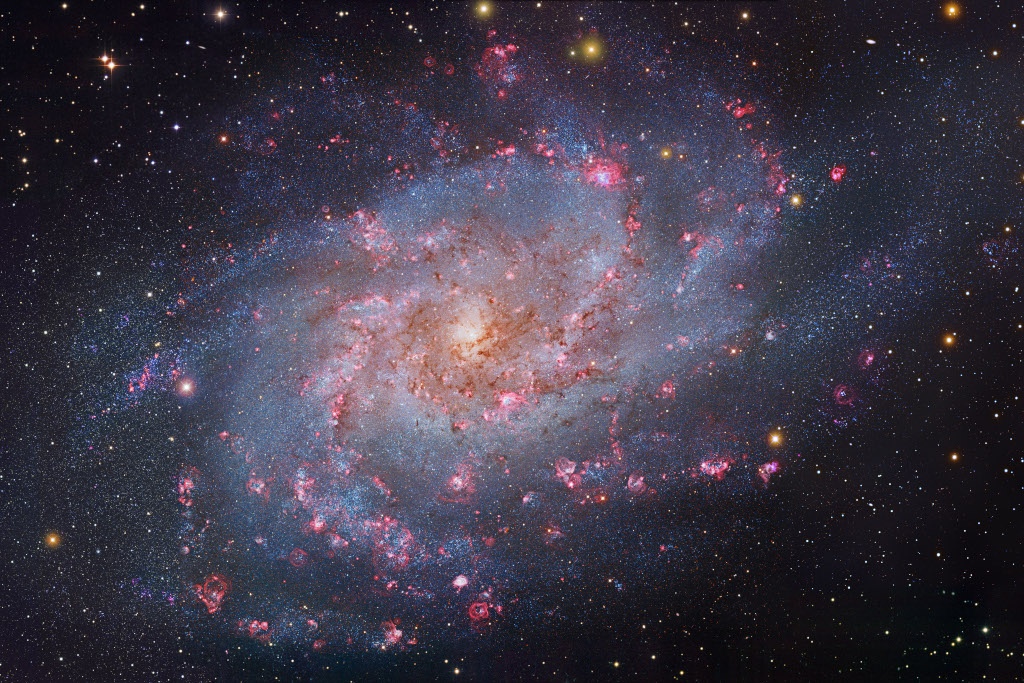
M33: The Triangulum Galaxy


The small, northern constellation Triangulum harbors this magnificent face-on spiral galaxy, M33. Its popular names include the Pinwheel Galaxy or just the Triangulum Galaxy. M33 is over 50,000 light-years in diameter, third largest in the Local Group of galaxies after the Andromeda Galaxy (M31), and our own Milky Way. About 3 million light-years from the Milky Way, M33 is itself thought to be a satellite of the Andromeda Galaxy and astronomers in these two galaxies would likely have spectacular views of each other's grand spiral star systems. As for the view from the Milky Way, this sharp image combines data from telescopes on and around planet Earth to show off M33's blue star clusters and pinkish star forming regions along the galaxy's loosely wound spiral arms. In fact, the cavernous NGC 604 is the brightest star forming region, seen here at about the 1 o'clock position from the galaxy center. Like M31, M33's population of well-measured variable stars have helped make this nearby spiral a cosmic yardstick for establishing the distance scale of the Universe.

https://apod.nasa.gov/apod/ap221103.html ( November 03, 2022)

ISS Daily Summary Report – 11/01/2022

iss-about-banner


X2R21 Transition Activities: As part of the X2R21 software updates occurring this week, the crew attached the remaining two Portable Computer System (PCS) laptops to the Joint Station LAN (JSL) so they could be imaged from the ground. After imaging, the JEM and Node 3 PCS laptops were reconnected to 1553. Ground teams continued transition … ...
November 01, 2022 at 12:00PM
From NASA: https://blogs.nasa.gov/stationreport/2022/11/01/iss-daily-summary-report-11-01-2022/

Tuesday, November 1, 2022

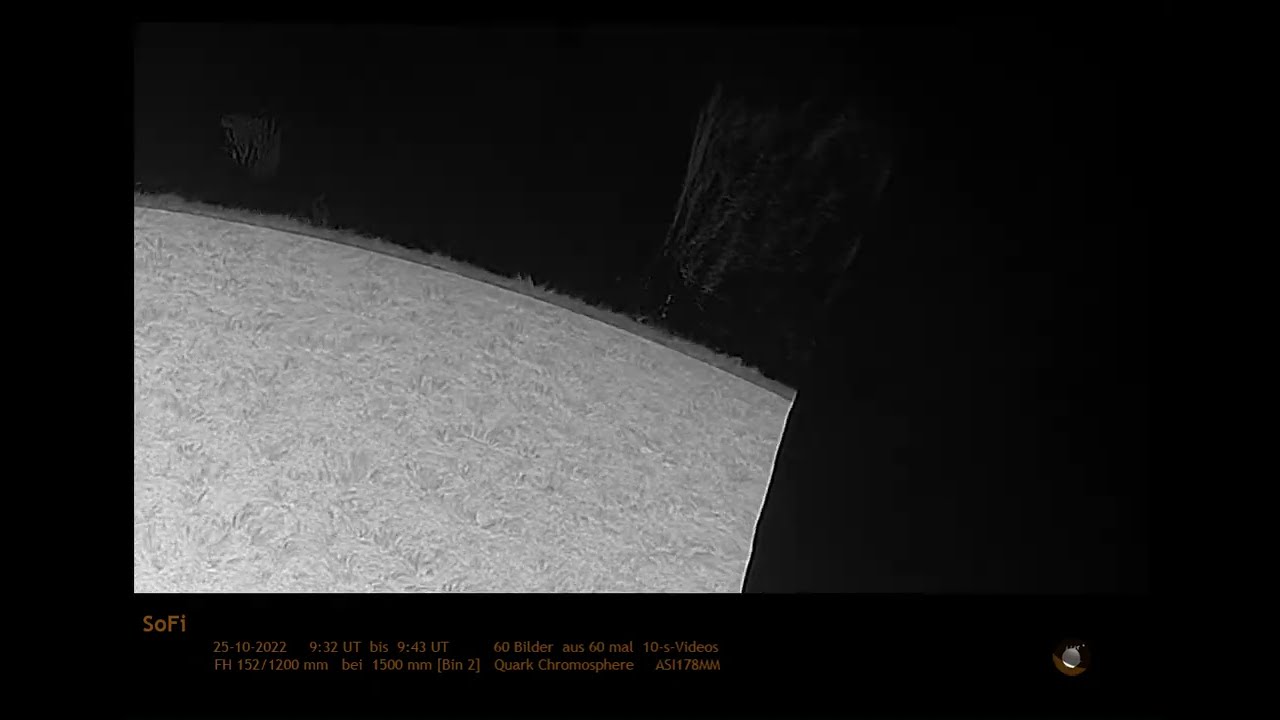
A Partial Eclipse of an Active Sun


Watch for three things in this unusual eclipse video. First, watch for a big dark circle to approach from the right to block out more and more of the Sun. This dark circle is the Moon, and the video was made primarily to capture this partial solar eclipse last week. Next, watch a large solar prominence hover and shimmer over the Sun's edge. A close look will show that part of it is actually falling back to the Sun. The prominence is made of hot plasma that is temporarily held aloft by the Sun's changing magnetic field. Finally, watch the Sun's edge waver. What is wavering is a dynamic carpet of hot gas tubes rising and falling through the Sun's chromosphere -- tubes known as spicules. The entire 4-second time-lapse video covers a time of about ten minutes, although the Sun itself is expected to last another 5 billion years.

https://apod.nasa.gov/apod/ap221102.html ( November 02, 2022)

ISS Daily Summary Report – 10/31/2022

iss-about-banner


X2R21 Transition Activities: As part of the X2R21 software updates occurring this week, the crew attached Portable Computer System (PCS) laptops to the Joint Station LAN (JSL) so they could be imaged from the ground. After imaging, the N2, Airlock, Lab, and SM PCS laptops were reconnected to 1553. The X2R21 software updates will provide … ...

October 31, 2022 at 12:00PM
From NASA: https://blogs.nasa.gov/stationreport/2022/10/31/iss-daily-summary-report-10-31-2022/

Stress Testing Super Hornet’s Wings


Teams at the NASA Armstrong Research Center recently completed stress testing on the Navy’s F/A-18E Super Hornet aircraft, seen here in a top view while in a wing loading test configuration at the Naval Air Systems Command (NAVAIR) in Patuxent River, Maryland.

from NASA http://www.nasa.gov/image-feature/stress-testing-super-hornet-s-wings
via IFTTT